Skip to content
X-Dreamers

Map of the Places of Jesus

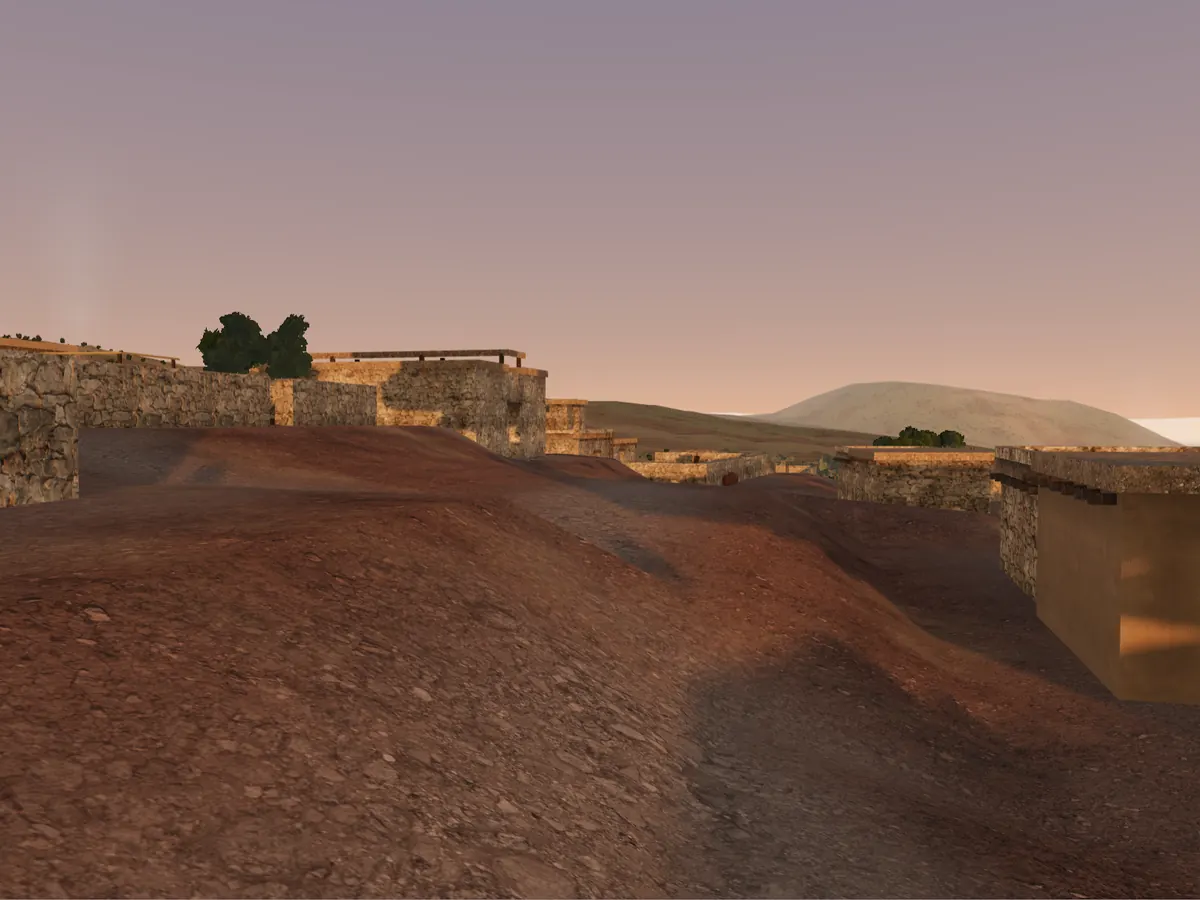
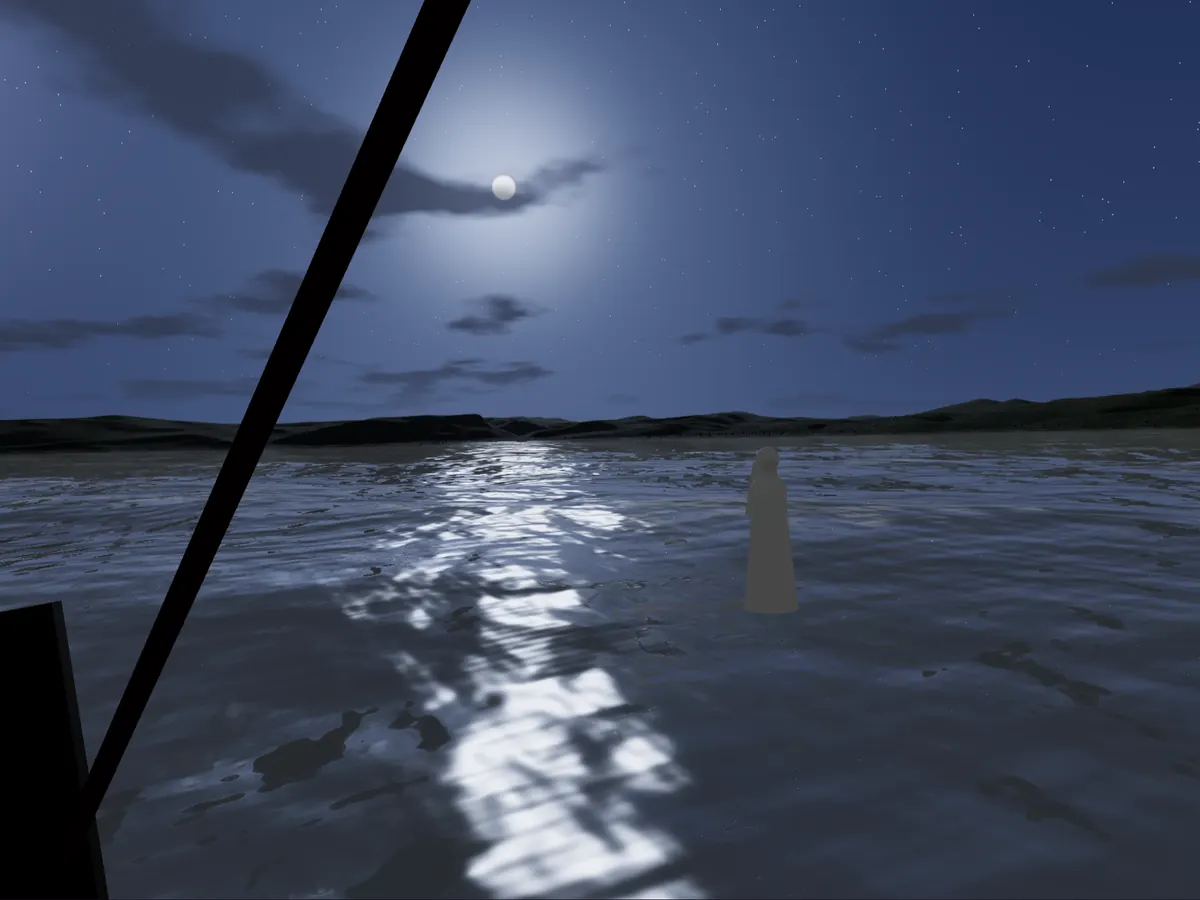
Where did Jesus go? The towns, shores and hills the Gospels name, from Bethlehem to Galilee and up to Jerusalem, on one map, each with its passages and how sure we are of the site. Five of them open as immersive 3D scenes.

Emmaus selected.

Life of Jesus
Site well establishedSite plausibleSite traditional or debated3D reconstructionRegion (approximate)

Step inside in 3D

Five places, rebuilt in detail from archaeology and the Gospels. All five are open to explore.

Some places are certain; some are not. Capernaum, Nazareth and the Pool of Siloam are well established; the mountain of the Transfiguration, the site of Emmaus and the exact place of the tomb are debated. Each place shows its claims with an evidence level, and debated places show the other candidate sites.

Coastline and lakes are drawn as today, except the Dead Sea, whose two modern basins are joined as the single lake of Jesus' day. Region borders, Jerusalem's walls and valleys are sketches. Scripture quotations are from the King James Version (1769).

Map data: coastline, lakes and rivers from Natural Earth (public domain); relief shading from the Terrain Tiles (Mapzen on AWS Open Data: SRTM, GMTED2010, ETOPO1). Place coordinates from the Pleiades gazetteer (CC BY 3.0), Wikidata (CC0) and © OpenStreetMap contributors (ODbL); each place's details name the record its position comes from.

Where did Jesus go? A map of the Gospel places

This lab maps 26 places where the Gospels set the life of Jesus, from his birth in Bethlehem and his childhood in Nazareth, through the ministry around the Sea of Galilee and the journey south through Samaria and Jericho, to the last week in Jerusalem. Each place opens its Gospel events with the key passage quoted in full, what archaeology has found, and how sure we can be that the modern site is the place the Gospels mean.

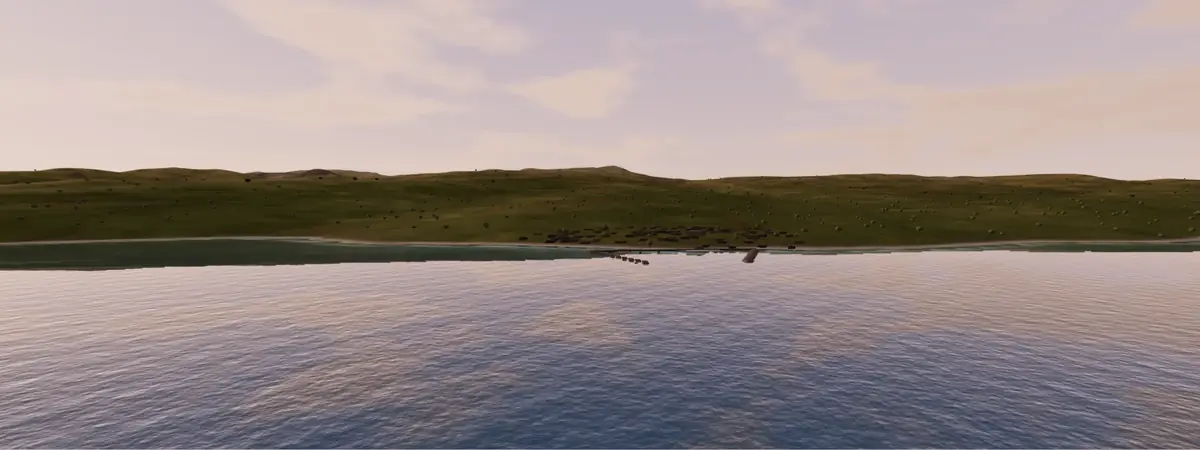
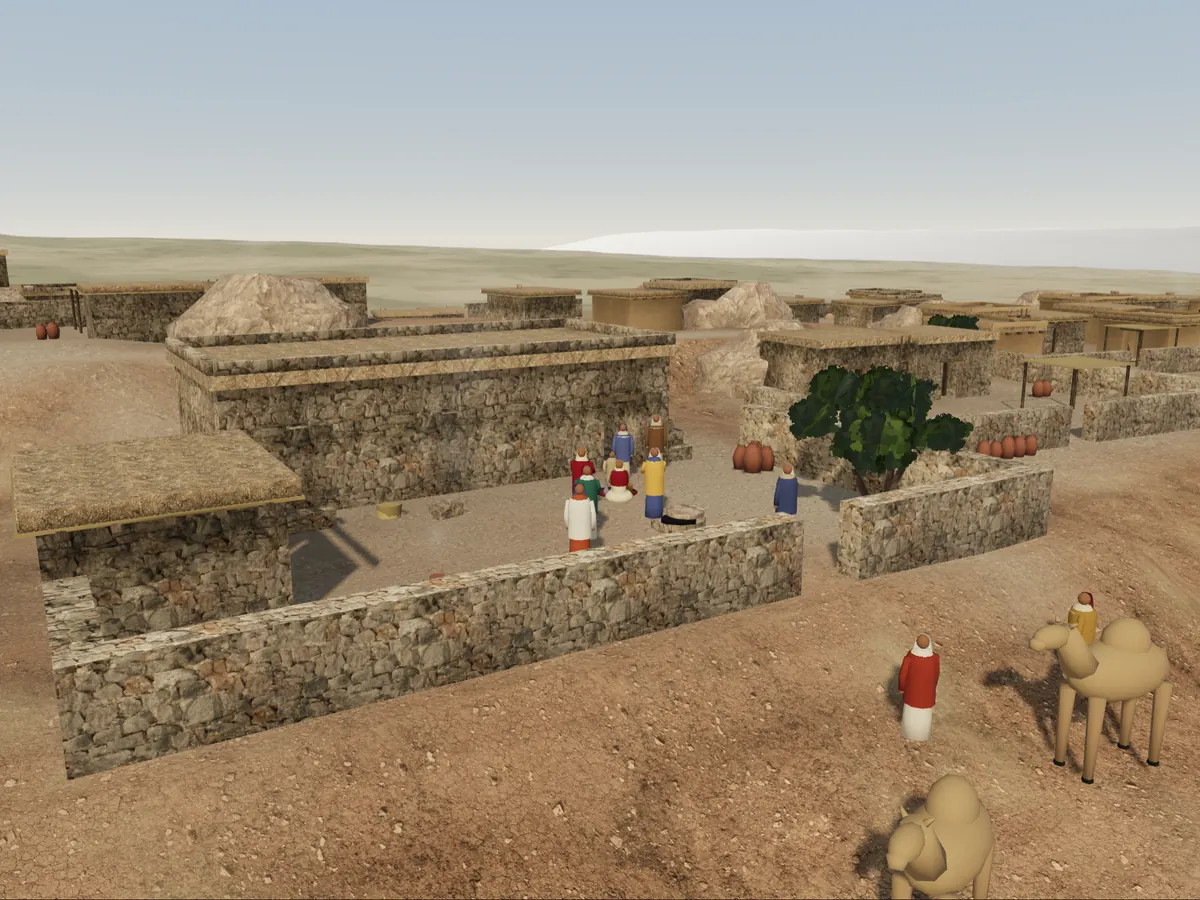
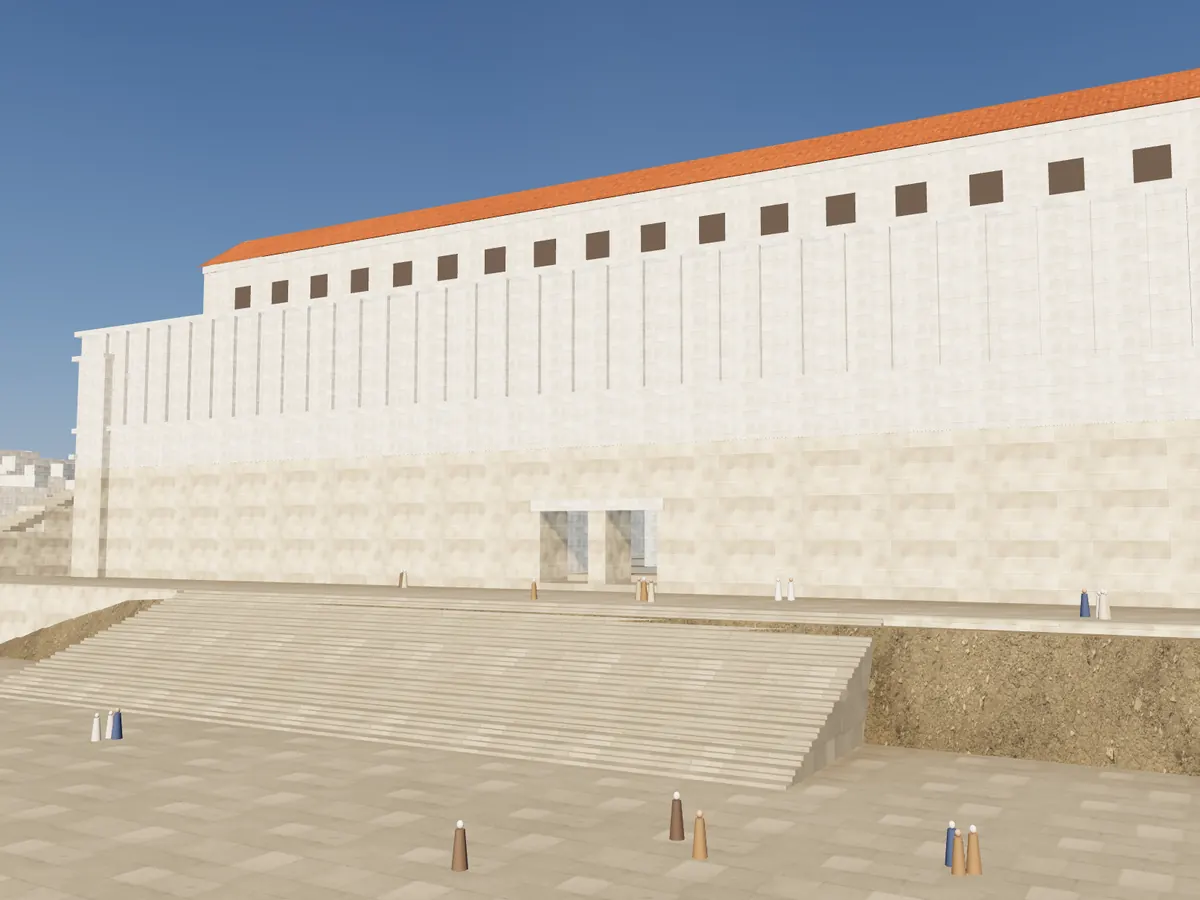
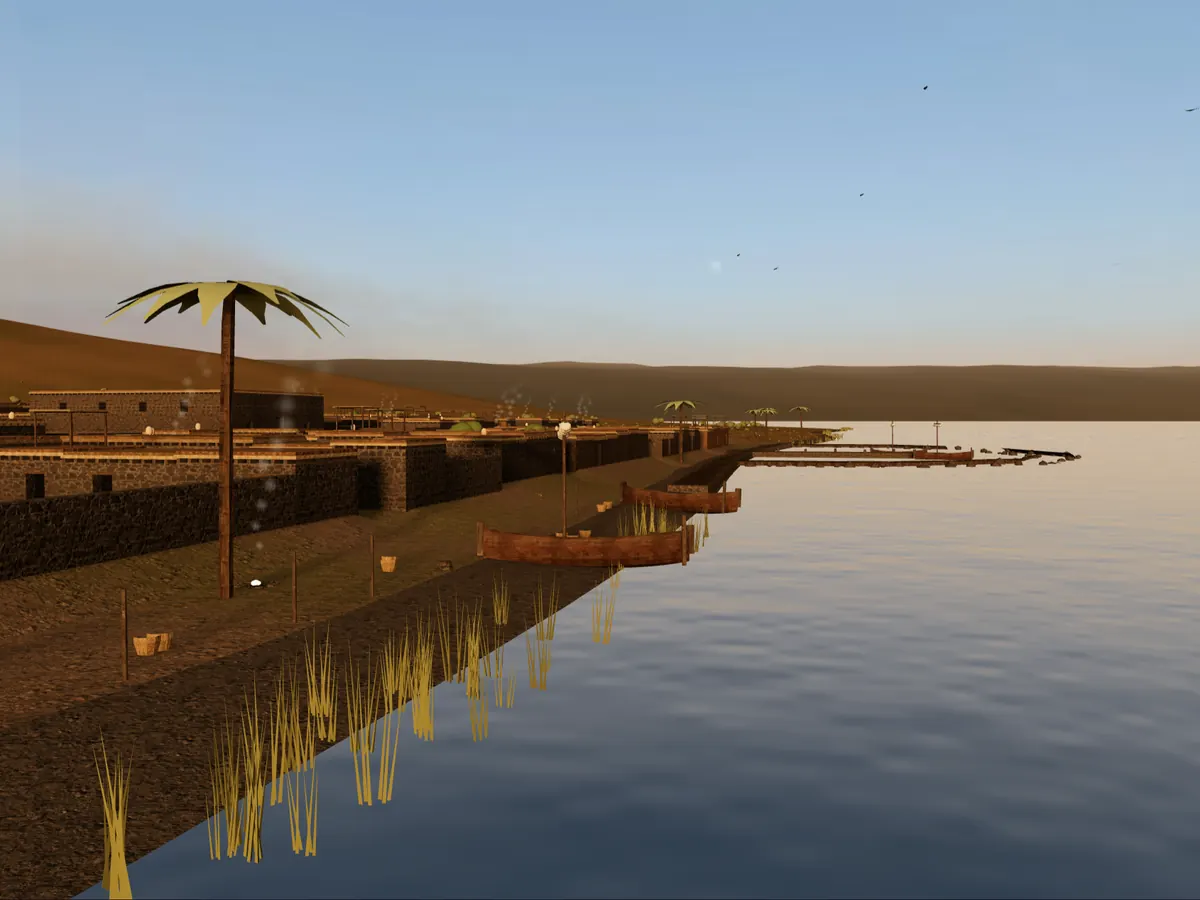
Some places are certain: Capernaum is Tell Hum on the north-west shore, and Nazareth, Bethlehem and the Pool of Siloam are well established. Others are debated, such as the mountain of the Transfiguration, the site of Emmaus and the exact place of the tomb; for these the map also shows the other candidate sites. Five places, Bethlehem, Nazareth, Capernaum, the Sea of Galilee and the Temple Mount, open into 3D reconstructions.

Places on the map, by region

Places on the map, by region
GalileeNazareth, Cana, Nain, Mount Tabor
Sea of Galilee shoreCapernaum, Sea of Galilee, Magdala, Bethsaida, Chorazin, Mount of Beatitudes, Kursi
The far northMount Hermon, Caesarea Philippi
SamariaSychar and Jacob's Well
Jordan valleyBethany beyond the Jordan, Jericho
JudeaBethlehem, Bethany, Emmaus
JerusalemJerusalem, Temple Mount, Pool of Bethesda, Pool of Siloam, Mount of Olives, Gethsemane, Golgotha and the tomb
PeriodsBirth and childhood (c. 6/5 BC – AD 8); ministry in Galilee (c. AD 27–29); journey to Jerusalem (c. AD 29–30); passion week (AD 30 or 33); resurrection appearances (40 days)

Key verses 5

4And Joseph also went up from Galilee, out of the city of Nazareth, into Judæa, unto the city of David, which is called Bethlehem; (because he was of the house and lineage of David:) 5To be taxed with Mary his espoused wife, being great with child. 6And so it was, that, while they were there, the days were accomplished that she should be delivered. 7And she brought forth her firstborn son, and wrapped him in swaddling clothes, and laid him in a manger; because there was no room for them in the inn.

Luke 2:4–7

13And leaving Nazareth, he came and dwelt in Capernaum, which is upon the sea coast, in the borders of Zabulon and Nephthalim: 14That it might be fulfilled which was spoken by Esaias the prophet, saying, 15The land of Zabulon, and the land of Nephthalim, by the way of the sea, beyond Jordan, Galilee of the Gentiles; 16The people which sat in darkness saw great light; and to them which sat in the region and shadow of death light is sprung up.

Matthew 4:13–16

37And there arose a great storm of wind, and the waves beat into the ship, so that it was now full. 38And he was in the hinder part of the ship, asleep on a pillow: and they awake him, and say unto him, Master, carest thou not that we perish? 39And he arose, and rebuked the wind, and said unto the sea, Peace, be still. And the wind ceased, and there was a great calm.

Mark 4:37–39

13When Jesus came into the coasts of Caesarea Philippi, he asked his disciples, saying, Whom do men say that I the Son of man am? 14And they said, Some say that thou art John the Baptist: some, Elias; and others, Jeremias, or one of the prophets. 15He saith unto them, But whom say ye that I am? 16And Simon Peter answered and said, Thou art the Christ, the Son of the living God.

Matthew 16:13–16

41Now in the place where he was crucified there was a garden; and in the garden a new sepulchre, wherein was never man yet laid. 42There laid they Jesus therefore because of the Jews’ preparation day; for the sepulchre was nigh at hand.

John 19:41–42

Scripture quotations: King James Version (1769) (KJV).

What the Bible says, what our model adds to it, where good readers disagree, and where the old copies and the translations differ. We set the views side by side and do not pick a winner.

  • Textually stated7
  • Plausible8
  • Speculative4

A few of the model's choices

  • Plausible

    The cave beneath the Church of the Nativity is the place of the birth.

  • Plausible

    Cana was at Khirbet Qana, about 13 km north of Nazareth.

  • Plausible

    Bethsaida is et-Tell, a mound about 2 km north of today's shore.

Show all 25
What the text says7

Stated in Scripture. Quoted from the King James Version (KJV) and the 1919 Chinese Union Version (和合本).

  • The Gospels' 'sea' is this freshwater lake, fed and drained by the Jordan.

    Textually stated

    1And it came to pass, that, as the people pressed upon him to hear the word of God, he stood by the lake of Gennesaret,

    Luke 5:1 · KJV
  • Jesus taught the crowds on a hillside in Galilee.

    Textually stated

    1And seeing the multitudes, he went up into a mountain: and when he was set, his disciples came unto him:

    Matthew 5:1 · KJV
  • The Transfiguration happened on 'a high mountain' about a week after Peter's confession near Caesarea Philippi.

    Textually stated

    2And after six days Jesus taketh with him Peter, and James, and John, and leadeth them up into an high mountain apart by themselves: and he was transfigured before them.

    Mark 9:2 · KJV
  • John baptized at Bethany beyond the Jordan, and Jesus was baptized by him in the Jordan.

    Textually stated

    28These things were done in Bethabara beyond Jordan, where John was baptizing.

    John 1:28 · KJV
  • The Mount of Olives is the ridge east of the city, a 'Sabbath day's journey' from it.

    Textually stated

    12Then returned they unto Jerusalem from the mount called Olivet, which is from Jerusalem a sabbath day’s journey.

    Acts 1:12 · KJV
  • Jesus was crucified near the city, outside its gate, at a place called Golgotha, and buried in a new tomb in a garden close by.

    Textually stated

    20This title then read many of the Jews: for the place where Jesus was crucified was nigh to the city: and it was written in Hebrew, and Greek, and Latin.

    John 19:20 · KJV
  • Emmaus was a village 'sixty stadia' (about 11 km) from Jerusalem.

    Textually stated

    13And, behold, two of them went that same day to a village called Emmaus, which was from Jerusalem about threescore furlongs.

    Luke 24:13 · KJV
What the model adds12

Choices the reconstruction has to make where the text is silent, each with its evidence level and the reason for it.

Plausible8
  • The cave beneath the Church of the Nativity is the place of the birth.

    Why: Justin Martyr (c. AD 155) already speaks of a cave near the village, and Origen (c. 248) says it was shown to visitors. Village houses often had a cave at the back for animals, which fits the manger (Luke 2:7), but the tradition cannot be checked.

  • Cana was at Khirbet Qana, about 13 km north of Nazareth.

    Why: The Arabic name keeps 'Qana'; Josephus stayed at a Cana near the plain of Asochis (Beth Netofa), and the excavated pilgrim cave shows the site was honoured as Cana for centuries.

  • Bethsaida is et-Tell, a mound about 2 km north of today's shore.

    Why: It has the largest ancient remains in the area and fishing gear from the Roman period. But 1st-century remains are thin, and the mound stands well above the lake level of Jesus' day, an odd place for a 'house of fishing'.

  • Mount Tabor is the mountain of the Transfiguration.

    Why: Cyril of Jerusalem and Jerome already name Tabor in the 4th century. Against it: Tabor is some 80 km from Caesarea Philippi, it is not especially high, and there seems to have been a settlement on its summit.

  • The town of Sychar was the village of Askar, 1 km north-east of the well.

    Why: The names are close and Askar has a spring. Some ancient versions read 'Shechem', the old city beside the well, which was largely abandoned by the 1st century.

  • The baptism site was at the Jordan opposite Jericho, around Wadi al-Kharrar and Qasr al-Yahud.

    Why: The 6th-century Madaba mosaic map marks 'Bethabara, the place of Saint John's baptism' here, and Byzantine pilgrims came here. It is also near where Elijah was taken up (2 Kings 2:6–11).

  • The sanctuary itself stood where the Dome of the Rock is today.

    Why: The most common view; others place it a little to the north or south. Nothing of the sanctuary survives above ground, and the platform cannot be excavated.

  • The tomb shown today is the tomb of Lazarus.

    Why: It has been venerated since at least the 4th century. The village had many rock-cut tombs, and the identification cannot be tested.

Speculative4
  • This hill above Tabgha is where the Sermon was given.

    Why: A traditional site, marked since the Byzantine period. The setting fits a sermon near Capernaum, but other hills nearby fit as well.

  • The Cenacle on Mount Zion is the room of the Last Supper.

    Why: The Gospels say only 'a large upper room' in the city. The Mount Zion tradition goes back to at least the 4th century; the present Gothic room is from the Crusader period.

  • The Chapel of the Ascension on the summit marks the exact spot.

    Why: Luke places the ascension 'as far as Bethany' and on Olivet; the summit shrine dates from the 4th century.

  • The houses shown today as the home of Mary or of Joseph are the Holy Family's.

    Why: The excavated houses show how people lived in Jesus' Nazareth, and some were honoured by early Christians, but nothing ties any of them to his family.

Competing views4

Where careful readers disagree. Each view with who holds it and the evidence for and against it. No verdict.

Where was Cana, the town of the wedding?

John 2:1; John 21:2

Khirbet Qana, about 13 km north of Nazareth

Held by Archaeologists Douglas Edwards and Tom McCollough; medieval pilgrims such as Theodosius and Burchard of Mount Sion

For

  • The Arabic name keeps "Qana", and excavation found a Jewish village of the period with ritual baths.
  • A cave there held stone jars in place and was honoured by pilgrims for centuries.

Against

  • The jars and the cave's veneration are later than Jesus' day and cannot prove the identification by themselves.

Sources: Wikipedia, "Cana"

Kafr Kanna, about 6–7 km north-east of Nazareth

Held by Catholic tradition and today's pilgrim churches

For

  • It lies on the main road from Nazareth to Tiberias and has been shown to pilgrims as Cana for centuries.

Against

  • Its name matches less exactly, and some scholars think it became the usual site because it was easier to reach.

Sources: Wikipedia, "Cana"

Qana in southern Lebanon

Held by Eusebius in his Onomasticon (4th century), and many Christians of the region since

For

  • It is the oldest identification on record.

Against

  • John calls it "Cana of Galilee", and this Qana lies far to the north, in the territory of Tyre.

Sources: Wikipedia, "Cana"

What the lab shows (a drawing choice, not a ruling): The map puts the marker at Khirbet Qana and names Kafr Kanna as the other candidate (Plausible).

Where was Bethsaida, the town of Peter, Andrew and Philip?

John 1:44

et-Tell, a mound about 2 km from today's shore

Held by Rami Arav, its excavator

For

  • It has the largest ancient remains in the area, with fishing weights and coins from the 2nd century BC onward.

Against

  • It stands far from the shore for a fishing town; this needs the lake or the river mouth to have shifted.

Sources: Wikipedia, "Bethsaida"

el-Araj, on the old shore where the Jordan enters the lake

Held by Mordechai Aviam and R. Steven Notley, its excavators

For

  • A Roman bathhouse (2017) fits Philip's city of Julias, and a Byzantine church found in 2019 has a mosaic invoking St Peter.

Against

  • Excavation is still going on, and remains of Jesus' own day there are not yet fully published.

Sources: Wikipedia, "Bethsaida"

What the lab shows (a drawing choice, not a ruling): The map puts the marker at et-Tell and shows el-Araj as the other candidate (both Plausible).

On which mountain was Jesus transfigured?

Mark 8:27; Mark 9:2

Mount Tabor

Held by Christian tradition since the 3rd century (Origen), followed by Cyril of Jerusalem and Jerome

For

  • It is the oldest tradition, and the mountain stands alone above the plain in Galilee.

Against

  • It is some 80 km from Caesarea Philippi, where the disciples were a week before, it is not especially high, and there was a settlement on its summit.

Sources: Wikipedia, "Transfiguration of Jesus"

Mount Hermon

Held by Many modern commentators, from the Gospels' geography

For

  • It is truly a "high mountain" and rises above the region of Caesarea Philippi.

Against

  • No early tradition points to it, and its summit is cold and remote.

Sources: Wikipedia, "Transfiguration of Jesus"

What the lab shows (a drawing choice, not a ruling): The map marks both mountains, each with its evidence.

Which village was Emmaus?

Luke 24:13; Luke 24:33

A village nearer Jerusalem: Motza, el-Qubeibeh or Abu Ghosh

Held by Many modern scholars (Motza, after Josephus' Emmaus of the veterans); the Crusader-era shrines (el-Qubeibeh, Abu Ghosh)

For

  • These fit the sixty stadia most manuscripts read and a walk back the same evening.

Against

  • Motza is closer than sixty stadia, and the traditions of el-Qubeibeh and Abu Ghosh begin only with the Crusaders.

Sources: Commentaries on Luke 24:13 (Meyer, Cambridge Bible, Pulpit Commentary)

What the lab shows (a drawing choice, not a ruling): The map marks Emmaus-Nicopolis and lists the nearer candidates (Plausible).

Textual notes2

Places where manuscripts, ancient versions or translations differ in numbers or wording. KJV and 和合本 are quoted as they stand.

Sixty stadia or 160? (Luke 24:13)

Manuscripts

13And, behold, two of them went that same day to a village called Emmaus, which was from Jerusalem about threescore furlongs.

Luke 24:13 · KJV

13正當那日、門徒中有兩個人往一個村子去、這村子名叫以馬忤斯、離耶路撒冷約有二十五里。

路加福音 24:13 · 和合本 (CUV 1919)
Other witnesses
Most Greek manuscriptssixty stadia (about 11 km)
Codex Sinaiticus and some other manuscripts and versions160 stadia (about 30 km)

KJV gives the distance in English measure, "about threescore furlongs"; the 和合本 turns it into Chinese measure, "about twenty-five li". Both follow the sixty. Meyer and the Cambridge Bible record the 160 reading and doubt it: a village 160 stadia away could not be reached and left again the same evening.

Sources: Commentaries on Luke 24:13 (Meyer, Cambridge Bible, Pulpit Commentary)

Bethany beyond the Jordan, or Bethabara? (John 1:28)

Manuscripts

28These things were done in Bethabara beyond Jordan, where John was baptizing.

John 1:28 · KJV

28這是在約但河外、伯大尼、約翰施洗的地方作的見證。

約翰福音 1:28 · 和合本 (CUV 1919)
Other witnesses
Almost all the manuscripts Origen saw, and most todayBethany
Origen's proposal, followed by later manuscripts and the KJVBethabara

KJV follows Origen and reads Bethabara; the 和合本 reads Bethany (伯大尼). Origen found "Bethany" in almost all copies but could not find such a place by the Jordan, so he proposed Bethabara; the commentators (Bengel, Ellicott, Barnes) agree the reading arose from his conjecture. The 6th-century Madaba map later marks "Bethabara" at the baptism site.

Sources: Commentaries on John 1:28 (Bengel, Ellicott, Cambridge Bible, Meyer, Barnes)

Frequently asked questions

What places did Jesus visit?

The Gospels name about two dozen. He was born in Bethlehem, grew up in Nazareth and was baptised in the Jordan, where John was baptising at Bethany beyond the Jordan (John 1:28). In Galilee he lived in Capernaum and worked in Cana, Nain, Bethsaida, Chorazin and on the lake, and Magdala was the home of Mary Magdalene; he went north to Caesarea Philippi and crossed to the east shore. On the way south he passed Sychar in Samaria and Jericho, stayed at Bethany and died and rose in Jerusalem. The map holds 26 places, each marked by how sure its location is.

Where was Jesus born?

Matthew and Luke both place his birth in Bethlehem of Judea, the town of David about 9 km south of Jerusalem (strongly supported). That the cave beneath the Church of the Nativity is the exact spot is a plausible tradition, not certain.

Where did Jesus live during his ministry?

He grew up in Nazareth, a small hill village in Lower Galilee, and then made Capernaum on the north shore of the Sea of Galilee his home (Matthew 4:13). Most of his Galilean ministry took place on and around the lake.

Where was Jesus crucified and buried?

The Gospels say at a place called Golgotha, outside the city gate, with a new tomb in a garden close by. The Church of the Holy Sepulchre is the plausible site; the Garden Tomb north of the Damascus Gate is a speculative alternative.

Which mountain was the Transfiguration on?

The Gospels only say “an high mountain”. Mount Tabor has been honoured as the site since the 4th century; many scholars prefer Mount Hermon, near Caesarea Philippi where the preceding events happen. Both are plausible.

In what order did Jesus visit these places?

The Gospels do not give a full itinerary. Matthew, Mark and Luke tell a ministry in Galilee followed by one journey up to Jerusalem; John records several visits to Jerusalem for the feasts (John 2:13; 5:1; 7:10; 12:12). So the broad order, Bethlehem and Nazareth, then Galilee, then Jerusalem, is clear, while the sequence of many Galilean episodes is not, and the map groups them by place rather than by date.

Sources & limits

Limits of this lab 4

  • Map points come from Pleiades, Wikidata and OpenStreetMap; where a site is debated, the marker shows one candidate and the card names the others.
  • The Gospels rarely give exact spots. Many places shown today (rooms, caves, hilltops) are traditions from the 4th century or later.
  • The order and dating of Jesus' journeys follow a common harmony of the Gospels; the Gospels themselves do not give a full itinerary.
  • Coastlines, rivers and roads are drawn from modern data and simplified; the lake's shore and the Jordan's mouth have moved since the 1st century.

Sources 19

  1. King James Version (KJV) (Public domain outside the United Kingdom)
  2. 官話和合譯本 (Chinese Union Version, 1919), zh.wikisource (Public domain)
  3. Pleiades: a gazetteer of past places (CC BY 3.0)
  4. Wikipedia, "Cana"
  5. Wikipedia, "Bethsaida"
  6. Wikipedia, "Transfiguration of Jesus"
  7. Commentaries on Luke 24:13 (Meyer, Cambridge Bible, Pulpit Commentary) (Public domain)
  8. Commentaries on John 1:28 (Bengel, Ellicott, Cambridge Bible, Meyer, Barnes) (Public domain)
  9. Wikipedia, "Capernaum" (citing Stanislao Loffreda, Recovering Capharnaum, 1984)
  10. Shelley Wachsmann, The Sea of Galilee Boat (1995)
  11. Mendel Nun, The Sea of Galilee and Its Fishermen in the New Testament (1989)
  12. Bellarmino Bagatti, Excavations in Nazareth, vol. 1 (Franciscan Printing Press, 1969)
  13. Ken Dark, Roman-Period and Byzantine Nazareth and Its Hinterland (Routledge, 2020)
  14. Jonathan L. Reed, Archaeology and the Galilean Jesus (Trinity Press International, 2000)
  15. Yardenna Alexandre, "Nazareth", Hadashot Arkheologiyot 124 (2012)
  16. Protevangelium of James 11 (2nd century)
  17. Wikipedia, "Basilica of the Annunciation"
  18. Commentaries on Mark 5:1 (Ellicott, Cambridge Bible, Pulpit Commentary) (Public domain)
  19. Wikipedia, "Exorcism of the Gerasene demoniac"

Scripture is quoted only from KJV and the 1919 和合本. Other works are cited for facts and arguments, not quoted at length.

How we build the Labs →Found a mistake? Report it →

What’s new · v1.3.1Version 1.3.1: English Scripture is now quoted from the King James Version (1769).