 X-Dreamers
Where Did Jesus Live and Teach? From Nazareth to Capernaum
Jesus grew up in Nazareth, made Capernaum his home, taught around the Sea of Galilee and in the Temple courts. What each place was like, and how sure we are.
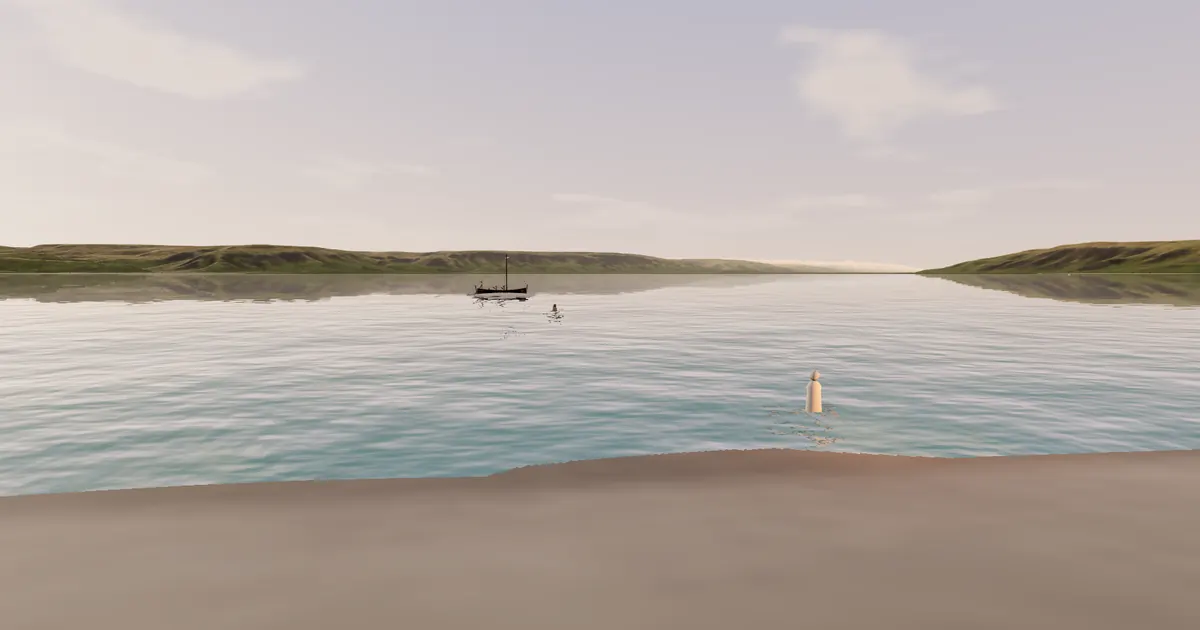
Jesus grew up in Nazareth, a small farming village in the hills of Lower Galilee. When his public ministry began he moved to Capernaum, a fishing town on the north-west shore of the Sea of Galilee, and Matthew calls it “his own city”. Most of his teaching and healing in the Gospels happens in that lakeside region: in synagogues, in houses, on hillsides and from boats. He went up to Jerusalem for the pilgrim feasts and taught in the courts of the Temple Mount, and it was in Jerusalem that he was crucified and rose again.
Explore the Places of Jesus map →
The four places at a glance
| Place | What it was | What happened there | How sure is the site? |
|---|---|---|---|
| Nazareth | A hill village of perhaps a few hundred people | Jesus grew up here and was rejected in its synagogue | Strongly supported: beneath the old centre of the modern city |
| Capernaum | A basalt fishing village on the north-west shore | His home base: synagogue teaching, Peter’s house, the paralysed man lowered through a roof | Strongly supported: Tell Hum |
| Sea of Galilee | A freshwater lake about 21 × 13 km, some 210 m below sea level | Fishermen called, a storm stilled, crowds fed, breakfast on the shore | Stated in the text |
| Temple Mount | Herod’s vast platform around the Temple | Presented as a baby, found at twelve, taught in the porches, drove out the money-changers | Strongly supported |
Nazareth: where Jesus grew up
Nazareth is never mentioned in the Old Testament, in Josephus or in the early rabbinic writings. The remains archaeologists have found there are terraces, wine presses, cisterns and simple houses: an agricultural village, and an obscure one. Nathanael’s reaction fits exactly:
Nathanael said to him, “Can any good thing come out of Nazareth?” Philip said to him, “Come and see.” (John 1:46)
Families lived in rooms of fieldstone around shared courtyards, and many houses opened at the back into caves in the soft limestone. Jesus worked as a tektōn, “the carpenter” (Mark 6:3), a word that covers a builder working in wood and often stone: roof beams, doors, ploughs and yokes.
Luke says Jesus went into the synagogue on the Sabbath, “as was his custom” (Luke 4:16). The congregation certainly met, but no first-century synagogue building has been found at Nazareth, so the modest hall in the 3D scene is modelled on synagogues excavated elsewhere in Galilee. After he read from Isaiah, the town turned on him and led him “to the brow of the hill that their city was built on, that they might throw him off the cliff” (Luke 4:29). Where that brow was is not known.
Walk through first-century Nazareth →
Capernaum: his own city
When Jesus began to preach, he left the hills for the lake:
Leaving Nazareth, he came and lived in Capernaum, which is by the sea, in the region of Zebulun and Naphtali, (Matthew 4:13)
Capernaum sat on a road near the border between Herod Antipas’s Galilee and his brother Philip’s territory, which helps explain a customs booth (Levi’s) and an officer (the centurion) in the Gospel stories. It was a village of perhaps 600 to 1,500 people, not the town of 10,000 older books describe.
Three finds from the excavations sharpen the Gospel scenes:
- The synagogue. The white limestone synagogue visitors see today is 300 to 400 years later than Jesus. Beneath it lie black basalt walls and a cobbled floor that the excavators dated to the first century and took to be the synagogue where “he entered into the synagogue and taught” (Mark 1:21). That identification is plausible but debated.
- Peter’s house. About 30 m south of the synagogue is an ordinary courtyard house whose main room was set apart for gatherings from an early date, then built over by a house-church and an octagonal church. Mark says Jesus went “immediately” from the synagogue to Simon’s house. It fits, but no inscription names Peter.
- The roofs. No roof tiles were found in the houses. Roofs were beams covered with reeds and packed earth, which is exactly what four friends could dig through:
When they could not come near to him for the crowd, they removed the roof where he was. When they had broken it up, they let down the mat that the paralytic was lying on. (Mark 2:4)
Walk the streets of Capernaum →
The Sea of Galilee: teaching on the shore and on the water
The Gospels call it the Sea of Galilee, the lake of Gennesaret and the Sea of Tiberias. It is a freshwater lake, fed and drained by the Jordan. Jesus called his first disciples from their boats here, “for they were fishermen” (Mark 1:16).
The lake lies deep in a basin, and cool air pouring down from the heights can raise high waves within minutes. Mark’s account of the storm reads like someone who had been in one:
He himself was in the stern, asleep on the cushion; and they woke him up and asked him, “Teacher, don’t you care that we are dying?” (Mark 4:38)
In 1986 a fishing boat from about Jesus’ time was found in the mud near Ginosar: 8.2 m long and 2.3 m wide, built mostly of cedar and oak, and much repaired. Nothing links it to any Gospel event, but it shows the kind of boat that could carry a dozen men and a sleeping teacher in the stern. The 3D lake scene sails that boat through six Gospel scenes, from the calling of the fishermen to the breakfast of John 21.
The Temple Mount: teaching in Jerusalem
Herod the Great doubled the Temple Mount with huge retaining walls, creating a paved court of about 14 hectares surrounded by colonnades. Anyone could enter the outer court. Pilgrims usually came up a broad stairway about 64 m wide on the south side, through the Hulda Gates.
At twelve his parents found him “in the temple, sitting in the middle of the teachers” (Luke 2:46). As an adult he walked in the eastern colonnade in winter:
It was winter, and Jesus was walking in the temple, in Solomon’s porch. (John 10:23)
He overturned the money-changers’ tables, most likely in the Royal Stoa along the south side, a basilica Josephus describes with 162 columns. He watched a widow give two small coins at the treasury. And when his disciples admired the enormous stones, he told them that not one would be left on another (Mark 13:2). The Romans burned the Temple in AD 70.
Climb the Temple Mount in Jesus’ day →
What we know and what is reconstructed
| Detail | Evidence level |
|---|---|
| Jesus grew up in Nazareth and moved to Capernaum “by the sea”; he taught in Solomon’s porch | Stated in the text |
| Capernaum is Tell Hum; Nazareth lies under the old modern city; Herod’s platform is today’s Temple Mount; the white Capernaum synagogue is late Roman | Strongly supported |
| The basalt foundations are the synagogue Jesus taught in; the house under the octagon was Peter’s; the money-changers worked in the Royal Stoa | Plausible |
| Capernaum’s population; the form of Nazareth’s synagogue; the site of the “brow of the hill” | Speculative |
| House layouts, the number of houses, times of day and light in the scenes | Artistic |
Frequently asked questions
Where did Jesus grow up? In Nazareth, a small village in Lower Galilee (Luke 2:39; 4:16).
Where did Jesus live during his ministry? In Capernaum on the Sea of Galilee, which Matthew calls “his own city” (Matthew 9:1).
Can you visit Peter’s house in Capernaum? You can visit the house venerated as Peter’s, now under a modern church. The tradition is early, but nothing on the site names its first owner.
Did Jesus teach in the Temple? Yes. The Gospels place his teaching in the Temple courts, including Solomon’s porch, especially during his last week.
Explore the map
The lab puts the towns, shores and hills of the Gospels on one map, each with its passages and the evidence for the site. Four open into 3D reconstructions.
Open the Places of Jesus map → · or go straight to Capernaum, Nazareth, Cana or Gethsemane on the map.
Related labs
- Ministry in Galilee on the Bible Time Map
- Ministry in Galilee on the Bible Story Map
- Jesus at the Feast of Tabernacles: the feast of John 7, in the same Temple courts.
Found this helpful? Pass it on.