 X-Dreamers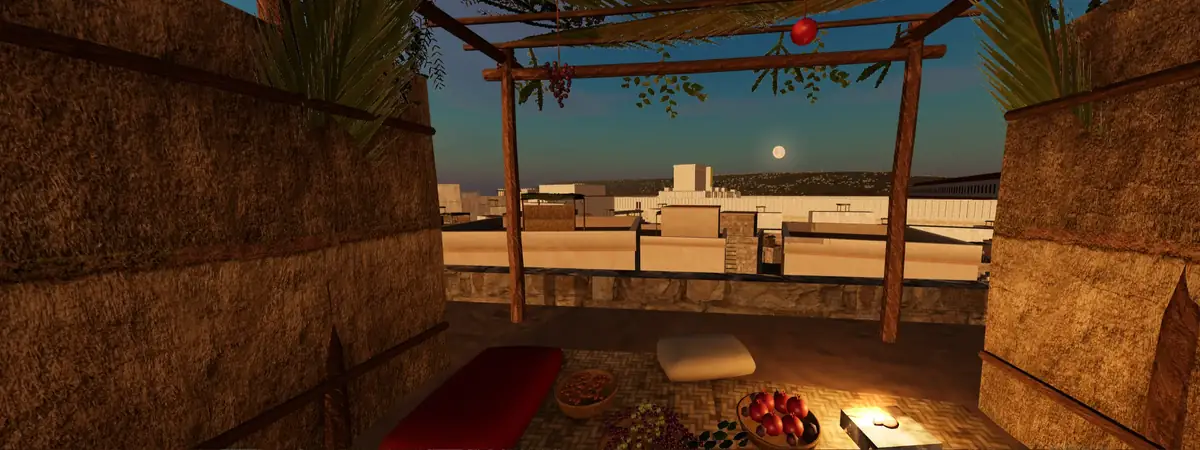
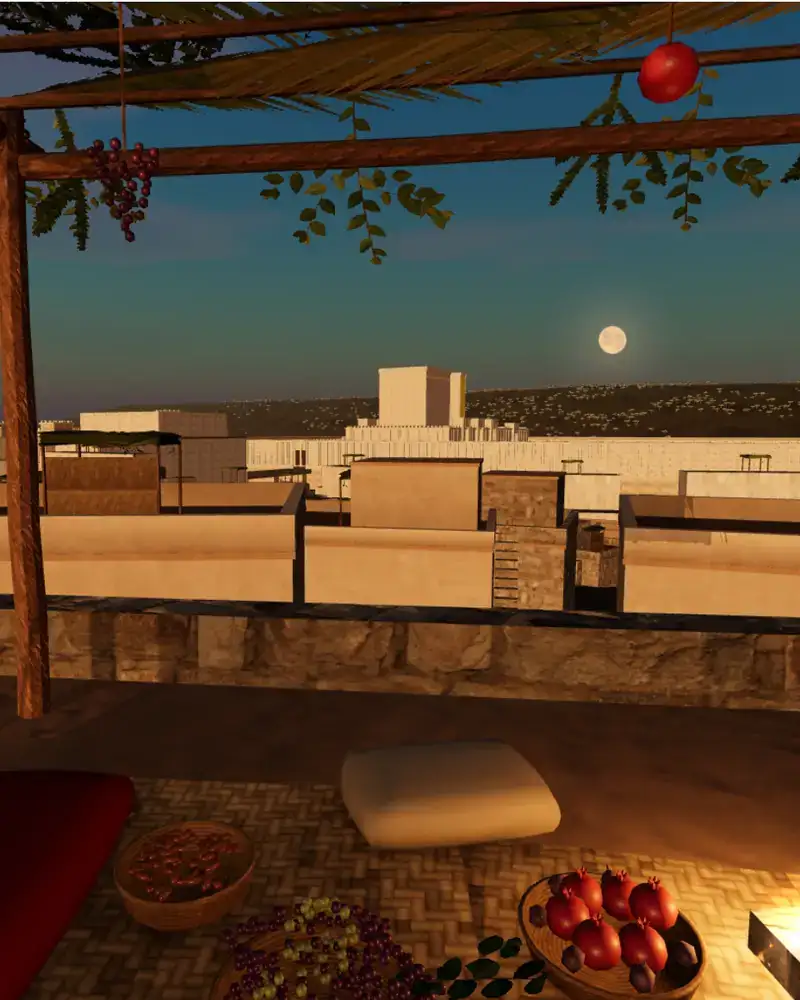
Booth (sukkah)
Also: sukkah (Hebrew) · tabernacle
A temporary shelter of branches in which Israel lived for the seven days of the feast.
Leviticus commands every native-born Israelite to live in booths for seven days, so that each generation would know that the LORD made Israel live in booths when he brought them out of Egypt. Nehemiah records booths made of olive, wild olive, myrtle, palm and other leafy branches, built on roofs and in courtyards.
- Palm fronds
- Olive and wild olive branches
- Myrtle
- Leafy branches
How sure are we?
- Textually statedBiblical text
Israelites lived in booths for the seven days of the feast, to remember the Exodus.
Stated directly in the Law.
Leviticus 23:42–43
- Textually statedBiblical text
Booths were built from olive, wild olive, myrtle, palm and thick-leaved branches.
Nehemiah 8:15 lists these branches for making booths in Ezra's time. The Law itself gives no building instructions.
Nehemiah 8:15
- SpeculativeLater Jewish tradition
The roof is of cut branches, gives more shade than sun, and leaves gaps where the sky (and at night the stars) can be seen.
These are rules of later Jewish law: the Mishnah (Sukkah 1:1, about 200 AD) requires more shade than sun; the Talmud (Sukkah 22b) discusses roofs so dense that the stars cannot be seen, and later codes prefer that they can. The Bible gives no such rules, and whether earlier booths followed them is unknown.
OBJECT:SUKKAH · Connected to: EVENT:FEAST_OF_TABERNACLES, PLACE:CAMP_OF_ISRAEL