 X-Dreamers
What Was the Feast of Tabernacles, and Why Did Jesus Go?
Seven days in booths of branches after the autumn harvest: what Leviticus 23 and Nehemiah 8 say about Sukkot, and what Jesus cried out on its last great day.
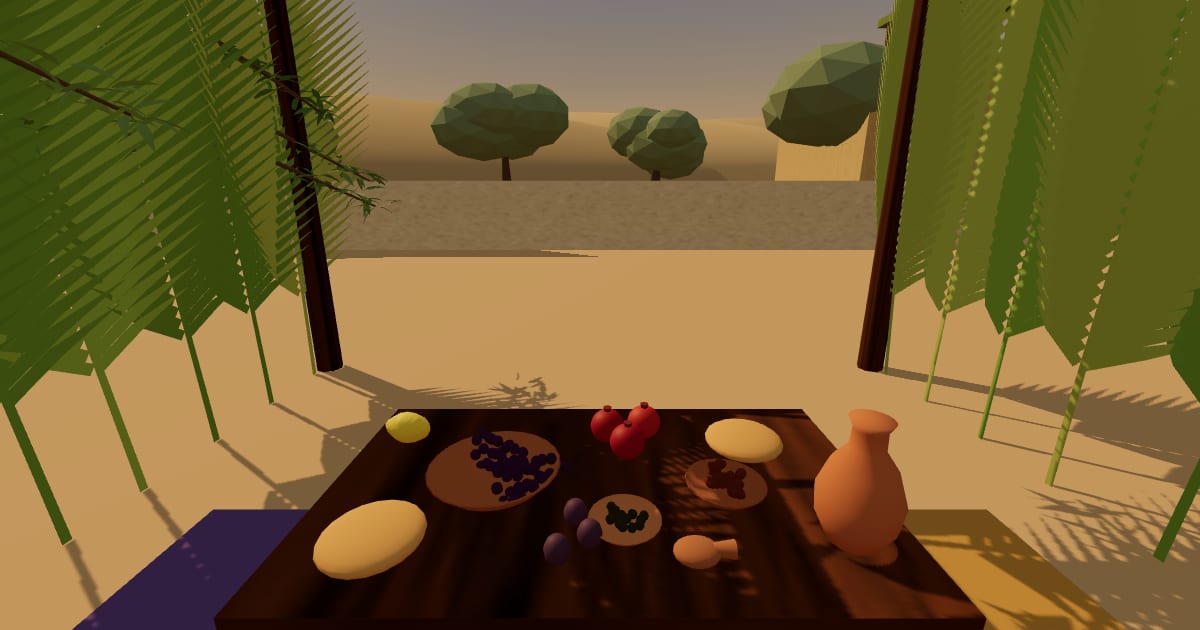
The Feast of Tabernacles, also called the Feast of Booths or Sukkot, was Israel’s autumn festival. It began on the fifteenth day of the seventh month, after the grain and grapes were gathered in, and lasted seven days, with a solemn assembly on the eighth. For that week Israel lived in shelters of branches, remembering how God brought them out of Egypt. Jesus went up to Jerusalem for it, as faithful Jews did, and on its last great day he stood up and invited the thirsty to come to him and drink.
The feast at a glance
| When | From the 15th day of the 7th month, seven days, near the full moon |
| Eighth day | A solemn assembly (Leviticus 23:36) |
| The four kinds | Fruit of majestic trees, palm branches, boughs of thick trees, willows of the brook |
| Bulls offered | 13 on the first day, one fewer each day to 7: seventy in all, plus one on the eighth |
| Whole feast | 71 bulls, 15 rams, 105 lambs, 8 goats (Numbers 29) |
What Leviticus 23 commands
Leviticus sets the date in one line: “On the fifteenth day of this seventh month is the feast of booths for seven days to the LORD” (Leviticus 23:34). Deuteronomy puts it in farming terms: it came “after you have gathered in from your threshing floor and from your wine press” (Deuteronomy 16:13). It was harvest home, and everyone was to rejoice, servants, foreigners, orphans and widows included. Then comes the unusual part:
You shall dwell in temporary shelters for seven days. All who are native-born in Israel shall dwell in temporary shelters, that your generations may know that I made the children of Israel to dwell in temporary shelters when I brought them out of the land of Egypt. I am the LORD your God.’” (Leviticus 23:42–43)
A farmer with a full barn spent a week in a hut. Thanksgiving and memory went together: the harvest was a gift to people who had once owned only what they could carry.
The lab opens inside such a booth, on a flat roof in Jerusalem, sitting on mats among baskets of grapes, pomegranates, figs and dates, with the Temple across the city. Move from Afternoon to Sunset to Night and watch the full moon rise in the east, since the feast began on the fifteenth of a lunar month; press Look up to see the sky through the branches. Switch the setting to Wilderness and the same booth stands among the tents of Israel, with the pillar of cloud or fire far ahead. The captions keep the layers apart: Nehemiah names the branches but never describes a roof, and stars through the gaps come from a later rabbinic rule.
The same chapter names what Israel was to hold:
You shall take on the first day the fruit of majestic trees, branches of palm trees, and boughs of thick trees, and willows of the brook; and you shall rejoice before the LORD your God seven days. (Leviticus 23:40)
In the lab’s Four species view you can turn each in 3D. Choose Goodly fruit, Palm branch, Thick-leaved bough or Willow, and the card beside it separates the verse from later Jewish tradition, which identified the fruit as the citron (etrog) and the thick bough as myrtle. Both are plausible; Leviticus names neither.
A week of offerings
Numbers 29 lists the burnt offerings day by day: thirteen bulls on the first day, one fewer each day down to seven, with two rams, fourteen lambs and a goat for a sin offering every day. The Offerings view steps through the eight days with Previous day and Next day, and totals them, flour and wine included, under All eight days. Each animal is a small token; no slaughter is shown. The old idea that the seventy bulls stand for the seventy nations is there too, marked as speculative tradition.
Nehemiah 8: the feast rediscovered
The most vivid account of the feast comes from after the exile, when Jerusalem’s walls had just been rebuilt. In the seventh month the people gathered “into the wide place that was in front of the water gate” (Nehemiah 8:1), where Ezra read the Law aloud and the Levites explained it. The people wept, and were told to stop: “Don’t be grieved, for the joy of the LORD is your strength” (Nehemiah 8:10).
Then they found the command about booths, and went out to the hills for olive, myrtle and palm branches:
So the people went out and brought them, and made themselves temporary shelters, everyone on the roof of his house, in their courts, in the courts of God’s house, in the wide place of the water gate, and in the wide place of Ephraim’s gate. (Nehemiah 8:16)
Nothing like it had been done “since the days of Joshua the son of Nun” (Nehemiah 8:17). The Nehemiah 8 view shows a stylised Jerusalem with booths on the roofs and in the squares; turn on Labels to find the Water Gate, the Gate of Ephraim and Ezra reading the Law.
Why Jesus went up
John 7 opens with the feast approaching and Jesus in Galilee. His unbelieving brothers pushed him to go and show himself. He went up later, quietly, and by mid-week was teaching in the Temple. He went because it was a feast of the LORD, the last and most joyful of the three pilgrim feasts. On its final day he spoke:
Now on the last and greatest day of the feast, Jesus stood and cried out, “If anyone is thirsty, let him come to me and drink! He who believes in me, as the Scripture has said, from within him will flow rivers of living water.” (John 7:37–38)
John explains at once: “But he said this about the Spirit, which those believing in him were to receive” (John 7:39).
Why water? The Law commands no water ceremony, but the Mishnah, written down around AD 200, describes one: each morning a priest filled a golden flask at the Pool of Siloam and poured it out at the altar. It also describes great golden lampstands lit at night in the Temple’s Court of Women. If those customs were kept in Jesus’ day, his cry about living water, and soon after “I am the light of the world” (John 8:12), landed right in the middle of them. That is a plausible reading, not something John says.
The lab’s Last great day view follows the water-drawing in four stops, from the Pool of Siloam up to the altar, then shows the Court of Women at night under the great lamps, with the city lit below. Every ceremony detail is marked as later tradition. Its Scripture panel adds Isaiah 12:3 and Zechariah’s vision of the nations going up “to keep the feast of booths” (Zechariah 14:16).
What we know and what is reconstructed
| Point | Evidence level |
|---|---|
| The dates; living in booths; the four kinds; the offerings of Numbers 29; Nehemiah’s booths on roofs and in squares; Jesus’ words on the last great day | Stated in the text |
| The first night fell near the full moon; the flour and wine amounts for each animal | Strongly supported |
| The citron and the myrtle; water-drawing and great lamps in the late Second Temple; the “last great day” as the seventh day; Jesus’ words echoing those customs | Plausible |
| Seeing the stars through the roof (Talmud); booths among the tents in the wilderness camp; seventy bulls for seventy nations; lampstands fifty cubits high | Speculative |
| The look of the roof; the layout of Nehemiah’s Jerusalem | Artistic |
Frequently asked questions
Is the Feast of Tabernacles the same as the Tabernacle? No. The Tabernacle was the portable sanctuary; the feast was an annual festival spent in booths. Both remember the wilderness years.
Did Jesus keep the Feast of Tabernacles? Yes. John 7 has him go up to Jerusalem for it and teach in the Temple during the feast.
What was the “last and greatest day” in John 7? Probably the seventh day, which the lab rates plausible; some think John means the eighth-day assembly.
Keep the feast in 3D
The Camp view, with Show booths, also sets a few branch shelters among the wilderness tents, marked as an illustration. For the tent sanctuary itself, see Inside the Tabernacle.
Open the Feast of Tabernacles lab →, or go straight to the offerings, Nehemiah 8 or the last great day.
Related labs
- The Tabernacle: walk from the gate to the veil as a priest.
- The Bible Story Map: John 7 and Nehemiah’s booths within the whole story.
- The Temple Mount in Jesus’ time, and our article Where did Jesus live and teach?
Found this helpful? Pass it on.