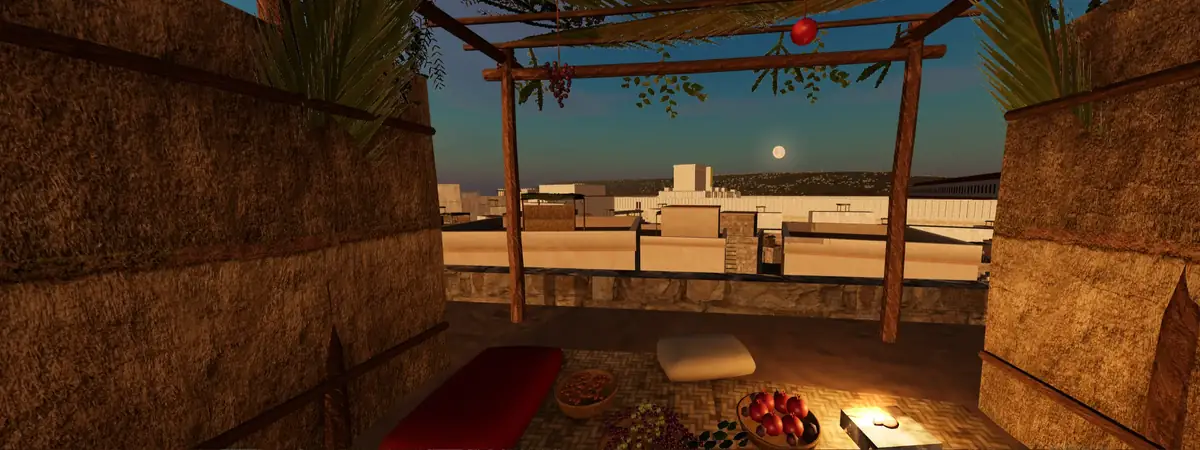
Plausible✦Later Jewish traditionWater from Siloam was poured on the altar each morning of the feast in the late Second Temple period.
Described in the Mishnah (Sukkah 4:9–10), written about 130 years after the Temple fell; a story of a priest who poured the water on his feet (compare Josephus, Antiquities 13.372) points to an older custom. The Bible does not command it.
Plausible✦Later Jewish traditionA priest filled a golden flagon at Siloam; at the Water Gate the shofar sounded a long blast, a trill and a long blast; at the altar he poured the water into a silver bowl at its south-west corner.
Mishnah Sukkah 4:9. The same chapter (4:5) describes willow branches set up round the altar with their tops bending over it. Written down about AD 200 from the memory of the Second Temple; plausible for Jesus’ day, not described in the Gospels.
Plausible✦Later Jewish traditionGreat lampstands lit the Court of Women on the nights of the feast.
Described in the Mishnah (Sukkah 5:2–4) as Temple practice; not mentioned in the Bible or Josephus.
Speculative✦Later Jewish traditionThe lampstands were fifty cubits high.
Given in the Babylonian Talmud (Sukkah 52b), centuries after the Temple. The scene below scales them down.
Plausible✦Later Jewish traditionMen of piety danced with torches, the Levites played on the fifteen steps, and there was no courtyard in Jerusalem that was not lit by the light.
Mishnah Sukkah 5:3–4, remembering the nights of the water-drawing celebration in the Court of Women. The numbers, the crowd and the city lights in this view are artistic.
 X-Dreamers