Skip to content
X-Dreamers

Evidence · Exodus 28 and 39 · Leviticus 8 and 16

The High Priest's Garments

For glory and for beauty

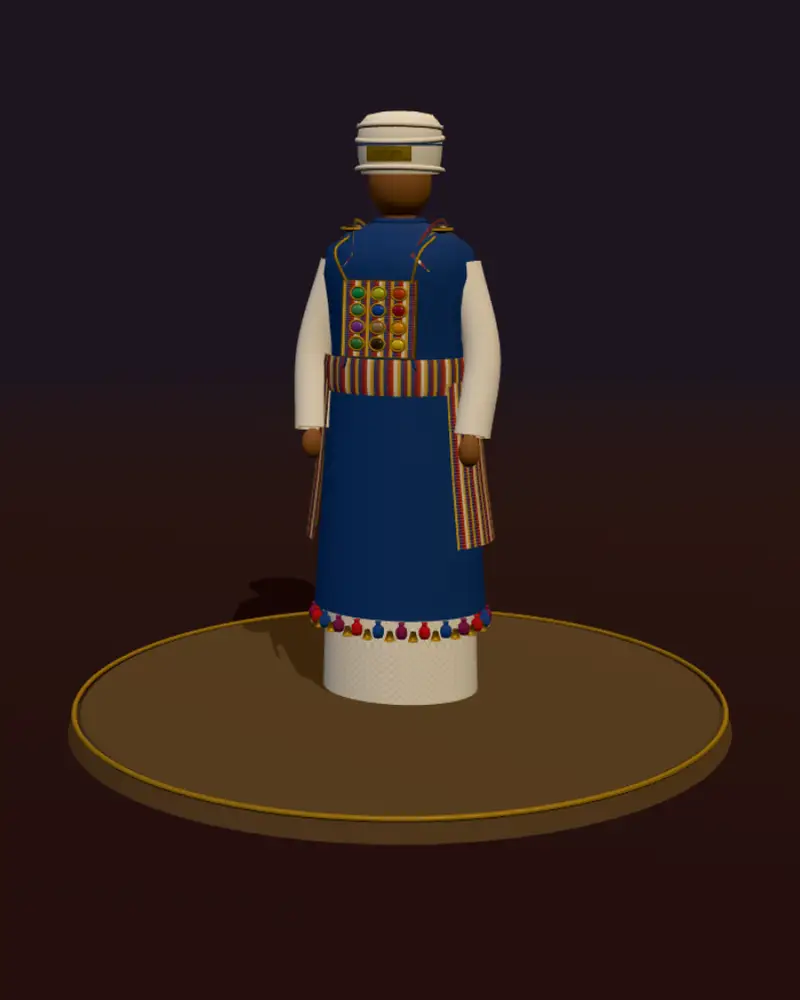
What did the high priest wear? Dress him in immersive 3D, layer by layer in the order of Leviticus 8, from the linen undergarments to the gold plate, and compare the twelve breastplate stones across translations.

A stylised 3D figure of the high priest in the blue robe, ephod, breastpiece and white turban

The Priests' Garments

Dress the high priest layer by layer, then take the garments apart.

Explore in 3D · drag to turn, pinch to zoom

3D · about 320 KB

The Day of Atonement

Loading the priests' garments…

Dress the high priest layer by layer, in the order of Leviticus 8: 12 stops.

Three sets of garments

The Day of Atonement

Once a year, to go behind the veil, the high priest laid aside the gold and the colours. He bathed and put on four plain linen garments, “holy garments”, and after the atonement he took them off and left them in the tent (Leviticus 16:4, 23).

4He shall put on the holy linen coat, and he shall have the linen breeches upon his flesh, and shall be girded with a linen girdle, and with the linen mitre shall he be attired: these are holy garments; therefore shall he wash his flesh in water, and so put them on.

Leviticus 16:4

23And Aaron shall come into the tabernacle of the congregation, and shall put off the linen garments, which he put on when he went into the holy place, and shall leave them there: 24And he shall wash his flesh with water in the holy place, and put on his garments, and come forth, and offer his burnt offering, and the burnt offering of the people, and make an atonement for himself, and for the people.

Leviticus 16:23–24

32And the priest, whom he shall anoint, and whom he shall consecrate to minister in the priest’s office in his father’s stead, shall make the atonement, and shall put on the linen clothes, even the holy garments:

Leviticus 16:32

The garments

Tap a garment on the figure, or choose it here.

The twelve stones, compared

Translations differ wildly, because most of these Hebrew words occur only in lists of gems. Here are the Hebrew, the oldest Greek translation, the KJV and the 和合本 side by side, with what each stone may have been.

Textually statedSpeculativeThe Hebrew names are in the text; which minerals they were is mostly unknown.
  1. אֹדֶם odem

    1 · 1

    σάρδιον sardion · sardius · 紅寶石

    Carnelian or sard (red chalcedony), common in seals of the period; red jasper. Ruby (corundum) was hardly worked or engraved in the region then.

    Tribe (model): Reuben

  2. פִּטְדָה pitdah

    1 · 2

    τοπάζιον topazion · topaz · 紅璧璽

    Peridot (green-yellow olivine), which Greek writers called topazos after a Red Sea island; yellow serpentine or chrysolite. Modern topaz is a different mineral.

    Tribe (model): Simeon

  3. בָּרֶקֶת bareqet

    1 · 3

    σμάραγδος smaragdos · carbuncle · 紅玉

    A green stone (the Greek smaragdos covered several): emerald, green feldspar or malachite; others suggest rock crystal.

    Tribe (model): Levi

  4. נֹפֶךְ nofekh

    2 · 1

    ἄνθραξ anthrax · emerald · 綠寶石

    The Greek “coal” suggests a glowing red stone such as garnet; others propose turquoise, mined in Sinai, or malachite.

    Tribe (model): Judah

  5. סַפִּיר sappir

    2 · 2

    σάπφειρος sappheiros · sapphire · 藍寶石

    Lapis lazuli, the deep blue stone with golden flecks that Pliny calls sapphirus; blue sapphire (corundum) is unlikely so early.

    Tribe (model): Dan

  6. יָהֲלֹם yahalom

    2 · 3

    ἴασπις iaspis · diamond · 金鋼石

    Jasper (the Greek), onyx or rock crystal. Diamond, as in the KJV and the 和合本, could not yet be cut or engraved.

    Tribe (model): Naphtali

  7. לֶשֶׁם leshem

    3 · 1

    λιγύριον ligyrion · ligure · 紫瑪瑙

    Amber (the Greek ligyrion may be amber), jacinth (zircon), or an orange agate.

    Tribe (model): Gad

  8. שְׁבוֹ shevo

    3 · 2

    ἀχάτης achatēs · agate · 白瑪瑙

    Agate, banded chalcedony: the identification most translations agree on.

    Tribe (model): Asher

  9. אַחְלָמָה aḥlamah

    3 · 3

    ἀμέθυστος amethystos · amethyst · 紫晶

    Amethyst (purple quartz), following the Greek; others suggest red or brown jasper.

    Tribe (model): Issachar

  10. תַּרְשִׁישׁ tarshish

    4 · 1

    χρυσόλιθος chrysolithos · beryl · 水蒼玉

    The Greek “gold stone”: yellow jasper, golden topaz or citrine; others propose beryl or amber.

    Tribe (model): Zebulun

  11. שֹׁהַם shoham

    4 · 2

    βηρύλλιον bēryllion · onyx · 紅瑪瑙

    Onyx or sardonyx (Josephus calls the shoulder stones sardonyx), carnelian, or malachite. The Greek gives a different name here than for the shoulder stones (smaragdos, Exodus 28:9).

    Tribe (model): Joseph

  12. יָשְׁפֵה yashfeh

    4 · 3

    ὀνύχιον onychion · jasper · 碧玉

    Jasper, often green in antiquity; the Greek, oddly, has “onyx” here and “jasper” for the sixth stone.

    Tribe (model): Benjamin

The text does not say which name was on which stone; the model follows birth order.

Blue, purple and scarlet

Three dyed yarns, linen and gold run through the garments. The Hebrew names are clear; how the colours looked is a matter of ancient dyes.

  • Blue (tekhelet)

    Greek · KJV · 和合本: ὑάκινθος hyakinthos · blue · 藍色

    A dye from sea snails: Hexaplex (Murex) trunculus, whose dye is purple-violet, or turns sky blue when the vat is exposed to sunlight. The Talmud names a creature, the ḥilazon; the dye went out of use in late antiquity. In the 1880s the Radzyner Rebbe proposed a cuttlefish dye (later shown to owe its blue to a chemical process); Isaac Herzog's 1913 study favoured the murex; in the 1980s Otto Elsner showed the sunlight effect; and murex tekhelet has been made again since the 1990s. Many accept the murex; some doubt it.

    PlausibleA murex dye is well supported; whether tekhelet was sky blue or blue-violet is still debated. Switch the shade below to compare.
  • Purple (argaman)

    Greek · KJV · 和合本: πορφύρα porphyra · purple · 紫色

    The red-purple of the murex snails (Bolinus brandaris and Hexaplex trunculus), the costly “royal purple” of the Phoenician coast. Wool dyed with true murex purple was found at Timna, from about 1000 BC.

    Strongly supportedA murex purple is well supported by ancient texts and dyed finds; its exact shade varied.
  • Scarlet (tola'at shani)

    Greek · KJV · 和合本: κόκκινον kokkinon · scarlet · 朱紅色

    Literally “worm of scarlet”: the kermes insect that lives on oak trees, dried and crushed for a bright red dye. The Greek kokkos (“berry, grain”) names the same insect.

    Strongly supportedA kermes red is widely agreed.
  • Fine linen (shesh)

    Greek · KJV · 和合本: βύσσος byssos · fine linen · 細麻

    Fine linen from flax, a word borrowed from Egyptian, where the finest linen was woven. “Twined” linen is linen of several plied threads.

    Strongly supportedLinen is clear; its whiteness depended on bleaching.
  • Gold threads

    Greek · KJV · 和合本: χρυσίον chrysion · gold · 金線

    “They did beat the gold into thin plates, and cut it into wires, to work it in the blue, and in the purple, and in the scarlet, and in the fine linen” (Exodus 39:3).

    Textually statedHow the gold was made into thread is stated.

Was tekhelet sky blue or blue-violet?

Shown side by side, without a verdict.

Sky blue: the murex dye exposed to sunlight in the vat, as the dye is made today; the Talmud likens tekhelet to the sea and the sky.

Who holds it: The modern murex tekhelet makers and many rabbinic readers (Babylonian Talmud, Menachot 42b–44a (tekhelet and the ḥilazon); O. Elsner's experiments on the light-sensitivity of murex dye (Shenkar College, 1980s), as reported in Herzog ed. Spanier (1987))

Blue-violet or hyacinth: the Greek hyakinthos and the Latin hyacinthinus are dark violet-blue, the colour the same dye gives without sunlight.

Who holds it: Many scholars of ancient dyes, from the Greek and Latin terms (I. Herzog, The Royal Purple and the Biblical Blue: Argaman and Tekhelet (1913 thesis; ed. E. Spanier, 1987); The Septuagint (Greek Old Testament), Exodus 28; 1 Kingdoms (1 Samuel) 14:41)

Tekhelet in the model

What were the Urim and the Thummim?

What were the Urim and the Thummim?

Shown side by side, without a verdict.

Two lots, drawn or cast to give a yes or a no. The Greek of 1 Samuel 14:41 has a longer text in which Saul asks: if the guilt is in me or Jonathan, “give Urim”; if in the people, “give Thummim”.

Who holds it: Most modern scholars, from the Greek text of 1 Samuel 14 (The Septuagint (Greek Old Testament), Exodus 28; 1 Kingdoms (1 Samuel) 14:41; C. Van Dam, The Urim and Thummim: A Means of Revelation in Ancient Israel (1997))

The stones of the breastpiece themselves, which shone, or whose letters lit up, to give the answer.

Who holds it: Josephus (the stones shone before a victory) and the Babylonian Talmud (Yoma 73b) (Josephus, Jewish Antiquities 3.151–178 (3.7.1–7), and Jewish War 5.227–236; Babylonian Talmud, Yoma 6a, 12b and 71b–73b (the garments; the Urim and Thummim))

Objects kept inside the doubled breastpiece whose form and use are simply not known; the text only says they were put “in” it and were on Aaron's heart.

Who holds it: Many commentators, who leave the question open (C. Van Dam, The Urim and Thummim: A Means of Revelation in Ancient Israel (1997))

The ephod's shape

What shape was the ephod?

Shown side by side, without a verdict.

A wrap-around apron or kilt from the waist down, open in front, with the two shoulder straps rising behind and over the shoulders.

Who holds it: Rashi (eleventh century) and many later drawings (Rashi (1040–1105), commentary on Exodus 28)

A short vest covering the chest and back, joined at the shoulders and tied at the waist by the band, reaching down to the hips.

Who holds it: Josephus describes a short garment with sleeves, “like a tunic”; many modern illustrations (Josephus, Jewish Antiquities 3.151–178 (3.7.1–7), and Jewish War 5.227–236)

The word was also used for a simpler linen ephod worn by priests and by Samuel and David (1 Samuel 2:18; 2 Samuel 6:14), and for an object of worship (Judges 8:27), so its form may have varied.

Who holds it: Lexicons and commentators (L. Koehler and W. Baumgartner, The Hebrew and Aramaic Lexicon of the Old Testament (HALOT), entries for the garments and stones)

Ephod in the model

More open questions

Which name was on which stone?

Shown side by side, without a verdict.

In the order of their birth, as Exodus 28:10 says of the shoulder stones: Reuben on the first stone, Benjamin on the last. The model shows this order.

Who holds it: The Aramaic Targum Pseudo-Jonathan and many modern reconstructions; Josephus gives birth order for the shoulder stones (Josephus, Jewish Antiquities 3.151–178 (3.7.1–7), and Jewish War 5.227–236)

In the order of the camp around the Tabernacle (Numbers 2), led by Judah.

Who holds it: Proposed by some interpreters, since Numbers 2 is the order Israel kept round the sanctuary

The text does not say: any arrangement of the names on the stones is a reconstruction.

Who holds it: The text of Exodus 28:21 and 39:14

What was the “checkered” weave of the tunic?

Shown side by side, without a verdict.

A checkered or diamond pattern woven into the white linen itself, texture rather than colour.

Who holds it: Most modern translations (“fitted”, “checkered”) and reconstructions; the model shows this (L. Koehler and W. Baumgartner, The Hebrew and Aramaic Lexicon of the Old Testament (HALOT), entries for the garments and stones)

Woven with recesses like the settings of the stones (the same root as the gold “settings”), a raised or cellular pattern.

Who holds it: Rashi and other medieval commentators (Rashi (1040–1105), commentary on Exodus 28)

A pattern in colours, as the 和合本's “雜色” (many-coloured) reads it.

Who holds it: The 1919 Chinese Union Version and some older translations

How many bells and pomegranates?

Shown side by side, without a verdict.

The text does not say; the model shows 24 of each, an artistic choice.

Who holds it: The text of Exodus 28 and 39

Later rabbinic tradition counts 72 bells (or 36) round the hem.

Who holds it: The Babylonian Talmud, Zevachim 88b (Babylonian Talmud, Zevachim 88b (the bells))

Were the ordinary priests' sashes coloured too?

Shown side by side, without a verdict.

Yes: Exodus 39:29 describes “a girdle” of blue, purple and scarlet right after the tunics of Aaron and his sons, so all the sashes were alike. The model shows this.

Who holds it: Josephus and one view in the Talmud (Yoma 6a) (Josephus, Jewish Antiquities 3.151–178 (3.7.1–7), and Jewish War 5.227–236; Babylonian Talmud, Yoma 6a, 12b and 71b–73b (the garments; the Urim and Thummim))

No: the ordinary priests wore plain linen sashes; only the high priest's was embroidered.

Who holds it: Another view in the Talmud and some commentators (Babylonian Talmud, Yoma 6a, 12b and 71b–73b (the garments; the Urim and Thummim))

How were the names divided between the shoulder stones?

Shown side by side, without a verdict.

Six on each “according to their birth”: Reuben to Naphtali on one, Gad to Benjamin on the other.

Who holds it: The plain reading of Exodus 28:10; Josephus puts the six eldest on the right shoulder (Josephus, Jewish Antiquities 3.151–178 (3.7.1–7), and Jewish War 5.227–236)

Arranged so that each stone carried the same number of letters (25 each, with Benjamin spelled in full).

Who holds it: The Babylonian Talmud (Sotah 36a) (Babylonian Talmud, Sotah 36a (the names on the shoulder stones))

How sure is each part?

  • Textually stated

    Textually stated: Said directly in the biblical text.

  • Strongly supported

    Strongly supported: A close inference from the text or firm evidence.

  • Plausible

    Plausible: A reasonable reconstruction among live options.

  • Speculative

    Speculative: An informed guess; the text is silent.

  • Artistic

    Artistic: A stylistic choice made for the reconstruction.

Sources

  1. King James Version (1769): Exodus 28–29 and 39; Leviticus 8 and 16
  2. Chinese Union Version (和合本, 1919), via Wikisource
  3. Open Scriptures Hebrew Bible (Westminster Leningrad Codex with morphology), in the Hebrew Word Explorer
  4. The Septuagint (Greek Old Testament), Exodus 28; 1 Kingdoms (1 Samuel) 14:41
  5. Josephus, Jewish Antiquities 3.151–178 (3.7.1–7), and Jewish War 5.227–236
  6. Philo of Alexandria, On the Life of Moses 2.109–135
  7. Babylonian Talmud, Yoma 6a, 12b and 71b–73b (the garments; the Urim and Thummim)
  8. Babylonian Talmud, Zevachim 88b (the bells)
  9. Babylonian Talmud, Sotah 36a (the names on the shoulder stones)
  10. Babylonian Talmud, Menachot 42b–44a (tekhelet and the ḥilazon)
  11. The Aramaic Targums to Exodus 28 and later Jewish commentary on the order of the tribes
  12. Rashi (1040–1105), commentary on Exodus 28
  13. J. A. Harrell, J. K. Hoffmeier and K. F. Williams, “Hebrew Gemstones in the Old Testament: A Lexical, Geological, and Archaeological Analysis”, Bulletin for Biblical Research 27 (2017)
  14. L. Koehler and W. Baumgartner, The Hebrew and Aramaic Lexicon of the Old Testament (HALOT), entries for the garments and stones
  15. C. Van Dam, The Urim and Thummim: A Means of Revelation in Ancient Israel (1997)
  16. Pliny the Elder, Natural History, book 37 (precious stones)
  17. I. Herzog, The Royal Purple and the Biblical Blue: Argaman and Tekhelet (1913 thesis; ed. E. Spanier, 1987)
  18. O. Elsner's experiments on the light-sensitivity of murex dye (Shenkar College, 1980s), as reported in Herzog ed. Spanier (1987)
  19. N. Sukenik and others, “Early evidence of royal purple dyed textile from Timna Valley (Israel)”, PLOS ONE 16 (2021)

Use this in class

12 stops · about 30 minutes

Teach mode puts large captions on the projector, follows a presentation clicker and keeps presenter notes on your own screen.

How to teach with the labs →

A reconstruction, with its evidence. The figure is stylised on purpose and has no face: it shows the garments, not a person. The text gives the materials, the colours and the order of dressing; it does not give the cut of most garments, the identity of most stones or the form of the Urim and Thummim. Every garment says how sure we can be, and where scholars differ the views are set side by side.

Scripture quotations are from the King James Version (1769). Walk in as a priest →

What did the high priest wear, and in what order was he dressed?

Exodus 28 and 39 describe the “holy garments for Aaron … for glory and for beauty”. Under them every priest wore linen undergarments, a long linen tunic, a sash and a headband. Over these the high priest wore a robe all of blue with pomegranates and golden bells round its hem; the ephod, woven of gold, blue, purple, scarlet and fine linen, with an onyx stone on each shoulder carrying six names of the tribes; the breastpiece, a span square with twelve stones in four rows; and a linen turban with a plate of pure gold engraved “holy to Yahweh”. Leviticus 8 gives the order in which Moses dressed Aaron.

Much is not said: the cut of the ephod, which minerals the stones were, which name was on which stone, and what the Urim and Thummim were. This lab dresses a stylised figure layer by layer in the order of Leviticus 8, lets you take the garments apart, and sets the evidence side by side: the Hebrew names with the oldest Greek translation, the KJV and the Chinese Union Version, the ancient dyes behind the colours, and the competing reconstructions, without a verdict.

The priestly garments at a glance

The priestly garments at a glance
The high priest's garmentsBreastpiece, ephod, robe, checkered tunic, turban, sash (Exodus 28:4), with linen undergarments and the gold plate
Order of dressingWashed, then tunic, sash, robe, ephod and band, breastpiece with the Urim and Thummim, turban, gold plate (Leviticus 8:6–9)
ColoursBlue (tekhelet), purple (argaman), scarlet (tola'at shani), fine linen and gold thread (Exodus 28:5; 39:3)
The breastpieceA span square, doubled, twelve engraved stones in four rows (Exodus 28:15–21)
The gold plateEngraved qodesh la-YHWH, “holy to Yahweh”, tied to the turban with a blue cord (Exodus 28:36–37)
Ordinary priestsLinen undergarments, tunic, sash and headband (Exodus 28:40–42; Leviticus 8:13)
Day of AtonementPlain linen tunic, undergarments, sash and turban (Leviticus 16:4)

Key verses 6

2And thou shalt make holy garments for Aaron thy brother for glory and for beauty. 3And thou shalt speak unto all that are wise hearted, whom I have filled with the spirit of wisdom, that they may make Aaron’s garments to consecrate him, that he may minister unto me in the priest’s office. 4And these are the garments which they shall make; a breastplate, and an ephod, and a robe, and a broidered coat, a mitre, and a girdle: and they shall make holy garments for Aaron thy brother, and his sons, that he may minister unto me in the priest’s office.

Exodus 28:2–4

7And he put upon him the coat, and girded him with the girdle, and clothed him with the robe, and put the ephod upon him, and he girded him with the curious girdle of the ephod, and bound it unto him therewith. 8And he put the breastplate upon him: also he put in the breastplate the Urim and the Thummim. 9And he put the mitre upon his head; also upon the mitre, even upon his forefront, did he put the golden plate, the holy crown; as the LORD commanded Moses.

Leviticus 8:7–9

17And thou shalt set in it settings of stones, even four rows of stones: the first row shall be a sardius, a topaz, and a carbuncle: this shall be the first row. 18And the second row shall be an emerald, a sapphire, and a diamond. 19And the third row a ligure, an agate, and an amethyst. 20And the fourth row a beryl, and an onyx, and a jasper: they shall be set in gold in their inclosings.

Exodus 28:17–20

30And thou shalt put in the breastplate of judgment the Urim and the Thummim; and they shall be upon Aaron’s heart, when he goeth in before the LORD: and Aaron shall bear the judgment of the children of Israel upon his heart before the LORD continually.

Exodus 28:30

36And thou shalt make a plate of pure gold, and grave upon it, like the engravings of a signet, HOLINESS TO THE LORD.

Exodus 28:36

4He shall put on the holy linen coat, and he shall have the linen breeches upon his flesh, and shall be girded with a linen girdle, and with the linen mitre shall he be attired: these are holy garments; therefore shall he wash his flesh in water, and so put them on.

Leviticus 16:4

Scripture quotations: King James Version (1769) (KJV).

What the Bible says, what our model adds to it, where good readers disagree, and where the old copies and the translations differ. We set the views side by side and do not pick a winner.

  • Textually stated9
  • Strongly supported3
  • Plausible7
  • Speculative5

A few of the model's choices

  • Speculative

    The materials, the straps, the band and the stones are stated; the shape is not. Two reconstructions are offered: change them under “The ephod's shape”.

  • Plausible

    The square, the size, the four rows and the fastenings are stated; which stone is which mineral, and which name is on which stone, are not known.

  • Speculative

    Nothing is known of their form. The model draws no object: only a dashed outline of the doubled breastpiece they were put in.

Show all 32
What the text says9

Stated in Scripture. Quoted from the King James Version (KJV) and the 1919 Chinese Union Version (和合本).

  • The high priest's garments: a breastpiece, an ephod, a robe, a tunic, a turban and a sash, made for Aaron and his sons.

    Textually stated

    4And these are the garments which they shall make; a breastplate, and an ephod, and a robe, and a broidered coat, a mitre, and a girdle: and they shall make holy garments for Aaron thy brother, and his sons, that he may minister unto me in the priest’s office.

    Exodus 28:4 · KJV
  • The ephod was made of gold, blue, purple, scarlet and fine twined linen.

    Textually stated

    6And they shall make the ephod of gold, of blue, and of purple, of scarlet, and fine twined linen, with cunning work.

    Exodus 28:6 · KJV
  • Two stones on the shoulders carried the names of the sons of Israel, six on each, in the order of their birth.

    Textually stated

    9And thou shalt take two onyx stones, and grave on them the names of the children of Israel: 10Six of their names on one stone, and the other six names of the rest on the other stone, according to their birth.

    Exodus 28:9–10 · KJV
  • Twelve stones in four rows were set in the breastpiece.

    Textually stated

    17And thou shalt set in it settings of stones, even four rows of stones: the first row shall be a sardius, a topaz, and a carbuncle: this shall be the first row. 18And the second row shall be an emerald, a sapphire, and a diamond. 19And the third row a ligure, an agate, and an amethyst.

    Exodus 28:17–20 · KJV
  • The Urim and the Thummim were put in the breastpiece of judgment, on Aaron's heart.

    Textually stated

    30And thou shalt put in the breastplate of judgment the Urim and the Thummim; and they shall be upon Aaron’s heart, when he goeth in before the LORD: and Aaron shall bear the judgment of the children of Israel upon his heart before the LORD continually.

    Exodus 28:30 · KJV
  • The robe of the ephod was all of blue.

    Textually stated

    31And thou shalt make the robe of the ephod all of blue.

    Exodus 28:31 · KJV
  • A plate of pure gold was engraved "HOLINESS TO THE LORD".

    Textually stated

    36And thou shalt make a plate of pure gold, and grave upon it, like the engravings of a signet, HOLINESS TO THE LORD.

    Exodus 28:36 · KJV
  • Linen undergarments reached from the waist to the thighs.

    Textually stated

    42And thou shalt make them linen breeches to cover their nakedness; from the loins even unto the thighs they shall reach:

    Exodus 28:42 · KJV
  • On the Day of Atonement the high priest wore only linen: tunic, undergarments, sash and turban.

    Textually stated

    4He shall put on the holy linen coat, and he shall have the linen breeches upon his flesh, and shall be girded with a linen girdle, and with the linen mitre shall he be attired: these are holy garments; therefore shall he wash his flesh in water, and so put them on.

    Leviticus 16:4 · KJV
What the model adds15

Choices the reconstruction has to make where the text is silent, each with its evidence level and the reason for it.

Strongly supported3
  • Linen, and from the waist to the thighs, is stated; the cut is a simple guess.

    Why: Exodus 28:42 says linen, from the waist to the thighs.

  • A murex purple is well supported by ancient texts and dyed finds; its exact shade varied.

    Why: Murex purple is known from ancient texts and from dyed finds such as those at Timna.

  • A kermes red is widely agreed.

    Why: The usual red dye of the region came from the kermes insect.

Plausible7
  • The square, the size, the four rows and the fastenings are stated; which stone is which mineral, and which name is on which stone, are not known.

    Why: Exodus 28:15–21 gives a doubled square a span each way, four rows of stones and gold chains; the minerals and the order of names are not stated.

  • Blue, the head opening, the pomegranates and the bells are stated; the length, the sleeves (none here) and the number of bells are not.

    Why: Exodus 28:31–35 gives the colour, the woven opening, the pomegranates and the bells, but not their number.

  • A long linen tunic is clear; its length, the sleeves and the look of the weave are reconstructed.

    Why: Exodus 28:39 names fine linen and a special weave; the cut is not described.

  • The colours and the embroidery are stated; the width, length and pattern follow Josephus and are partly guessed.

    Why: Exodus 39:29 gives the colours and the embroiderer's work; Josephus adds its width and length.

  • A linen turban is stated; its height and the way it is wound are reconstructed.

    Why: Exodus 28:39 names a linen turban; how it was wound is not described.

  • Pure gold, the words and the place on the forehead are stated. The model writes them in the square script of printed Bibles; Aaron's plate would have used the older Hebrew script (artistic).

    Why: Exodus 28:36–38 gives the gold, the words and the blue cord; the script of Aaron's day was older than the square letters of printed Bibles.

  • A murex dye is well supported; whether tekhelet was sky blue or blue-violet is still debated. Switch the shade below to compare.

    Why: Murex blue is attested in ancient dyeing and in the Talmud; the shade is debated (see Competing views).

Speculative5
  • The materials, the straps, the band and the stones are stated; the shape is not. Two reconstructions are offered: change them under “The ephod's shape”.

    Why: Exodus 28:6–12 gives the materials, straps, band and stones but no shape; Rashi and Josephus picture it differently.

  • Nothing is known of their form. The model draws no object: only a dashed outline of the doubled breastpiece they were put in.

    Why: Exodus 28:30 says only that they were put in the breastpiece; nothing describes them.

  • Linen is stated; the shape is a guess, drawn here as a rounded cap.

    Why: Exodus 28:40 and 29:9 name the priests' linen headbands without a shape.

  • Lapis lazuli, the deep blue stone with golden flecks that Pliny calls sapphirus; blue sapphire (corundum) is unlikely so early.

    Why: Lapis lazuli was widely worked and engraved; sapphire (corundum) was hardly worked so early.

  • Jasper (the Greek), onyx or rock crystal. Diamond, as in the KJV and the 和合本, could not yet be cut or engraved.

    Why: Diamond could not yet be cut; the Greek reads jasper.

Competing views5

Where careful readers disagree. Each view with who holds it and the evidence for and against it. No verdict.

Which minerals were the twelve stones?

Exodus 28:17–20; Revelation 21:19–20

Follow the Greek names of the Septuagint, the oldest translation

Held by Josephus (with small changes), most older translations; Revelation 21's foundation stones share eight of the names

For

  • The Greek translators worked over two thousand years ago, far closer to the words' use than any modern reader.

Against

  • The Greek names were themselves loose: smaragdos covered several green stones, and the Greek puts "onyx" for the twelfth stone and "jasper" for the sixth.

Sources: The Septuagint (Greek Old Testament), Exodus 28; 1 Kingdoms (1 Samuel) 14:41; Josephus, Jewish Antiquities 3.151–178 (3.7.1–7), and Jewish War 5.227–236

Start from the stones actually cut and engraved in Egypt and the Levant at the time

Held by J. A. Harrell, J. K. Hoffmeier and K. F. Williams (2017)

For

  • It rules out stones no one could yet cut or engrave: diamond (the KJV's diamond, the 和合本's 金鋼石) and ruby or sapphire of corundum.

Against

  • Matching each Hebrew word to a mineral still rests on inference; other studies, such as Ayil (2024), reach different lists.

Sources: J. A. Harrell, J. K. Hoffmeier and K. F. Williams, “Hebrew Gemstones in the Old Testament: A Lexical, Geological, and Archaeological Analysis”, Bulletin for Biblical Research 27 (2017); Wikipedia, "Priestly breastplate"

Most cannot be identified

Held by Many commentators and lexicons, which give the identifications with question marks

For

  • Most of the Hebrew words occur only in lists like this one, so their meaning cannot be fixed from context.

Against

  • A few identifications, such as agate and lapis lazuli, are widely agreed, and archaeology narrows the range for the rest.

Sources: L. Koehler and W. Baumgartner, The Hebrew and Aramaic Lexicon of the Old Testament (HALOT), entries for the garments and stones; Wikipedia, "Priestly breastplate"

What the lab shows (a drawing choice, not a ruling): The lab gives each stone's Hebrew, KJV, 和合本 and Greek names side by side; the colour drawn is one proposal, marked Speculative.

What were the Urim and the Thummim?

Exodus 28:30; 1 Samuel 14:41; 1 Samuel 28:6; Ezra 2:63

Two lots, giving a yes or a no

Held by Most modern scholars, from the Greek text of 1 Samuel 14

For

  • In the Greek of 1 Samuel 14:41, Urim is to point to Saul and Jonathan and Thummim to the people: a choice between two.

Against

  • The Hebrew text of that verse, followed by KJV and the 和合本, names neither, and Exodus never calls them lots.

Sources: The Septuagint (Greek Old Testament), Exodus 28; 1 Kingdoms (1 Samuel) 14:41; C. Van Dam, The Urim and Thummim: A Means of Revelation in Ancient Israel (1997); Wikipedia, "Urim and Thummim"

The breastpiece stones themselves, shining or lighting up letters

Held by Josephus and the Babylonian Talmud (Yoma 73b)

For

  • They take Urim to mean "lights".

Against

  • Exodus 28:30 puts the Urim and Thummim into the breastpiece after the stones are set, as something besides them.
  • The Hebrew alphabet has 22 letters, the breastpiece only 12 stones.

Sources: Josephus, Jewish Antiquities 3.151–178 (3.7.1–7), and Jewish War 5.227–236; Babylonian Talmud, Yoma 6a, 12b and 71b–73b (the garments; the Urim and Thummim); Wikipedia, "Urim and Thummim"

Objects whose form and use are not known

Held by Many commentators, who leave the question open

For

  • The text only says they were put "in" the breastpiece and were on Aaron's heart; after the exile no priest had them (Ezra 2:63).

Against

  • The Greek of 1 Samuel 14:41 gives at least one picture of how they worked.

Sources: C. Van Dam, The Urim and Thummim: A Means of Revelation in Ancient Israel (1997)

What the lab shows (a drawing choice, not a ruling): The model draws no object: only a dashed outline of the doubled breastpiece they were put in (Speculative).

What shape was the ephod?

Exodus 28:6–8; 1 Samuel 2:18; Judges 8:27

A wrap-around apron from the waist down, with straps over the shoulders

Held by Rashi (11th century) and many later drawings

For

  • The band (28:8) and the shoulder straps (28:7) fit a garment tied at the waist and held up from the shoulders.

Against

  • Josephus describes a short garment with sleeves, "like a tunic".

Sources: Rashi (1040–1105), commentary on Exodus 28; Josephus, Jewish Antiquities 3.151–178 (3.7.1–7), and Jewish War 5.227–236

A short vest over the chest and back, joined at the shoulders

Held by Josephus ("like a tunic", with sleeves); many modern illustrations

For

  • Josephus describes the garment worn in the Second Temple.

Against

  • Exodus mentions no sleeves, and Josephus wrote more than a thousand years after the Tabernacle.

Sources: Josephus, Jewish Antiquities 3.151–178 (3.7.1–7), and Jewish War 5.227–236

The form varied: the word also names a simple linen ephod and an object of worship

Held by Lexicons and commentators

For

  • Samuel and David wore a linen ephod (1 Samuel 2:18; 2 Samuel 6:14), and Gideon's ephod became an object of worship (Judges 8:27).

Against

  • Exodus 28 describes one particular garment, with its band and straps, whatever the word meant elsewhere.

Sources: L. Koehler and W. Baumgartner, The Hebrew and Aramaic Lexicon of the Old Testament (HALOT), entries for the garments and stones

What the lab shows (a drawing choice, not a ruling): The lab offers both the apron and the vest; the shape is marked Speculative.

Was tekhelet sky blue or blue-violet?

Exodus 28:31; Numbers 15:38

Sky blue: murex dye exposed to sunlight in the vat

Held by Today's makers of murex tekhelet and many rabbinic readers

For

  • The Talmud likens tekhelet to the sea and the sky, and the same dye turns blue in sunlight (Elsner's experiments).

Against

  • The Greek hyakinthos and the Latin hyacinthinus, used for tekhelet, name a dark violet-blue.

Sources: Babylonian Talmud, Menachot 42b–44a (tekhelet and the ḥilazon); O. Elsner's experiments on the light-sensitivity of murex dye (Shenkar College, 1980s), as reported in Herzog ed. Spanier (1987)

Blue-violet, the colour of hyacinth

Held by Many scholars of ancient dyes, from the Greek and Latin terms

For

  • The ancient translations name a violet-blue, the colour the same dye gives without sunlight.

Against

  • The rabbinic likeness to sea and sky points to a clearer blue.

Sources: I. Herzog, The Royal Purple and the Biblical Blue: Argaman and Tekhelet (1913 thesis; ed. E. Spanier, 1987); The Septuagint (Greek Old Testament), Exodus 28; 1 Kingdoms (1 Samuel) 14:41

What the lab shows (a drawing choice, not a ruling): The lab lets you switch the shade; a murex dye itself is marked Plausible.

What was the weave of the tunic: "fitted", checkered, or many-coloured?

Exodus 28:4; Exodus 28:39

A checkered pattern woven into the white linen itself

Held by Most modern translations and commentators (Barnes, Keil and Delitzsch, the Cambridge Bible)

For

  • The commentators read a weaving in checks or diaper work, in threads of one colour, not embroidery.

Against

  • The same Hebrew root is used for the gold "settings" of the stones, which suggests recessed cells rather than a flat check.

Sources: Commentaries on Exodus 28:39 (Ellicott, Barnes, Cambridge Bible, Gill, Keil and Delitzsch); L. Koehler and W. Baumgartner, The Hebrew and Aramaic Lexicon of the Old Testament (HALOT), entries for the garments and stones

What the lab shows (a drawing choice, not a ruling): The model weaves a checkered texture into white linen (Plausible).

Textual notes3

Places where manuscripts, ancient versions or translations differ in numbers or wording. KJV and 和合本 are quoted as they stand.

Twelve stones, three sets of names: KJV, 和合本 and the Greek

Translations

17And thou shalt set in it settings of stones, even four rows of stones: the first row shall be a sardius, a topaz, and a carbuncle: this shall be the first row. 18And the second row shall be an emerald, a sapphire, and a diamond. 19And the third row a ligure, an agate, and an amethyst.

Exodus 28:17–20 · KJV

17要在上面鑲寶石四行.第一行是紅寶石、紅璧璽、紅玉。18第二行是綠寶石、藍寶石、金鋼石。19第三行是紫瑪瑙、白瑪瑙、紫晶。

出埃及記 28:17–20 · 和合本 (CUV 1919)
Other witnesses
First stone (odem): KJV / 和合本 / Greeksardius / 紅寶石 / sardion (carnelian)
Third stone (bareqet)carbuncle / 紅玉 / smaragdos
Sixth stone (yahalom)diamond / 金鋼石 (diamond) / iaspis (jasper)
Eleventh stone (shoham)onyx / 紅瑪瑙 / bēryllion

The two translations often name different stones for the same Hebrew word, and the Greek differs again. The meanings of the Hebrew names are obscure. Diamond, as in the KJV and the 和合本, could not yet be cut. Josephus lists the stones twice and reverses the order of the third and fourth rows.

Sources: The Septuagint (Greek Old Testament), Exodus 28; 1 Kingdoms (1 Samuel) 14:41; J. A. Harrell, J. K. Hoffmeier and K. F. Williams, “Hebrew Gemstones in the Old Testament: A Lexical, Geological, and Archaeological Analysis”, Bulletin for Biblical Research 27 (2017); Wikipedia, "Priestly breastplate"

"A broidered coat" or 「雜色的內袍」?

Translations

4And these are the garments which they shall make; a breastplate, and an ephod, and a robe, and a broidered coat, a mitre, and a girdle: and they shall make holy garments for Aaron thy brother, and his sons, that he may minister unto me in the priest’s office.

Exodus 28:4 · KJV

4所要作的、就是胸牌、以弗得、外袍、雜色的內袍、冠冕、腰帶、使你哥哥亞倫和他兒子穿這聖服、可以給我供祭司的職分。

出埃及記 28:4 · 和合本 (CUV 1919)

39And thou shalt embroider the coat of fine linen, and thou shalt make the mitre of fine linen, and thou shalt make the girdle of needlework.

Exodus 28:39 · KJV

39要用雜色細麻線織內袍.用細麻布作冠冕.又用繡花的手工作腰帶。

出埃及記 28:39 · 和合本 (CUV 1919)

KJV reads "a broidered coat" and "thou shalt embroider the coat of fine linen"; the 和合本 reads 「雜色的內袍」 and 「用雜色細麻線織內袍」, a many-coloured tunic. The Hebrew describes a kind of weave; Ellicott, Barnes, Keil and Delitzsch and the Cambridge Bible read it as checked or diaper work in threads of one colour. See "Competing views".

Sources: Commentaries on Exodus 28:39 (Ellicott, Barnes, Cambridge Bible, Gill, Keil and Delitzsch)

Urim and Thummim in 1 Samuel 14:41 (Greek)

Manuscripts

41Therefore Saul said unto the LORD God of Israel, Give a perfect lot. And Saul and Jonathan were taken: but the people escaped.

1 Samuel 14:41 · KJV

41掃羅禱告耶和華以色列的 神說、求你指示實情.於是掣籤掣出掃羅和約拿單來.百姓盡都無事。

撒母耳記上 14:41 · 和合本 (CUV 1919)
Other witnesses
Hebrew (Masoretic) texta short prayer; neither Urim nor Thummim is named
Greek Septuaginta longer prayer: Urim to point to Saul and Jonathan, Thummim to the people

KJV ("Give a perfect lot") and the 和合本 (「求你指示實情」) both follow the short Hebrew. The longer Greek is the main reason many scholars think the Urim and Thummim were lots.

Sources: Wikipedia, "Urim and Thummim"; The Septuagint (Greek Old Testament), Exodus 28; 1 Kingdoms (1 Samuel) 14:41

Frequently asked questions

What were the high priest's eight garments?

Exodus 28:4 lists six: the breastpiece, the ephod, the robe, the checkered tunic, the turban and the sash. Add the linen undergarments (28:42) and the gold plate on the turban (28:36) and there are eight, which is how the Mishnah counts them (Yoma 7:5). Ordinary priests wore four: undergarments, tunic, sash and headband (28:40–42). The list is stated; the cut and pattern of each piece are reconstruction choices in this model.

What were the twelve stones on the breastpiece?

Exodus 28:17–20 names them in Hebrew, but most of the words occur only in lists of gems, so translations differ widely: the KJV's “a sardius, a topaz, and a carbuncle” and the Chinese Union Version's 紅寶石、紅璧璽、紅玉 render the same first row. Scholars match the names to stones engraved at the time, such as carnelian, lapis lazuli and jasper, but most identifications remain uncertain.

What were the Urim and the Thummim?

Nobody knows. They were put in the breastpiece (Exodus 28:30) and used to inquire of the LORD (Numbers 27:21). Many scholars think they were lots giving yes or no, from the Greek text of 1 Samuel 14:41; Josephus and the Talmud speak of the stones shining; others leave the question open.

What colour was the “blue” of the high priest's robe?

The Hebrew is tekhelet, a dye from murex sea snails. It gives blue-violet, or sky blue if the dye vat is exposed to sunlight, and scholars still debate which shade tekhelet was. The dye was lost in late antiquity and has been made again from the murex since the 1990s.

In what order was the high priest dressed?

After washing with water, Moses put on Aaron the tunic, tied the sash, put on the robe and the ephod with its band, placed the breastpiece with the Urim and Thummim, set the turban on his head and the gold plate, the holy crown, on its front (Leviticus 8:6–9). The linen undergarments were worn under all of these (Exodus 28:42).

What did the high priest wear on the Day of Atonement?

Only plain linen: a holy linen tunic, linen undergarments, a linen sash and a linen turban (Leviticus 16:4). He bathed before putting them on, and afterwards took them off and left them in the Tent of Meeting (16:23).

Did ordinary priests wear the ephod and breastpiece?

No. Aaron's sons and the priests after them wore linen undergarments, a tunic, a sash and a headband (Exodus 28:40–42). The robe, ephod, breastpiece and gold plate belonged to the high priest.

Why did the high priest's robe have bells?

Exodus 28:33–35 puts golden bells and pomegranates of blue, purple and scarlet alternately round the hem of the blue robe, so that “his sound shall be heard when he goeth in unto the holy place before the LORD, and when he cometh out, that he die not.” The purpose is stated; how many bells there were is not. Later traditions give 72 or 36, which is speculative, so the number on the model is a reconstruction choice.

Sources & limits

Limits of this lab 4

  • No priestly garment of this period survives; the model is built from Exodus 28 and 39 and Leviticus 8 and 16, with Josephus and rabbinic sources, marked as later, where the text is silent.
  • Which mineral each stone was, and which name was on which stone, are not known; the stones' colours and the order of the names are reconstructions.
  • Cuts, lengths, sleeves, the number of bells and the shape of the ephod are not given in the text.
  • The figure wearing the garments is stylized; the shades of the dyes are reconstructions.

Sources 22

  1. King James Version (KJV) (Public domain outside the United Kingdom)
  2. 官話和合譯本 (Chinese Union Version, 1919), zh.wikisource (Public domain)
  3. Open Scriptures Hebrew Bible (Westminster Leningrad Codex with morphology), in the Hebrew Word Explorer
  4. The Septuagint (Greek Old Testament), Exodus 28; 1 Kingdoms (1 Samuel) 14:41
  5. Josephus, Jewish Antiquities 3.151–178 (3.7.1–7), and Jewish War 5.227–236
  6. Philo of Alexandria, On the Life of Moses 2.109–135
  7. Babylonian Talmud, Yoma 6a, 12b and 71b–73b (the garments; the Urim and Thummim)
  8. Babylonian Talmud, Zevachim 88b (the bells)
  9. Babylonian Talmud, Sotah 36a (the names on the shoulder stones)
  10. Babylonian Talmud, Menachot 42b–44a (tekhelet and the ḥilazon)
  11. The Aramaic Targums to Exodus 28 and later Jewish commentary on the order of the tribes
  12. Rashi (1040–1105), commentary on Exodus 28
  13. J. A. Harrell, J. K. Hoffmeier and K. F. Williams, “Hebrew Gemstones in the Old Testament: A Lexical, Geological, and Archaeological Analysis”, Bulletin for Biblical Research 27 (2017)
  14. L. Koehler and W. Baumgartner, The Hebrew and Aramaic Lexicon of the Old Testament (HALOT), entries for the garments and stones
  15. C. Van Dam, The Urim and Thummim: A Means of Revelation in Ancient Israel (1997)
  16. Pliny the Elder, Natural History, book 37 (precious stones)
  17. I. Herzog, The Royal Purple and the Biblical Blue: Argaman and Tekhelet (1913 thesis; ed. E. Spanier, 1987)
  18. O. Elsner's experiments on the light-sensitivity of murex dye (Shenkar College, 1980s), as reported in Herzog ed. Spanier (1987)
  19. N. Sukenik and others, “Early evidence of royal purple dyed textile from Timna Valley (Israel)”, PLOS ONE 16 (2021)
  20. Wikipedia, "Priestly breastplate"
  21. Wikipedia, "Urim and Thummim"
  22. Commentaries on Exodus 28:39 (Ellicott, Barnes, Cambridge Bible, Gill, Keil and Delitzsch) (Public domain)

Scripture is quoted only from KJV and the 1919 和合本. Other works are cited for facts and arguments, not quoted at length.

How we build the Labs →Found a mistake? Report it →

What’s new · v0.9.2Version 0.9.2: English Scripture is now quoted from the King James Version (1769).

This lab is in beta: tell us what to improve →