 X-Dreamers
The inner courts
The Soreg and the Warning Inscription
A low stone lattice beyond which no Gentile could go.
What happened here
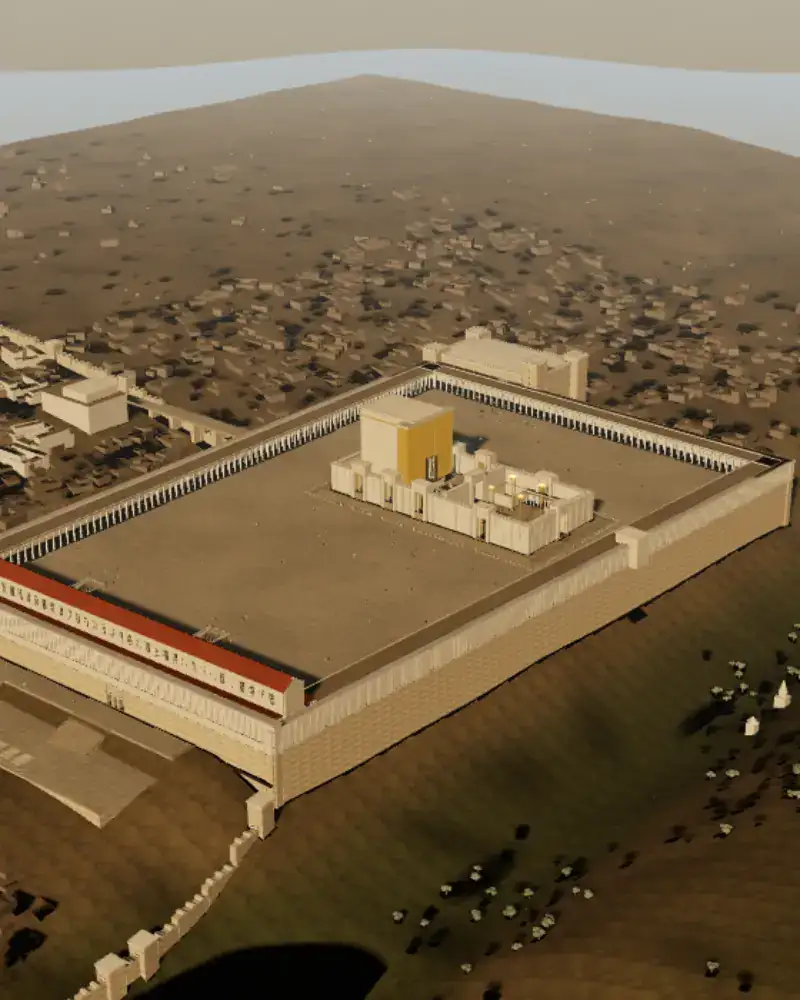
Around the raised inner courts ran a stone balustrade three cubits high. Slabs set along it warned, in Greek and Latin, that no foreigner could pass on pain of death. When Paul was seen in the Temple, he was accused of bringing Greeks inside and nearly killed.
Scripture
27And when the seven days were almost ended, the Jews which were of Asia, when they saw him in the temple, stirred up all the people, and laid hands on him, 28Crying out, Men of Israel, help: This is the man, that teacheth all men every where against the people, and the law, and this place: and further brought Greeks also into the temple, and hath polluted this holy place. 29(For they had seen before with him in the city Trophimus an Ephesian, whom they supposed that Paul had brought into the temple.)
14For he is our peace, who hath made both one, and hath broken down the middle wall of partition between us;
The inscription
ΜΗΘΕΝΑ ΑΛΛΟΓΕΝΗ ΕΙΣΠΟΡΕΥΕΣΘΑΙ ΕΝΤΟΣ ΤΟΥ ΠΕΡΙ ΤΟ ΙΕΡΟΝ ΤΡΥΦΑΚΤΟΥ ΚΑΙΠΕΡΙΒΟΛΟΥ ΟΣ Δ ΑΝ ΛΗΦΘΗ ΕΑΥΤΩΙ ΑΙΤΙΟΣ ΕΣΤΑΙ ΔΙΑ ΤΟ ΕΞΑΚΟΛΟΥΘΕΙΝ ΘΑΝΑΤΟΝ
Reflection
Paul, himself nearly killed over this barrier, wrote that Christ “is our peace, who hath made both one, and hath broken down the middle wall of partition.” Many readers hear an echo of the soreg; Paul does not name it, so this is a reflection, not a claim about his source.
Claims
- Strongly supported The balustrade was about three cubits high, with warning slabs at intervals.
- Strongly supported The warning text is known from two surviving stones.
- Artistic The lattice pattern and the placing of the slabs at each opening are reconstructed.
Archaeology and sources
Two copies of the Greek warning have been found. The complete one (Istanbul) reads: “No foreigner is to go beyond the balustrade and the enclosure around the Temple. Whoever is caught will have himself to blame for his death which follows.” Traces of red paint remain in the letters of the fragment in Jerusalem.
Sources
- Mishnah, tractate Middot (“Measurements”), compiled c. AD 200 — rabbinic tradition
- Josephus, Jewish War 5.5 (written c. AD 75)
- Temple warning inscription: complete stone found by C. Clermont-Ganneau, 1871 (Istanbul Archaeology Museums); fragment found 1935 (Israel Museum)