 X-Dreamers
Where Was Jesus Crucified? Holy Week in Jerusalem, Day by Day
From Palm Sunday to the empty tomb: where the Last Supper, Caiaphas’s house, Pilate’s judgment seat, Golgotha and the tomb were, and how sure we can be of each.
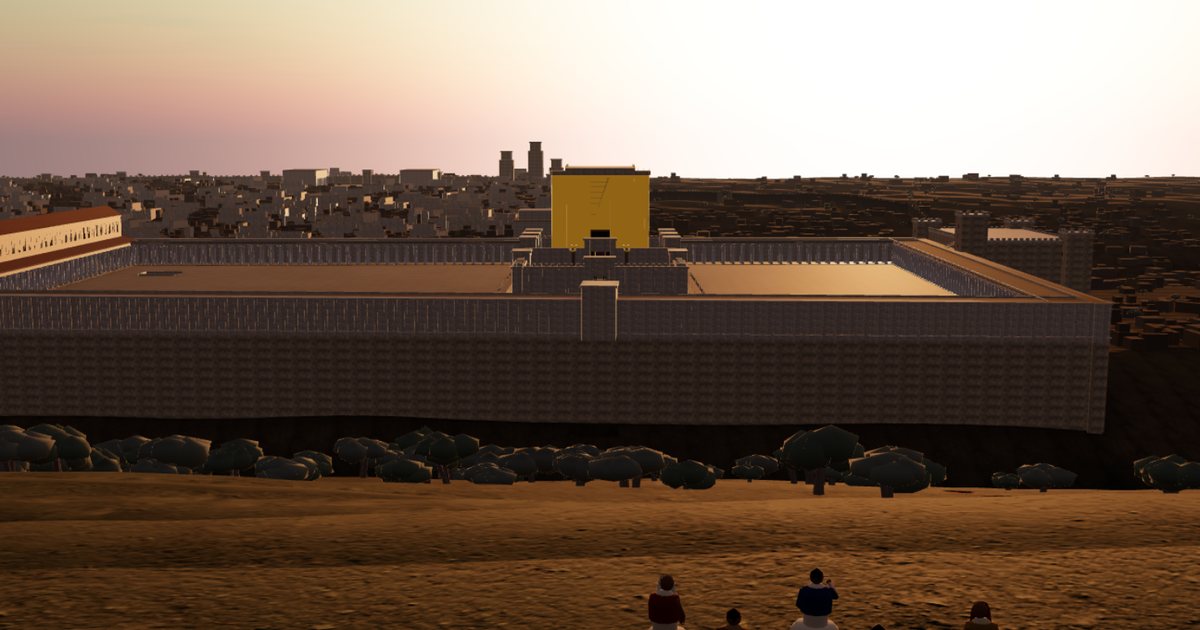
Jesus was crucified at Golgotha, outside the city wall of Jerusalem by a road, and buried nearby in a new tomb cut in the rock. Of the two places shown today, the Church of the Holy Sepulchre has much the stronger claim: in Jesus’ day the ground lay just outside the wall, in an old quarry with Jewish tombs of the period. The lab rates it Strongly supported and the Garden Tomb Speculative. The week runs from Palm Sunday to the empty tomb a week later, and three other places in it are debated. The Gospels say only that the upper room was in the city; the Mount Zion site is Speculative. Caiaphas’s house was probably in the Upper City (Plausible), not at St Peter in Gallicantu (Speculative). Pilate most likely judged Jesus at Herod’s palace (Strongly supported), not the Antonia Fortress (Speculative).
To see the city as it stood that week, see Jerusalem in Jesus' time in 3D.
Holy Week at a glance
| Day | Event | Place | How sure of the place |
|---|---|---|---|
| Sunday | The entry on a colt | Down the Mount of Olives | Textually stated |
| Monday | The tables overturned | The Court of the Gentiles | Plausible |
| Tuesday | Teaching; the discourse | The temple courts; the Mount of Olives | Textually stated |
| Thursday | The Last Supper | An upper room; Mount Zion by tradition | Speculative |
| Thursday night | The prayer and the arrest | Gethsemane, across the Kidron | Plausible |
| Thursday night | Peter’s denials | Upper City or Gallicantu | Plausible; Speculative |
| Friday morning | Before Pilate | Herod’s palace or the Antonia | Strongly supported; Speculative |
| Friday | The crucifixion and burial | Holy Sepulchre or Garden Tomb | Strongly supported; Speculative |
| Sunday at dawn | The empty tomb | The same tomb | Textually stated |
Wednesday (the plot, the anointing at Bethany) has no scene: the Gospels date it only loosely.
Sunday to Tuesday
The crowd spread cloaks and branches before the colt, crying, “Hosanna! Blessed is he who comes in the name of the Lord!” (Mark 11:9). Luke alone adds that Jesus “saw the city and wept over it” (Luke 19:41); see Weeping over the city, or walk the road. On Monday he overturned the money changers’ tables in the court open to Gentiles; on Tuesday evening he sat on the Mount of Olives facing the temple and said not one stone would be left on another.
Thursday: the upper room and Gethsemane
Two disciples were sent to a house whose master would show them “a large upper room furnished and ready” (Mark 14:15). The Cenacle on Mount Zion has been shown as the room since the 4th century; its hall is Crusader work. The lab shows the foot washing and the bread and the cup.
This is where John’s timing differs. Matthew, Mark and Luke present the supper as the Passover meal. John says that on Friday morning the leaders stayed out of the praetorium “that they might not be defiled, but might eat the Passover” (John 18:28), and that the crucifixion fell on “the Preparation Day of the Passover” (John 19:14). The lab gives three answers: John’s “Passover” may mean the week-long feast and “Preparation” its Friday (Plausible); Jesus may have held the meal a day early, knowing he would die (Plausible); or the accounts follow two calendars, such as Qumran’s (Speculative). Either way, John shows Jesus dying as the Passover lambs were made ready.
Then they crossed the Kidron to Gethsemane, “oil press” in Aramaic (Strongly supported). The traditional site fits the Gospels, though the exact spot is unknown (Plausible). Passover fell at the full moon, so the prayer is lit by moonlight, and the arrest by torches:
He said, “Abba, Father, all things are possible to you. Please remove this cup from me. However, not what I desire, but what you desire.” (Mark 14:36)
Caiaphas’s house: Upper City or Gallicantu?
Jesus was questioned in the house while Peter warmed himself in the courtyard below. The lab opens on the Upper City (Plausible), where priestly mansions with ritual baths have been excavated, though no find names Caiaphas. Switch to St Peter in Gallicantu (Speculative): its rock-cut pit is shown as Jesus’ cell, but is more likely a cistern, and the earliest pilgrims placed the house higher up. At the rooster’s crow Luke adds one line: “The Lord turned and looked at Peter.” (Luke 22:61)
Pilate’s praetorium: Herod’s palace or the Antonia?
When Pilate therefore heard these words, he brought Jesus out and sat down on the judgment seat at a place called “The Pavement”, but in Hebrew, “Gabbatha.” (John 19:13)
John names the place but not where it was. Roman governors stayed in Herod’s palace at the feasts; Philo tells of Pilate hanging shields there, and Josephus of a governor judging in front of it. So Herod’s palace is Strongly supported. The Antonia Fortress, where the Via Dolorosa begins, is Speculative: it was a barracks, and the paving long shown there as Gabbatha belongs to a 2nd-century square of Hadrian’s. (See the fortress in the Temple Mount lab.)
Golgotha and the tomb: Holy Sepulchre or Garden Tomb?
The Gospels give three marks of the place: “the place where Jesus was crucified was near the city” (John 19:20); Jesus “suffered outside of the gate” (Hebrews 13:12); and it had a garden with a new tomb.
Now in the place where he was crucified there was a garden. In the garden was a new tomb in which no man had ever yet been laid. (John 19:41)
The Holy Sepulchre fits all three. The area lay outside the Second Wall until the city grew in the 40s AD, tombs of the period are still visible inside the church, and Eusebius tells how Constantine’s builders removed a Roman temple in the 320s and found the tomb Jerusalem’s Christians remembered. The Garden Tomb, proposed in the 19th century, is a quiet place to pray, but its tomb was cut in the Iron Age, so it was not new in Jesus’ day.
Mark says, “It was the third hour when they crucified him.” (Mark 15:25) John puts Pilate’s verdict at “about the sixth hour” (John 19:14). People reckoned time loosely in three-hour blocks, so a mid-morning event could be named either way (Plausible); a Roman count from midnight and a copying error are both Speculative.
The lab tells the crucifixion with restraint: faceless figures, no wounds, and in the darkness crosses seen only from far off. The darkness was no eclipse: Passover fell at the full moon (Strongly supported). At the ninth hour Jesus cried out and breathed his last, and the centurion said, “Truly this man was the Son of God!” (Mark 15:39)
What we know and what is guessed
Stated or strongly supported: the order of the week; an upper room in the city; Gethsemane across the Kidron; Golgotha near the city and outside the gate; a new tomb in a garden; a Friday before the Sabbath; governors lodging in Herod’s palace.
Plausible: the Upper City for Caiaphas; the traditional Gethsemane; AD 30 or 33.
Speculative or artistic: the Cenacle, Gallicantu, the Antonia, the Garden Tomb; the lab’s tables, crowds and trees.
Frequently asked questions
Where was Jesus crucified? At Golgotha, just outside the wall, most likely where the Holy Sepulchre stands.
Is the Garden Tomb where Jesus was buried? Almost certainly not: its tomb was cut centuries before Jesus.
What day was Jesus crucified? A Friday, the day of Preparation, most likely in AD 30 or 33.
The first day of the week
On Saturday the tomb lies sealed and guarded. John says Mary Magdalene came while it was still dark, Mark that the sun had risen; the women likely set out in the dark and arrived at sunrise (Plausible). The tomb stop closes with two verses:
Now on the first day of the week, Mary Magdalene went early, while it was still dark, to the tomb, and saw that the stone had been taken away from the tomb. (John 20:1)
“He has risen! He is not here. See the place where they laid him!” (Mark 16:6)
Open the tomb at dawn →, or start at Palm Sunday and walk all nine stops.
Related
- The Temple Mount in Jesus’ day, and Where did Jesus live and teach?
- The last great day of the Feast of Tabernacles, when Jesus cried out, “If anyone is thirsty, let him come to me and drink!” (John 7:37)
- Golgotha on the Places of Jesus map.
Found this helpful? Pass it on.