 X-Dreamers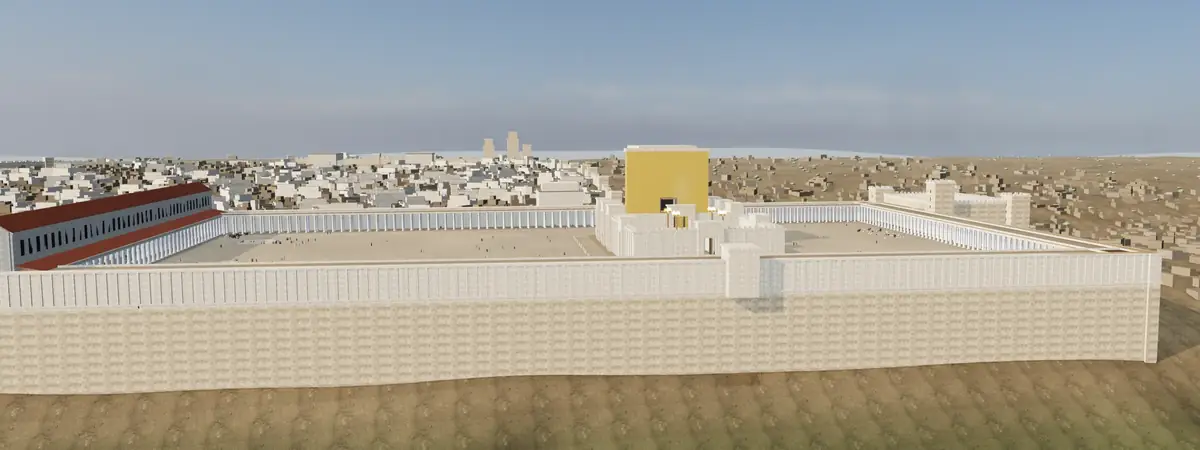
The outer court
The Royal Stoa
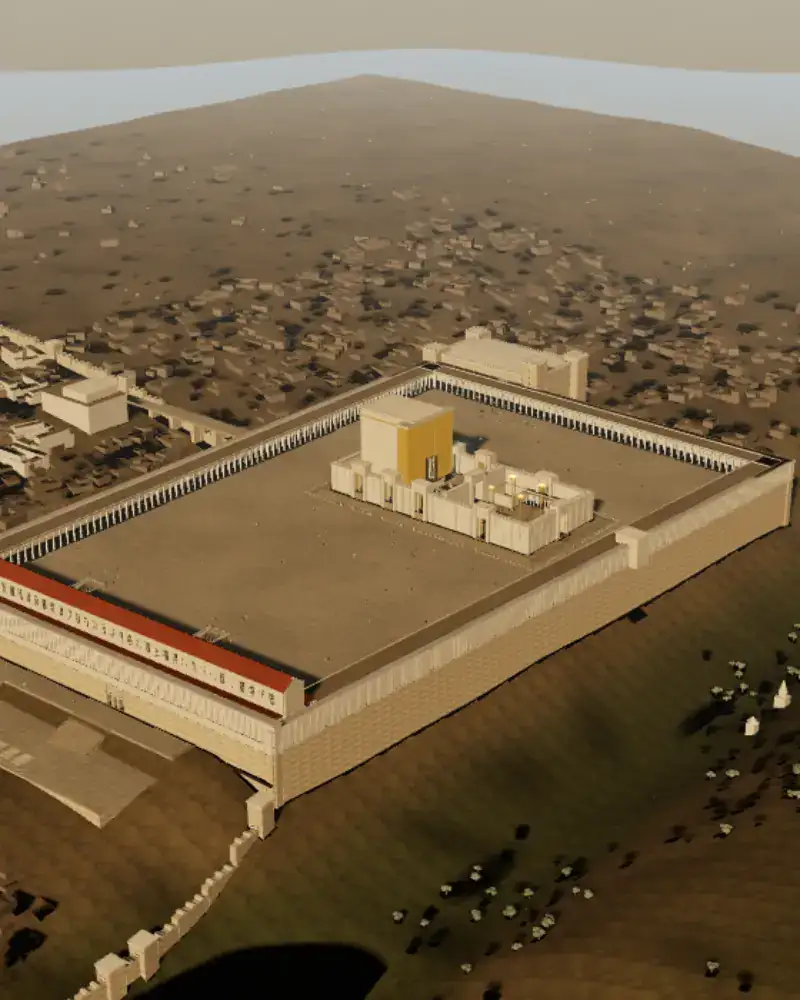
A vast basilica along the south side — likely setting of the money-changers.
What happened here
Josephus calls the Royal Stoa more worthy of mention than any work under the sun: 162 columns in four rows, a central nave higher than the aisles, and a ceiling of carved cedar. Market business connected with the sacrifices — changing money into Tyrian coin for the Temple tax and selling animals and doves — plausibly took place here. Here Jesus made a whip of cords, overturned the tables of the money-changers, and said, “My house shall be called of all nations the house of prayer.”
Scripture
13And the Jews’ passover was at hand, and Jesus went up to Jerusalem, 14And found in the temple those that sold oxen and sheep and doves, and the changers of money sitting: 15And when he had made a scourge of small cords, he drove them all out of the temple, and the sheep, and the oxen; and poured out the changers’ money, and overthrew the tables; 16And said unto them that sold doves, Take these things hence; make not my Father’s house an house of merchandise.
15And they come to Jerusalem: and Jesus went into the temple, and began to cast out them that sold and bought in the temple, and overthrew the tables of the moneychangers, and the seats of them that sold doves; 16And would not suffer that any man should carry any vessel through the temple. 17And he taught, saying unto them, Is it not written, My house shall be called of all nations the house of prayer? but ye have made it a den of thieves.
Claims
- Strongly supported 162 columns in four rows, the fourth row built against the south wall.
- Plausible The money-changers and sellers worked in the Temple courts; the Royal Stoa is the likeliest place. (John 2:14)
- Artistic Josephus describes the height and the carved ceilings; the tiled roofs and clerestory windows shown are reconstructed.
Archaeology and sources
Fragments of its columns, capitals and decorated friezes were found in the rubble below the south-west corner. The stoa’s eastern end stood high above the Kidron valley.
Sources
- Josephus, Jewish Antiquities 15.11 (written c. AD 93–94)
- Leen Ritmeyer, The Quest: Revealing the Temple Mount in Jerusalem (Carta, 2006)