 X-Dreamers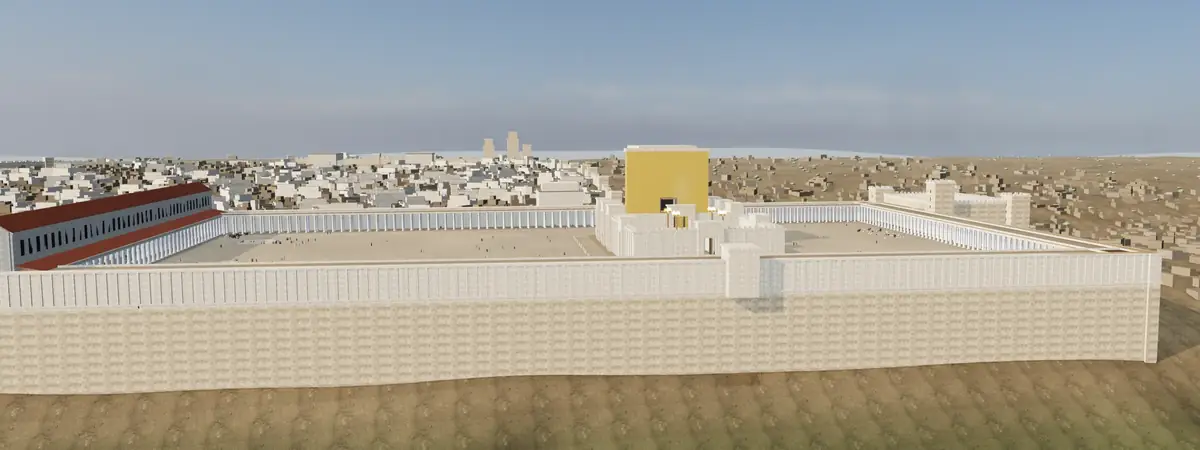
Approach
Robinson’s Arch and the Western Street
A stairway carried on a great arch over the street below the western wall.
What happened here
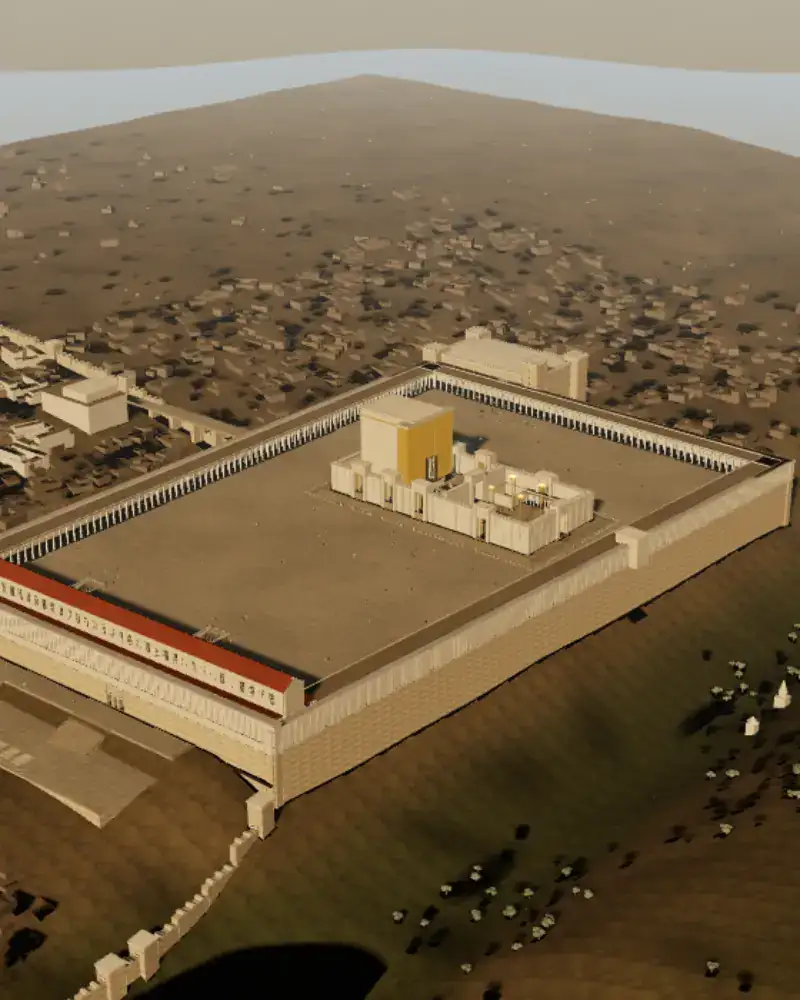
At the south-west corner a monumental stairway, carried on a huge arch across the street, climbed from the Tyropoeon valley to the Royal Stoa. The paved street below was lined with shops. Further north, Wilson’s Arch carried a causeway from the upper city to a gate in the western wall. When one of his disciples said, “Master, see what manner of stones and what buildings are here!”, stones like these were in view.
Scripture
1And as he went out of the temple, one of his disciples saith unto him, Master, see what manner of stones and what buildings are here!
Claims
- Strongly supported The arch carried a stairway that turned south down to the street.
- Strongly supported Herodian wall stones have drafted margins around a flat boss.
- Plausible The number and size of the smaller arches under the stair are reconstructed.
Archaeology and sources
The springing of the arch still projects from the Western Wall; it was identified by Edward Robinson in 1838. Excavations found the pier, the street, its shops, and stones thrown down in AD 70. Herodian blocks have finely drafted margins and flat bosses; some weigh many tons.
Sources
- R. Reich and Y. Billig, excavations at Robinson’s Arch and the Herodian street (1994–1996)
- Leen Ritmeyer, The Quest: Revealing the Temple Mount in Jerusalem (Carta, 2006)
- Charles Warren, shafts along the walls of the Haram (1867–1870)
- Excavations south and west of the Temple Mount: B. Mazar and M. Ben-Dov (1968–1978); E. Mazar, The Walls of the Temple Mount (2011)