 X-Dreamers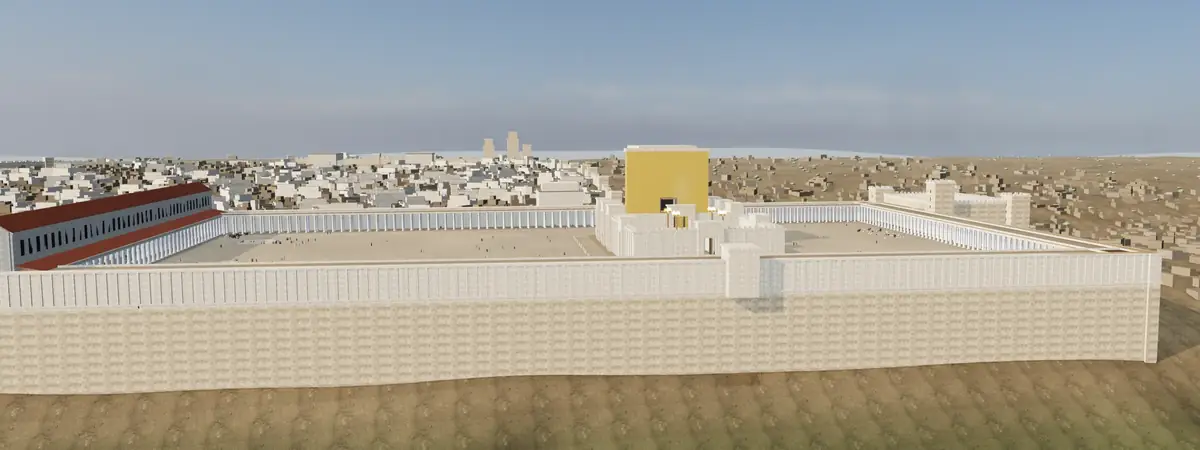

The outer court
The Court of the Gentiles
The great paved outer court, open to everyone.
What happened here
Herod doubled the area of the Temple Mount with huge retaining walls, creating a paved court of about 14 hectares surrounded by porticoes. Anyone could enter this outer court, Jew or Gentile. Jesus taught here daily in the last week of his life, while the chief priests looked for a way to destroy him.
Scripture
47And he taught daily in the temple. But the chief priests and the scribes and the chief of the people sought to destroy him,
7Even them will I bring to my holy mountain, and make them joyful in my house of prayer: their burnt offerings and their sacrifices shall be accepted upon mine altar; for mine house shall be called an house of prayer for all people.
Claims
- Strongly supported The Herodian platform measured about 485 × 470 × 315 × 280 m.
- Strongly supported Gentiles could enter the outer court but not the inner courts.
Archaeology and sources
The name “Court of the Gentiles” is modern; ancient writers speak of the outer court or the Temple Mount. The platform’s outline survives in today’s walls: about 485 m on the west, 470 m on the east, 315 m on the north and 280 m on the south.
Sources
- Charles Warren, shafts along the walls of the Haram (1867–1870)
- Leen Ritmeyer, The Quest: Revealing the Temple Mount in Jerusalem (Carta, 2006)
- Josephus, Jewish War 5.5 (written c. AD 75)
- Temple warning inscription: complete stone found by C. Clermont-Ganneau, 1871 (Istanbul Archaeology Museums); fragment found 1935 (Israel Museum)