 X-Dreamers
Reading A
A floating box
Plausible
The word tevah is used elsewhere only for the basket of baby Moses: a container made to float, not to sail.
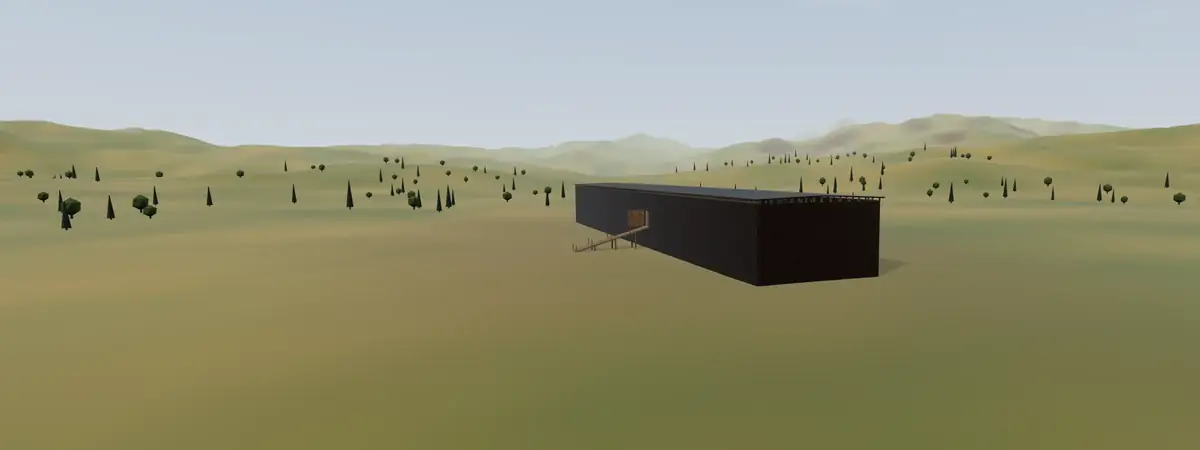
Enter from a verse
Three hundred cubits long, fifty cubits wide, and thirty cubits high
15And this is the fashion which thou shalt make it of: The length of the ark shall be three hundred cubits, the breadth of it fifty cubits, and the height of it thirty cubits.
Scripture: King James Version (1769).
God gives Noah three measurements and little else. Four doors show what the text fixes, what it leaves open, and where you can stand beside the ark at full size.
Genesis gives Noah's age, six hundred years when the flood came, but no calendar we can tie to other history. Readers differ on whether the numbers of Genesis 5 and 11 can be added up into dates.
6And Noah was six hundred years old when the flood of waters was upon the earth.
The flood: undated on the Time Map.
Genesis 1–11 gives genealogies but no calendar, and readers differ on whether its numbers can be added up into dates. These events are shown before the dated timeline, without years.
The text does not say where the ark was built. It came to rest on 'the mountains of Ararat', a region, the kingdom later called Urartu in the highlands of eastern Anatolia, not necessarily the single peak that bears the name today.
4And the ark rested in the seventh month, on the seventeenth day of the month, upon the mountains of Ararat.
“Ararat” is the region of Urartu in the eastern Anatolian highlands.
Ararat is a kingdom elsewhere in the Bible (2 Kings 19:37; Jeremiah 51:27) and matches Assyrian Urartu.
The ark landed on the peak now called Mount Ararat.
A tradition from about the 11th century onward. The text names a mountain land, not a peak, and no remains have been verified.
At about 0.45 metres to the cubit, the ark was about 135 metres long, 22.5 wide and 13.5 high, with three decks, rooms, a door in its side and an opening a cubit from the top. It was coated with pitch inside and out.
14Make thee an ark of gopher wood; rooms shalt thou make in the ark, and shalt pitch it within and without with pitch. 15And this is the fashion which thou shalt make it of: The length of the ark shall be three hundred cubits, the breadth of it fifty cubits, and the height of it thirty cubits. 16A window shalt thou make to the ark, and in a cubit shalt thou finish it above; and the door of the ark shalt thou set in the side thereof; with lower, second, and third stories shalt thou make it.
The ark was 300 cubits long, 50 cubits wide and 30 cubits high.
Stated directly in the text.
One cubit is about 0.45 m (roughly 18 inches).
Consistent with ancient Near Eastern common cubits and with the Siloam tunnel inscription; the text itself does not give a conversion.
Genesis gives the size but not the shape of the hull. Two pictures are common; the Noah's Ark lab lets you switch between them. Both are shown with their evidence; we do not choose.
Reading A
The word tevah is used elsewhere only for the basket of baby Moses: a container made to float, not to sail.
Reading B
A pointed bow and a fin at the stern would have turned the ark to face the waves; the text neither says nor rules it out.
Genesis gives the ark's length, width and height but says nothing about the shape of its hull.
Genesis 6:14–16 lists measurements, material, rooms, levels, a roof opening and a door, and no hull form.
Doors into the verse
15And this is the fashion which thou shalt make it of: The length of the ark shall be three hundred cubits, the breadth of it fifty cubits, and the height of it thirty cubits.
See this verse's connections in the Knowledge Graph
Every door is drawn from the Bible Labs knowledge graph: each claim keeps its evidence level, and readings that link one passage to another are marked as interpretation. King James Version (1769).