Skip to content
X-Dreamers

Genesis 6–9

How Big Was Noah's Ark?

Genesis 6:15 gives the ark 300 × 50 × 30 cubits: about 135 m long, 22.5 m wide and 13.5 m high, with three decks. Here it is rebuilt in immersive 3D from those words, with the rest marked as reconstruction.

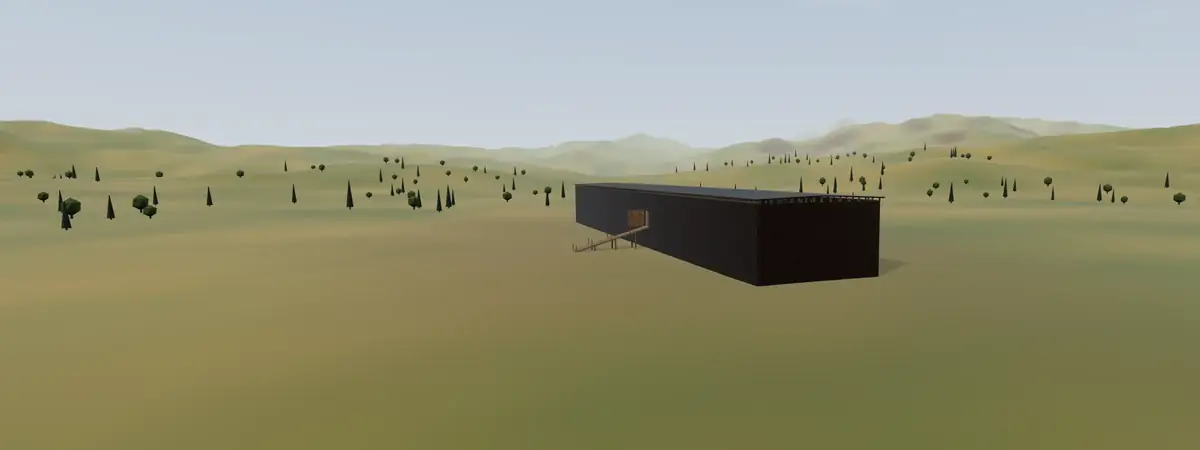
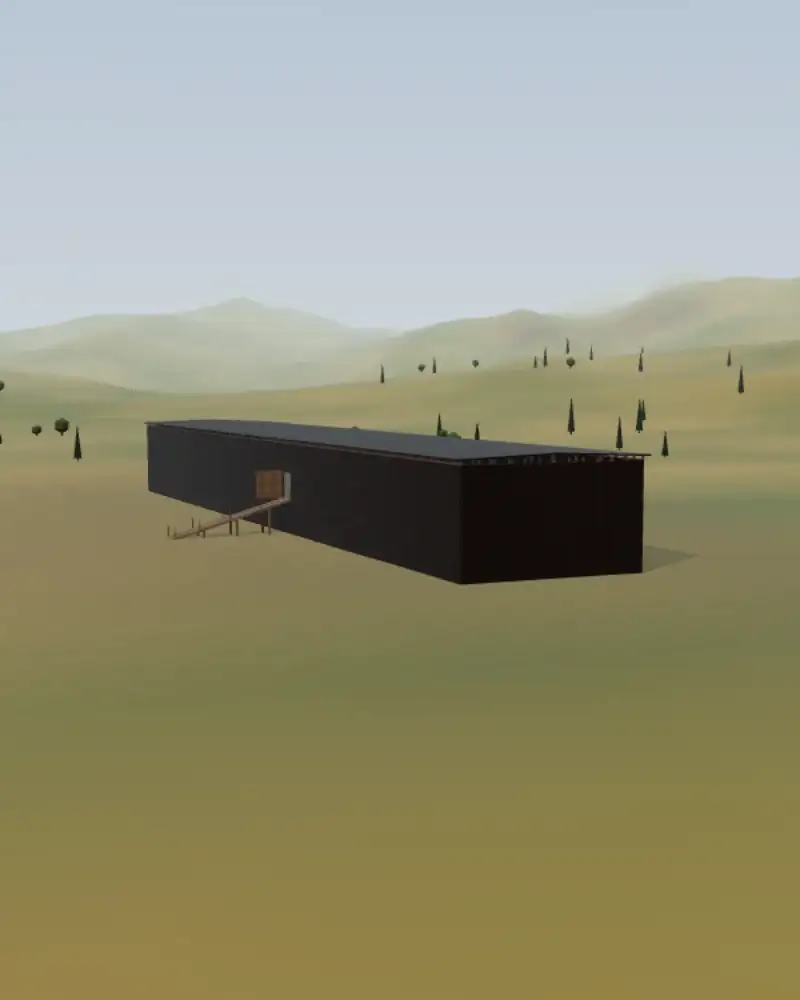
Noah's ark on the plain beside its ramp, seen from above

Noah's Ark

Walk the three decks, set the ark beside a jumbo jet, and follow the story to the rainbow.

Walk in 3D · move with the on-screen stick

3D · about 800 KB

Loading Noah's Ark…

Stop 3 of 25 · God's command · Hull shape

Here is its hull, shaped in this model like a long barge; the text gives its size, not its shape. Tap Next to come close to its skin.

The story

Moment 1 of 8

Genesis 6:14–16

The ark

The ark as God described it to Noah. Peel the layers, cut away the side to see the three decks, compare its size, or walk inside.

“And this is the fashion which thou shalt make it of: The length of the ark shall be three hundred cubits, the breadth of it fifty cubits, and the height of it thirty cubits.”

Genesis 6:15 (KJV)

Use this in class

25 stops · about 45 minutes

Teach mode puts large captions on the projector, follows a presentation clicker and keeps presenter notes on your own screen.

How to teach with the labs →

Watch a 40-second tour

A silent clip of the guided tour with its captions, made from this lab. Play it before class, or download it to show without a connection.

This is a reconstruction. Genesis gives the ark's size, its wood, its pitch, its rooms, three decks, a door and an opening a cubit high. It does not describe the hull shape, the roof, the layout inside, the pens, the stores or how many animals there were. Two hull shapes are offered, and every part shows its evidence level, from what the text states to what is an artistic choice.

The ark is drawn to scale in cubits. Metres assume a cubit of about 0.45 m; switch to the royal cubit (about 0.52 m) to compare, and the person, the pitch, the jet and the ship will change size against it. Scripture quotations are from the King James Version (1769).

Noah's ark: size, structure and story

Genesis 6:14–16 gives Noah's ark three measurements: 300 cubits long, 50 wide and 30 high. It names one material, gopher wood, sealed with pitch inside and out, and adds rooms, three decks, a door in the side and an opening finished to a cubit at the top. With a common cubit of about 0.45 m the ark was roughly 135 m long, 22.5 m wide and 13.5 m high; with a royal cubit of about 0.52 m, about 156 m long.

This lab rebuilds the ark in 3D from those words. You can peel the pitch and planks back to the frame, cut away the side to see the three decks, compare the ark with a jumbo jet and a football pitch, and walk inside. Everything the text does not describe, such as the hull shape, the pens and the stores, is marked as reconstruction, with an evidence level for each detail.

Noah's ark in numbers

Noah's ark in numbers
Length × width × height300 × 50 × 30 cubits (Genesis 6:15)
In metres (0.45 m cubit)About 135 × 22.5 × 13.5 m
In metres (0.52 m royal cubit)About 156 × 26 × 15.6 m
ProportionsLength 6 × width; length 10 × height
DecksThree: lower, second and third (Genesis 6:16)
Floor area of three decksAbout 45,000 square cubits (about 9,100 m²)
MaterialGopher wood, pitch inside and out (Genesis 6:14)
People aboardEight: Noah, his wife, three sons and their wives
RainForty days and forty nights; the waters prevailed 150 days
Time in the arkAbout a year and ten days (Genesis 7:11; 8:14)

Key verses 4

14Make thee an ark of gopher wood; rooms shalt thou make in the ark, and shalt pitch it within and without with pitch. 15And this is the fashion which thou shalt make it of: The length of the ark shall be three hundred cubits, the breadth of it fifty cubits, and the height of it thirty cubits. 16A window shalt thou make to the ark, and in a cubit shalt thou finish it above; and the door of the ark shalt thou set in the side thereof; with lower, second, and third stories shalt thou make it.

Genesis 6:14–16

11In the six hundredth year of Noah’s life, in the second month, the seventeenth day of the month, the same day were all the fountains of the great deep broken up, and the windows of heaven were opened. 12And the rain was upon the earth forty days and forty nights.

Genesis 7:11–12

3And the waters returned from off the earth continually: and after the end of the hundred and fifty days the waters were abated. 4And the ark rested in the seventh month, on the seventeenth day of the month, upon the mountains of Ararat. 5And the waters decreased continually until the tenth month: in the tenth month, on the first day of the month, were the tops of the mountains seen.

Genesis 8:3–5

7By faith Noah, being warned of God of things not seen as yet, moved with fear, prepared an ark to the saving of his house; by the which he condemned the world, and became heir of the righteousness which is by faith.

Hebrews 11:7

Scripture quotations: King James Version (1769) (KJV).

What the Bible says, what our model adds to it, where good readers disagree, and where the old copies and the translations differ. We set the views side by side and do not pick a winner.

  • Textually stated10
  • Strongly supported1
  • Plausible5
  • Speculative8
  • Artistic1

A few of the model's choices

  • Plausible

    In metres that is about 135 × 22.5 × 13.5 m with a common cubit, or 156 × 26 × 15.6 m with a royal cubit.

  • Plausible

    The word tevah, used elsewhere only for Moses' basket, points to a box-like vessel made to float rather than to sail.

  • Speculative

    A pointed bow and a fin at the stern would have turned the ark to face the waves.

Show all 33
What the text says10

Stated in Scripture. Quoted from the King James Version (KJV) and the 1919 Chinese Union Version (和合本).

  • The ark was 300 cubits long, 50 cubits wide and 30 cubits high.

    Textually stated

    15And this is the fashion which thou shalt make it of: The length of the ark shall be three hundred cubits, the breadth of it fifty cubits, and the height of it thirty cubits.

    Genesis 6:15 · KJV
  • The ark was made of gopher wood.

    Textually stated

    14Make thee an ark of gopher wood; rooms shalt thou make in the ark, and shalt pitch it within and without with pitch.

    Genesis 6:14 · KJV
  • The ark was sealed with pitch on the inside and the outside.

    Textually stated

    14Make thee an ark of gopher wood; rooms shalt thou make in the ark, and shalt pitch it within and without with pitch.

    Genesis 6:14 · KJV
  • The ark had lower, second and third levels.

    Textually stated

    16A window shalt thou make to the ark, and in a cubit shalt thou finish it above; and the door of the ark shalt thou set in the side thereof; with lower, second, and third stories shalt thou make it.

    Genesis 6:16 · KJV
  • The ark's door was in its side.

    Textually stated

    16A window shalt thou make to the ark, and in a cubit shalt thou finish it above; and the door of the ark shalt thou set in the side thereof; with lower, second, and third stories shalt thou make it.

    Genesis 6:16 · KJV
  • Animals went in by pairs, male and female, after their kind.

    Textually stated

    19And of every living thing of all flesh, two of every sort shalt thou bring into the ark, to keep them alive with thee; they shall be male and female. 20Of fowls after their kind, and of cattle after their kind, of every creeping thing of the earth after his kind, two of every sort shall come unto thee, to keep them alive.

    Genesis 6:19–20 · KJV
  • It rained forty days and forty nights, and the waters prevailed 150 days.

    Textually stated

    12And the rain was upon the earth forty days and forty nights.

    Genesis 7:12 · KJV
  • The dove brought back a freshly plucked olive leaf.

    Textually stated

    11And the dove came in to him in the evening; and, lo, in her mouth was an olive leaf pluckt off: so Noah knew that the waters were abated from off the earth.

    Genesis 8:11 · KJV
  • The ark rested on the 17th day of the 7th month.

    Textually stated

    4And the ark rested in the seventh month, on the seventeenth day of the month, upon the mountains of Ararat.

    Genesis 8:4 · KJV
  • The rainbow is the sign of God's covenant never again to destroy all flesh by a flood.

    Textually stated

    13I do set my bow in the cloud, and it shall be for a token of a covenant between me and the earth.

    Genesis 9:13 · KJV
What the model adds15

Choices the reconstruction has to make where the text is silent, each with its evidence level and the reason for it.

Strongly supported1
  • The word for rooms is qinnim, “nests”, suggesting many small compartments.

    Why: Qen is the ordinary Hebrew word for a bird's nest; it is used here in the plural, as a repeated “nests nests”.

Plausible5
  • In metres that is about 135 × 22.5 × 13.5 m with a common cubit, or 156 × 26 × 15.6 m with a royal cubit.

    Why: The text gives cubits, not metres. Ancient cubits ranged from about 0.44 to 0.52 m; switch the cubit to compare.

  • The word tevah, used elsewhere only for Moses' basket, points to a box-like vessel made to float rather than to sail.

    Why: Tevah appears only in Genesis 6–9 and Exodus 2:3–5. The rare word fits a chest that floats, but one word cannot fix the shape.

  • The pitch was bitumen, as in Moses' basket and in ancient Mesopotamian boats.

    Why: Bitumen was the standard waterproofing of the ancient Near East, but Genesis 6:14 uses a different word (kopher) from the bitumen of Exodus 2:3 and Genesis 11:3.

  • Each deck was about 10 cubits high.

    Why: An even division of the 30-cubit height; the text gives no deck heights.

  • The stay in the ark lasted about 370 days.

    Why: Depends on the calendar assumed: with 30-day months, 150 days fit the dates in 7:11 and 8:4 exactly, giving 370; a lunar year gives about 364.

Speculative8
  • A pointed bow and a fin at the stern would have turned the ark to face the waves.

    Why: A modern engineering proposal. It is compatible with the measurements but has no basis in the text.

  • Gopher wood was cypress.

    Why: The word occurs only here. Cypress is a traditional guess because it is durable and resinous; the similar sound of Greek kyparissos is sometimes cited, but that link is uncertain.

  • The rooms stood in rows along a central aisle on every deck.

    Why: A layout chosen for this model. The text gives no plan.

  • The tsohar was an opening a cubit high running around the top of the ark.

    Why: One common reading, adopted in this model because it would light and ventilate the upper deck.

  • The roof sloped from a central ridge to shed water.

    Why: A practical choice for this model; the text gives no roof shape.

  • The door opened onto the middle deck and was reached by a ramp.

    Why: The model's choice. The text gives only “in the side thereof”. Its planks on battens and braces are drawn as a common way to make a wide plank door, not from the text.

  • The ark carried somewhere between a few thousand and about 35,000 animals.

    Why: Published estimates depend entirely on what a “kind” is taken to be; the text gives no number.

  • The ark landed on the peak now called Mount Ararat.

    Why: A tradition from about the 11th century onward. The text names a mountain land, not a peak, and no remains have been verified.

Artistic1
  • This view shows water to every horizon.

    Why: Genesis says the high hills “under the whole heaven” were covered. Whether that means the entire globe or the whole world Noah knew is debated; the picture follows the wording, not a geological model.

Competing views4

Where careful readers disagree. Each view with who holds it and the evidence for and against it. No verdict.

A floating box, or a shaped hull?

Genesis 6:14–16; Exodus 2:3

A box-shaped chest that floats

Held by Readers who take tevah, the word used elsewhere only for Moses' basket, as "chest"; many older drawings and models

For

  • Genesis gives only length, width and height, which describe a box most simply.
  • Tevah is the word for Moses' basket, a container made to float, not a ship made to sail.

Against

  • The text does not say the sides were straight; one rare word cannot fix a shape.

Sources: Wikipedia, "Noah's Ark"

A ship-like hull with a bow and a fin at the stern

Held by Tim Lovett (the design behind the Ark Encounter replica)

For

  • A bow and a fixed fin would keep the ark facing the waves instead of rolling side-on, improving strength and comfort at sea.

Against

  • Lovett himself notes that the Bible does not give the ark's shape; the features come from engineering, not from the text.

Sources: Tim Lovett, "A Streamlined Noah's Ark?" (Answers in Genesis)

What the lab shows (a drawing choice, not a ruling): The lab opens on the box hull and lets you switch to a shaped one; neither is marked as the answer.

Which cubit: common or royal?

Genesis 6:15

A common cubit of about 0.45 m: an ark about 135 m long

Held by Most reconstructions, following the common cubits of Judah

For

  • The Siloam tunnel inscription (1,200 cubits for about 533 m) points to about 0.44–0.45 m.

Against

  • That is a cubit of Hezekiah's Judah; Genesis gives no standard for Noah's.

Sources: Wikipedia, "Cubit"

A royal cubit of about 0.52 m: an ark about 156 m long

Held by Some scholars, arguing that Moses, trained in Egypt, would have used the larger Egyptian cubit

For

  • The Egyptian royal cubit of seven palms is well attested from measuring rods.

Against

  • It rests on who wrote the account and what unit he had in mind, which the text does not say.

Sources: Wikipedia, "Noah's Ark"; Wikipedia, "Cubit"

What the lab shows (a drawing choice, not a ruling): The lab uses 0.45 m and lets you switch to 0.52 m.

Did the flood cover the whole globe, or the whole known land?

Genesis 7:19–20; Genesis 9:11

A global flood

Held by George McCready Price; John Whitcomb and Henry Morris (The Genesis Flood, 1961) and young-earth creationists since

For

  • Genesis says "all the high hills, that were under the whole heaven, were covered" (7:19).
  • The ark was built to keep alive every kind of land animal and bird, which a local flood would not require.

Against

  • Most geologists, archaeologists and biologists find a worldwide flood inconsistent with the rock record and the distribution of species.

Sources: Wikipedia, "Flood geology"; Wikipedia, "Genesis flood narrative"

A great regional flood, total for the world Noah knew

Held by John Pye Smith (1840) and Hugh Miller in the 19th century; some Christians today

For

  • The Hebrew word for "earth" is also the word for "land" (as in Genesis 12:1), and "under the whole heaven" can describe everything an observer could see.
  • It avoids the conflict with geology while keeping the flood as a real event.

Against

  • The water stood above the mountains for months and the ark came to rest on mountains (8:4–5), which is hard to picture for a valley flood.

Sources: Wikipedia, "Flood geology"; Wikipedia, "Genesis flood narrative"

What the lab shows (a drawing choice, not a ruling): The flood view shows water to every horizon, which fits either reading; it is marked Artistic.

Where did the ark come to rest?

Genesis 8:4

Somewhere in the mountains of Urartu, not a named peak

Held by Most scholars: Ararat is the Assyrian Urartu, the kingdom around Lake Van

For

  • Genesis says "mountains" (plural); elsewhere the Hebrew names the land of Ararat (2 Kings 19:37; Isaiah 37:38, where the KJV has "the land of Armenia") and "the kingdoms of Ararat" (Jeremiah 51:27), and Assyrian records call the kingdom Urartu.

Against

  • It names a region, so it cannot point to any one place on the ground.

Sources: Jewish Encyclopedia (1906), "Ararat"; Wikipedia, "Mountains of Ararat"

Mount Ararat (Ağrı Dağı) in eastern Turkey

Held by Armenian tradition from about the 11th century; Western travellers from William of Rubruck (13th century) on

For

  • A volcano of about 5,137 m with an ice cap, it is the highest mountain of the region, and it carries the name.

Against

  • The link with the ark is medieval, and older Jewish, Syriac and Islamic tradition placed the ark on Mount Judi instead.

Sources: Wikipedia, "Mount Ararat"; Wikipedia, "Mountains of Ararat"

Mount Judi (Cudi Dağı), near Cizre in south-eastern Turkey

Held by Older Jewish, Syriac and Islamic tradition

For

  • Targum Onkelos and the Syriac Peshitta read "the mountains of Qardu" for Ararat; Josephus quotes the Babylonian Berossus placing the ship's remains "at the mountain of the Cordyaeans".
  • The Quran (11:44) says the ship came to rest on al-Judi.

Against

  • These are readings and traditions centuries after Genesis; Josephus himself says only "a certain mountain in Armenia", and the Hebrew names a land, not a peak.

Sources: Targum Onkelos, Genesis 8:4 (Sefaria); Josephus, Antiquities of the Jews 1.3.5–6 (Whiston translation); Quran 11:44 (Sahih International, Quran.com); Wikipedia, "Mount Judi"

The boat-shaped Durupınar formation

Held by Ron Wyatt (from 1977) and David Fasold

For

  • Its outline looks like a large boat, near the Ararat range.

Against

  • Geologists of opposite views, Lorence Collins and the creationist Andrew Snelling among them, conclude it is a natural fold in the rock (a syncline).

Sources: Wikipedia, "Durupınar site"

What the lab shows (a drawing choice, not a ruling): The landing scene shows the ark high on a rugged mountain shoulder among steep slopes, crags and peaks, not any real mountain and no named peak (Artistic). The other tops stay under water at the landing and appear by the raven and the dove (Genesis 8:5).

Textual notes4

Places where manuscripts, ancient versions or translations differ in numbers or wording. KJV and 和合本 are quoted as they stand.

Seven pairs, or "seven males and seven females"? (Genesis 7:2)

Translations

2Of every clean beast thou shalt take to thee by sevens, the male and his female: and of beasts that are not clean by two, the male and his female.

Genesis 7:2 · KJV

2凡潔淨的畜類、你要帶七公七母.不潔淨的畜類、你要帶一公一母.

創世記 7:2 · 和合本 (CUV 1919)

The Hebrew says "seven seven". The KJV reads "by sevens", which leaves the count open; the 和合本 reads "七公七母" (seven males and seven females), which makes it fourteen. Ellicott reads seven of each kind; the Cambridge Bible seven pairs; Keil and Delitzsch three pairs and one extra animal for sacrifice. The lab's count follows the fourteen, marked Plausible.

Sources: Commentaries on Genesis 7:2 (Ellicott, Cambridge Bible, Keil and Delitzsch, Gill)

A "window" (透光處) or a roof? (Genesis 6:16)

Translations

16A window shalt thou make to the ark, and in a cubit shalt thou finish it above; and the door of the ark shalt thou set in the side thereof; with lower, second, and third stories shalt thou make it.

Genesis 6:16 · KJV

16方舟上邊要留透光處、高一肘.方舟的門要開在旁邊.方舟要分上、中、下三層。

創世記 6:16 · 和合本 (CUV 1919)

The Hebrew tsohar occurs only here. The KJV reads "a window" and the 和合本 "透光處", an opening for light; some versions read it as a roof. Ellicott, Gill and Keil and Delitzsch connect the word with light (its dual form means "noon"); the Cambridge Bible suggests a window or opening under the eaves; Poole reads the following words as a roof raised a cubit in the middle. Genesis 8:6 uses a different word (challon) for the window Noah opened, though the KJV says "window" in both places. The lab draws a cubit-high opening running round under the roof (Speculative).

Sources: Commentaries on Genesis 6:16 (Ellicott, Poole, Gill, Cambridge Bible, Keil and Delitzsch, Pulpit Commentary)

"The mountains of Ararat" or "Mount Ararat" (亞拉臘山)? (Genesis 8:4)

Translations

4And the ark rested in the seventh month, on the seventeenth day of the month, upon the mountains of Ararat.

Genesis 8:4 · KJV

4七月十七日、方舟停在亞拉臘山上。

創世記 8:4 · 和合本 (CUV 1919)

The text says the ark rested "upon the mountains of Ararat" (KJV), plural: a mountain land, the land of Ararat (Urartu), and it names no peak. The 和合本 reads "亞拉臘山上", which a Chinese reader easily takes as the single peak now called Mount Ararat. Two traditions name a peak: Ağrı Dağı, from the Middle Ages on, and Mount Judi (Cudi Dağı), from older Syriac, Targum and Quranic tradition. See "Competing views".

Sources: Wikipedia, "Mountains of Ararat"; Targum Onkelos, Genesis 8:4 (Sefaria); Wikipedia, "Mount Judi"

300 × 50 × 30 cubits: how long is that?

Units

15And this is the fashion which thou shalt make it of: The length of the ark shall be three hundred cubits, the breadth of it fifty cubits, and the height of it thirty cubits.

Genesis 6:15 · KJV

15方舟的造法乃是這樣、要長三百肘、寬五十肘、高三十肘。

創世記 6:15 · 和合本 (CUV 1919)

Both translations keep the cubit (肘) without converting it, and Genesis gives no conversion. With a common cubit of about 0.45 m the ark is about 135 × 22.5 × 13.5 m; with a royal cubit of about 0.52 m, about 156 × 26 × 15.6 m.

Sources: Wikipedia, "Cubit"

Frequently asked questions

How big was Noah's ark?

Genesis 6:15 says 300 cubits long, 50 cubits wide and 30 cubits high. At a common cubit of about 0.45 m that is about 135 × 22.5 × 13.5 m; at a royal cubit of about 0.52 m, about 156 × 26 × 15.6 m. The cubits are stated in the text; the metres depend on which cubit you assume.

What shape was Noah's ark?

The text gives three measurements and no hull shape. The Hebrew word tevah is used elsewhere only for the basket of baby Moses, which suggests a box-like vessel made to float rather than sail. The lab shows both a plain box and a hull with a shaped bow and stern; the shaped hull is speculative.

How many decks did Noah's ark have?

Three. Genesis 6:16 speaks of lower, second and third levels. Their heights are not given; about 10 cubits each is a plausible reading. What each deck held in this model, from large animals below to the family above, is reconstruction.

What was gopher wood?

Nobody knows for certain. Gopher wood is named only in Genesis 6:14. Cypress is a common guess, but it is speculative.

How long were Noah and his family in the ark?

About a year and ten days: from the 17th day of the second month of Noah's 600th year (Genesis 7:11) until the earth was dry on the 27th day of the second month of the next year (Genesis 8:14).

How does Noah's ark compare with a modern ship?

At 135 m (300 cubits of about 0.45 m) the ark was nearly twice as long as a jumbo jet (a 747-400 is 70.6 m) and longer than a football pitch (105 m), but about a third the length of the largest container ships (400 m). The lab sets all of them beside it. The cubits are stated in Genesis 6:15; the metres depend on the cubit, and the comparisons are modern yardsticks, not claims about how the ark was built or sailed.

How many animals were on Noah's ark?

The text gives no number. Animals went in two by two, male and female, after their kind, and clean animals and birds by sevens (Hebrew 'seven seven'), which some read as seven pairs and others as seven animals (Genesis 6:19–20; 7:2–3). Creatures of the sea are not included (Genesis 7:22). Published estimates run from a few thousand to about 35,000, depending on what a “kind” is taken to be, so any figure is speculative. The animals in the model are a selection.

Sources & limits

Limits of this lab 5

  • No trace of the ark has been found; claimed sightings and sites have not been verified. The model is drawn from Genesis 6–9 alone, with every other choice marked.
  • Genesis gives the size, the material, the rooms, three decks, a door and an opening, but no hull shape, deck plan, roof shape or stalls.
  • How many animals went in depends on what a "kind" is; the lab gives a range, not a number.
  • The flood, the landscape and the landing place are illustrations; they do not settle how far the flood reached or where the ark landed.
  • Sizes in metres depend on the cubit: 0.45 m by default, 0.52 m as an option.

Sources 17

  1. King James Version (KJV) (Public domain outside the United Kingdom)
  2. 官話和合譯本 (Chinese Union Version, 1919), zh.wikisource (Public domain)
  3. Wikipedia, "Noah's Ark"
  4. Wikipedia, "Mountains of Ararat"
  5. Wikipedia, "Mount Ararat"
  6. Wikipedia, "Mount Judi"
  7. Jewish Encyclopedia (1906), "Ararat" (Public domain)
  8. Targum Onkelos, Genesis 8:4 (Sefaria)
  9. Josephus, Antiquities of the Jews 1.3.5–6 (Whiston translation) (Public domain)
  10. Quran 11:44 (Sahih International, Quran.com)
  11. Wikipedia, "Durupınar site"
  12. Wikipedia, "Flood geology"
  13. Wikipedia, "Genesis flood narrative"
  14. Tim Lovett, "A Streamlined Noah's Ark?" (Answers in Genesis)
  15. Commentaries on Genesis 6:16 (Ellicott, Poole, Gill, Cambridge Bible, Keil and Delitzsch, Pulpit Commentary) (Public domain)
  16. Commentaries on Genesis 7:2 (Ellicott, Cambridge Bible, Keil and Delitzsch, Gill) (Public domain)
  17. Wikipedia, "Cubit"

Scripture is quoted only from KJV and the 1919 和合本. Other works are cited for facts and arguments, not quoted at length.

How we build the Labs →Found a mistake? Report it →

What’s new · v2.6.1Version 2.6.1: English Scripture is now quoted from the King James Version (1769).