 X-Dreamers
Reading A
Hezekiah, about 700 BC
PlausibleResearch
The dating of the plaster and the script of the inscription fit about 700 BC, matching Kings and Chronicles.
Enter from a verse
He made the pool and the conduit, and brought water into the city
20And the rest of the acts of Hezekiah, and all his might, and how he made a pool, and a conduit, and brought water into the city, are they not written in the book of the chronicles of the kings of Judah?
Scripture: King James Version (1769).
A short note at the end of Hezekiah's story points to one of the most famous finds in Jerusalem. Four doors open the time, the spring, the tunnel and the question of its date.
Hezekiah reigned in Judah about 716–687 BC. When Sennacherib of Assyria invaded in 701 BC, Hezekiah stopped the springs outside the city so that the attackers would find no water, and made sure Jerusalem had its own supply.
3He took counsel with his princes and his mighty men to stop the waters of the fountains which were without the city: and they did help him. 4So there was gathered much people together, who stopped all the fountains, and the brook that ran through the midst of the land, saying, Why should the kings of Assyria come, and find much water?
Hezekiah: c. 716–687 BC on the Time Map.
Kings gives the length of each reign and ties it to the other kingdom. The years follow Edwin Thiele's widely used chronology, anchored by Assyrian records (the battle of Qarqar in 853 BC, Jehu's tribute in 841 BC). Other reconstructions differ by a few years, and some reigns overlap as co-regencies.
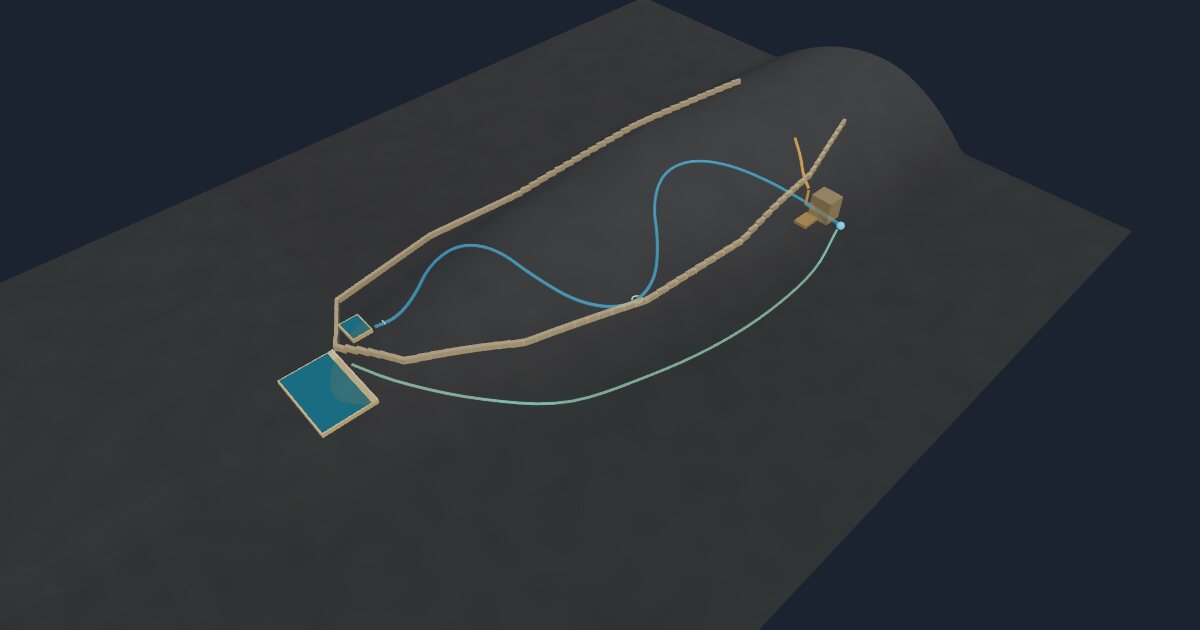
The Gihon is Jerusalem's only true spring, in the Kidron Valley below the City of David, where Solomon was anointed king. Hezekiah stopped its upper outlet and brought the water down to the west side of the City of David.
30This same Hezekiah also stopped the upper watercourse of Gihon, and brought it straight down to the west side of the city of David. And Hezekiah prospered in all his works.
Solomon was anointed at the Gihon; Hezekiah later stopped its upper outlet and brought its water to the west of the City of David.
Ronny Reich and Eli Shukron (1995–2008): Massive towers of the Middle Bronze Age were found guarding the spring and a rock-cut pool beside it.
A winding tunnel about 533 metres long runs through the rock from the Gihon to the Pool of Siloam, and visitors still wade through it. An inscription found near its southern end tells how two teams cut towards each other until they met.
20And the rest of the acts of Hezekiah, and all his might, and how he made a pool, and a conduit, and brought water into the city, are they not written in the book of the chronicles of the kings of Judah?
Kings and Chronicles say Hezekiah brought the water into the city; a Hebrew inscription in the tunnel tells how the hewers met.
Conrad Schick (1880): The Siloam inscription was found near the tunnel's southern end and first copied by Conrad Schick; it is now in Istanbul.
Amos Frumkin, Aryeh Shimron and Jeff Rosenbaum (2003): Radiocarbon and uranium–thorium dating of the plaster and stalactites placed the tunnel about 700 BC.
Most scholars identify the tunnel with Hezekiah's work; some date it earlier from the pottery at its ends. The two views are shown with their evidence; we do not choose.
Reading A
The dating of the plaster and the script of the inscription fit about 700 BC, matching Kings and Chronicles.
Reading B
Pottery found at the tunnel's ends suggests an earlier date, with Hezekiah perhaps improving an older channel.
The tunnel is there and can be walked; who cut it is debated, though most say Hezekiah.
Doors into the verse
20And the rest of the acts of Hezekiah, and all his might, and how he made a pool, and a conduit, and brought water into the city, are they not written in the book of the chronicles of the kings of Judah?
See this verse's connections in the Knowledge Graph
Every door is drawn from the Bible Labs knowledge graph: each claim keeps its evidence level, and readings that link one passage to another are marked as interpretation. King James Version (1769).