 X-Dreamers
Where Was Jesus Born? The House, the Manger and the ‘Inn’ in Luke 2
Luke names a manger and a full kataluma, but no stable and no innkeeper. Where Jesus was born, the cave tradition, and why the Magi found a house.
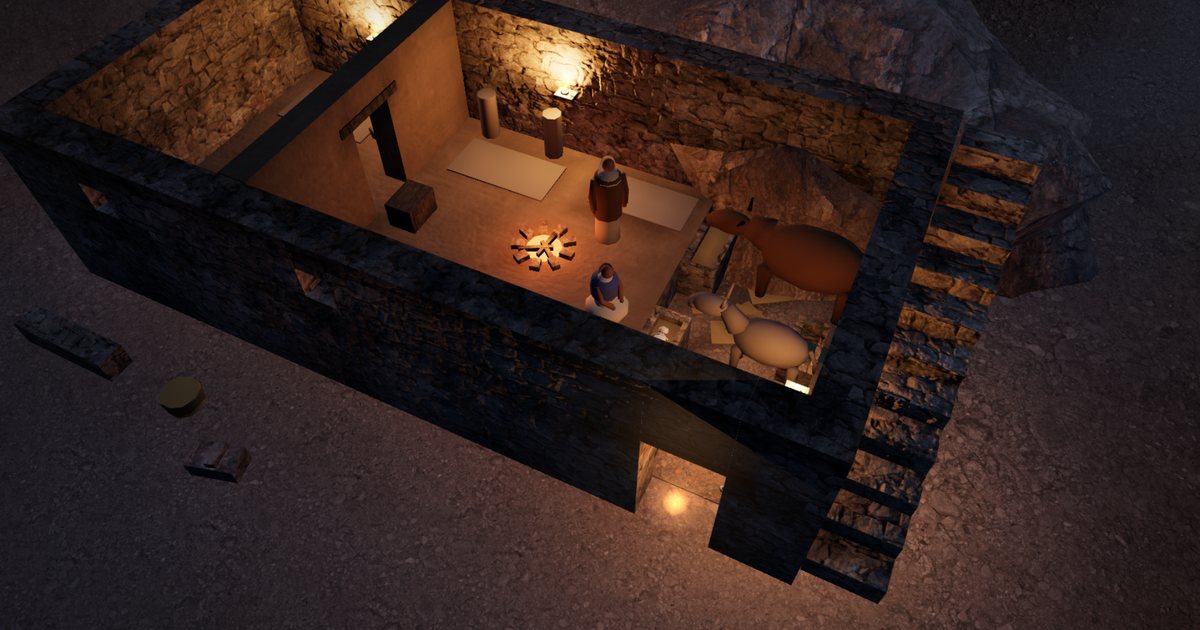
Jesus was born in Bethlehem of Judea, David’s town, 9 km south of Jerusalem; Matthew and Luke agree. Of the place itself Luke says only that Mary “laid him in a feeding trough, because there was no room for them in the inn” (Luke 2:7). No stable, no innkeeper, no animals. The word for “inn” is kataluma, which Luke elsewhere uses for a guest room, so many scholars read the verse as a crowded family house: the guest room was full, and the baby was laid in a manger in the main room. The oldest tradition outside the Gospels (about AD 155) puts the birth in a cave near the village; the two may be one place. Matthew adds that the Magi came later, “into the house”, and found “the young child”.
Step inside the house in Bethlehem →
Bethlehem and the birth at a glance
| Where | Bethlehem of Judea, 9 km south of Jerusalem, about 770 m above sea level |
| When | Before Herod the Great died (usually dated 4 BC), probably about 7–4 BC; no day or season given |
| From Nazareth | About 150 km by the Jordan valley or 125 km through Samaria; four to seven days on foot |
| The “inn” | Greek kataluma, a guest room (Luke 22:11), not pandocheion, an inn (Luke 10:34) |
| The Magi | Number not given; three gifts; they came later, to a house (Matthew 2:11, 16) |
What Luke actually says
A decree of Caesar Augustus sends people to be enrolled, “everyone to his own city” (Luke 2:3). Joseph goes up from Nazareth with Mary, who is pregnant, “because he was of the house and family of David” (Luke 2:4). Then the birth:
While they were there, the day had come for her to give birth. She gave birth to her firstborn son. She wrapped him in bands of cloth and laid him in a feeding trough, because there was no room for them in the inn. (Luke 2:6–7)
That is all. Mary wraps the baby herself, and no one turns the couple away. Nor was it the night they arrived: “while they were there” leaves room for days or weeks.
At the lab’s journey stop Mary rides a donkey, as tradition has it. Luke mentions none, so you can switch it off.
Kataluma: an inn, or a guest room?
Greek had an ordinary word for an inn, pandocheion, and Luke uses it when the Good Samaritan “brought him to an inn, and took care of him” (Luke 10:34). In 2:7 he chose another word. Kataluma comes back at the Last Supper, when the disciples are to ask the master of a house, “Where is the guest room, where I may eat the Passover with my disciples?” (Luke 22:11).
On that reading, the guest room had no space. That fits the village houses of Judea. The family lived on a raised floor; at night the animals came into a lower end by the door, and stone mangers along the edge could be reached from both levels. Scripture hints at it: the woman at Endor “had a fattened calf in the house” (1 Samuel 28:24), and in Luke 13:15 the ox is untied “from the stall”, the same Greek word as the manger of 2:7.
The picture is a full house, not a hostile town. Joseph had come to his own family’s town, and a descendant of David with a pregnant wife would be taken in. With the guest room full, perhaps of relatives in town for the same enrolment, Mary gave birth in the family room and laid the baby in the manger. The lab rates this reading Plausible.
At the house stop the roof is lifted away. Under Family house you see the lamplit raised floor, the stone manger at its edge and the animals below.
The cave tradition
Switch the reading to Cave and the birth moves into a cave behind the house. That tradition is early (Strongly supported). About AD 155 Justin Martyr wrote that Joseph, finding no lodging in the village, sheltered in a cave near it; about 248 Origen said the cave and its manger were shown at Bethlehem. Constantine built the Church of the Nativity over that grotto in the 330s; whether it is the very place cannot be checked.
The two readings are closer than they look: many houses in the Bethlehem hills were built against caves used for storage and animals, so “the house” and “the cave” may be one place. Neither supports the timber barn of European paintings; Judean villages were built of stone.
The shepherds and the sign
The manger returns as a sign: “you will find a baby wrapped in strips of cloth, lying in a feeding trough” (Luke 2:12). No shepherd could miss a newborn lying where the animals ate.
The shepherds’ stop moves to the fields east of the village at night, through four moments: The watch, The angel, The heavenly host and To Bethlehem. The heavenly host is drawn as light: Luke describes a multitude “praising God and saying” (Luke 2:13), not wings. He gives no season either.
What the Magi add: a house, and later
Only Matthew tells of the Magi, and he moves them away from the manger:
They came into the house and saw the young child with Mary, his mother, and they fell down and worshiped him. (Matthew 2:11)
A house, and a young child. Herod then killed the boys of Bethlehem “from two years old and under, according to the exact time which he had learned from the wise men” (Matthew 2:16). The visit came months after the birth, perhaps up to two years later (Strongly supported).
Luke points the same way: forty days after the birth, at the presentation in the Temple, the family offers “A pair of turtledoves, or two young pigeons” (Luke 2:24), the offering allowed to those who could not afford a lamb. If they were still poor then, the gold had not yet come. The Magi stop has two moments, in Herod’s Jerusalem and at the house by day, with more than three travellers at the door, since Matthew never counts them.
The common picture and the text
The lab’s Common picture vs the text panel sets ten familiar details beside the text, each with an evidence level.
| Common picture | What the text says | Evidence level |
|---|---|---|
| An innkeeper turned them away | No innkeeper, no refusal; no room in the kataluma | Textually stated |
| Born the night they arrived | “While they were there, the day had come” (2:6) | Textually stated |
| A wooden stable apart from the house | Only a manger; a house’s lower end or a cave fits | Plausible |
| Mary rode a donkey | Not in Luke; 2nd-century tradition | Speculative |
| An ox and a donkey at the manger | No animals named; the pair comes from Isaiah 1:3 | Speculative |
| Winged angels singing in the sky | The host was “praising God and saying” | Textually stated |
| Magi and shepherds kneeling together | The Magi came later, to a house | Strongly supported |
| Three kings | Matthew neither counts them nor calls them kings | Textually stated |
| The star shone over the stable | It led the Magi to the house, later | Textually stated |
| 25 December, in snow | No date or season; 25 December is first recorded in Rome in 336 | Textually stated |
None of this takes from the story. The Son of God was laid in a feeding trough in a crowded village house, and the news went first to shepherds out in the fields at night.
Frequently asked questions
Was Jesus born in a stable? Luke mentions only a manger. A family house’s lower end or a cave used for animals are both plausible; a wooden barn is not.
How many wise men were there? Matthew does not say. Three gifts suggested three visitors; their names date from the 6th century.
Walk through Bethlehem in 3D
Open Bethlehem and the birth of Jesus →, or go straight to the family house, the cave, the angel in the fields or the flight to Egypt.
Related
- The Places of Jesus map, with Bethlehem among the places of the Gospels.
- The Temple Mount in Jesus’ day, at the Nicanor Gate, where the Mishnah places a mother’s purification.
- Why do Matthew and Luke give different genealogies of Jesus? The family of David that took Joseph to Bethlehem.
Found this helpful? Pass it on.