 X-Dreamers
How Big Was Noah's Ark? The Measurements in Genesis 6, Explained
Genesis 6 gives the ark as 300 × 50 × 30 cubits: about 135 m long. What those numbers mean, what the text leaves out, and how the ark compares to a 747.
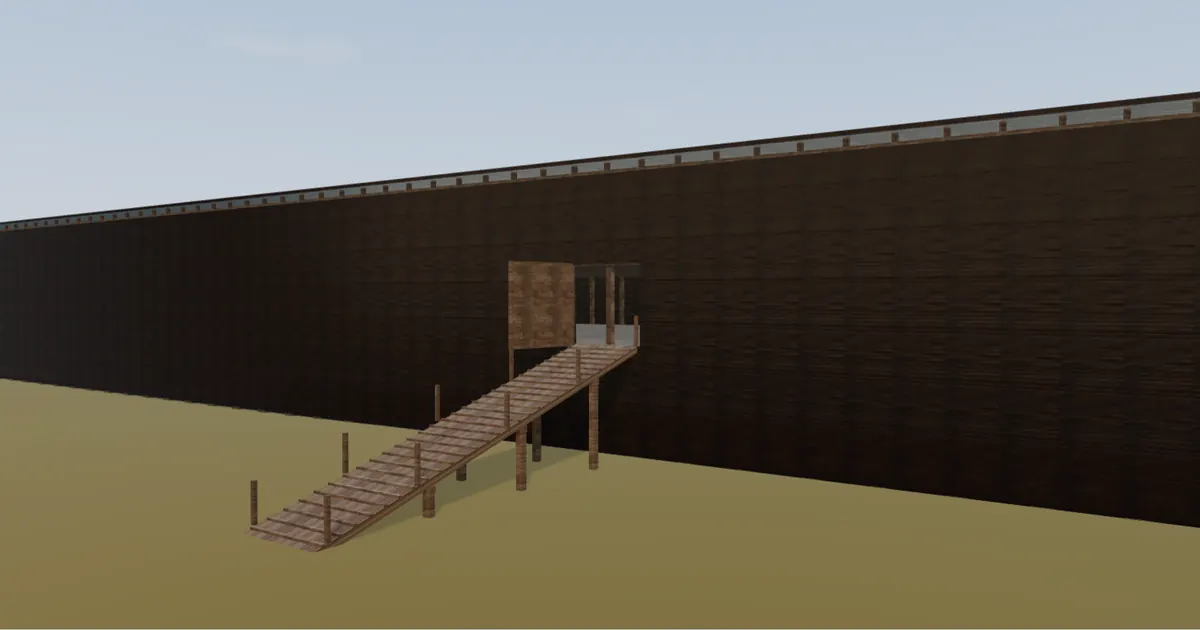
Noah’s ark was 300 cubits long, 50 cubits wide and 30 cubits high. That is the one measurement Genesis gives, and with the common cubit of about 45 cm it comes to roughly 135 metres long, 22.5 metres wide and 13.5 metres high: nearly twice the length of a jumbo jet, and big enough for three decks with a combined floor area larger than a football pitch. The numbers themselves are not in doubt. What they looked like, and almost everything about the inside, is a matter of careful reconstruction.
Or start from the verse itself: Genesis 6:15.
What Genesis 6 actually says
The instructions take three verses. In the World English Bible the Hebrew word for the ark, tevah, is rendered “ship”:
Make a ship of gopher wood. You shall make rooms in the ship, and shall seal it inside and outside with pitch. (Genesis 6:14)
This is how you shall make it. The length of the ship shall be three hundred cubits, its width fifty cubits, and its height thirty cubits. (Genesis 6:15)
You shall make a roof in the ship, and you shall finish it to a cubit upward. You shall set the door of the ship in its side. You shall make it with lower, second, and third levels. (Genesis 6:16)
That is the whole list: one material, one coating, rooms, three levels, a door in the side, and an opening or roof “finished to a cubit upward”. Then comes the line that closes the building story: “He did all that God commanded him” (Genesis 6:22).
The ark in metres
A cubit is the length from elbow to fingertip. Genesis never converts it, and ancient cubits varied from about 0.44 to 0.52 m. The lab lets you switch between the two most common values.
| Cubits (Genesis 6:15) | Common cubit, 0.45 m | Royal cubit, 0.52 m | |
|---|---|---|---|
| Length | 300 | about 135 m | about 156 m |
| Width | 50 | about 22.5 m | about 26 m |
| Height | 30 | about 13.5 m | about 15.6 m |
| Floor area, three decks | about 45,000 sq cubits | about 9,100 m² | about 12,200 m² |
| Volume, if box-shaped | 450,000 cubic cubits | about 41,000 m³ | about 63,000 m³ |
The ark is six times as long as it is wide and ten times as long as it is high. A 6 : 1 ratio sits comfortably within the range of modern cargo ships. How it actually handled in rough water would depend on hull shape and load, and Genesis gives neither.
How big is that, really?
Numbers like 135 m are hard to feel. The lab’s Compare button draws modern objects at their real size beside the ark:
- A Boeing 747-400 is 70.6 m long. The ark, on the common cubit, is nearly twice that.
- A football pitch is 105 × 68 m. The ark is about 30 m longer, though much narrower.
- The Tabernacle courtyard (100 × 50 cubits) fits alongside with room to spare. Both are measured in cubits.
People often ask whether the ark was bigger than the Titanic. It was not: the Titanic was about 269 m long, roughly twice the ark. But for a wooden vessel built without iron frames, 135 m is very large indeed.
Three decks, rooms and a door
The phrase “lower, second, and third levels” gives us three decks. Split the 30 cubits evenly and each deck is about 10 cubits high; take off the thickness of the floors and you are left with roughly 9 cubits, or about 4 m, of headroom. That is a reasonable reading, not a stated fact.
The word for “rooms” is qinnim, the ordinary Hebrew word for birds’ nests, used here in the plural. It suggests many small compartments rather than a few great halls. The layout is not given. The lab’s model runs bays along a central aisle on each deck and labels the plan as a guess.
The door was “in its side”. Genesis gives no size and no deck. The model puts it on the middle deck with a ramp, which is one workable choice among several. When everyone was aboard, the text is specific about who closed it:
Those who went in, went in male and female of all flesh, as God commanded him; then the LORD shut him in. (Genesis 7:16)
You can see that moment in the lab’s story strip: the LORD shuts the door →.
Was the ark a box or a ship?
Genesis gives three measurements and no hull shape. The word tevah appears in only one other place in the Bible: the papyrus basket in which the baby Moses was laid on the Nile, “coated … with tar and with pitch” (Exodus 2:3). A floating chest, then, rather than a sailing ship. The ark had no sail, oars or rudder that we are told of. It did not need to go anywhere; it needed to float.
Some modern designs give the ark a pointed bow and a fin at the stern, so that it would swing round to face the waves. That fits the numbers but has no basis in the text. The lab’s Hull buttons switch between the two, and you can peel back the pitch to see the bare planks.
What we know and what is guessed
The lab tags every claim with how sure we can be:
| Claim | Evidence level |
|---|---|
| 300 × 50 × 30 cubits; gopher wood; pitch inside and out; rooms; three levels; a door in the side | Stated in the text |
| The word for rooms means “nests”, suggesting many small compartments | Strongly supported |
| About 135 × 22.5 × 13.5 m (common cubit) | Plausible |
| Each deck about 10 cubits high | Plausible |
| Tevah points to a box-like vessel made to float | Plausible |
| Gopher wood was cypress | Speculative |
| A pointed bow and stern fin | Speculative |
| Where the animals, food, water and family were kept | Speculative |
| Scaffolding, landscape and the ramp in the story scenes | Artistic |
“Gopher” occurs once in the Bible, here, and most versions leave it untranslated. Cypress is a traditional guess because it is durable and resinous, but nobody knows. The same goes for the animals. Genesis 7 has pairs of most kinds and seven pairs of clean animals and birds. Published estimates of the total range from a few thousand to about 35,000, depending entirely on what a “kind” is taken to mean.
A year aboard
Genesis dates the flood by Noah’s age. It began on the seventeenth day of the second month of his six hundredth year, the ark came to rest “on Ararat’s mountains” (Genesis 8:4) in the seventh month, and the earth was dry on the twenty-seventh day of the second month of the next year. With 30-day months that is about 370 days inside the ark. “Ararat” is a region, the old kingdom of Urartu around Lake Van, not one peak, and no remains of the ark have been verified.
The New Testament remembers the ark as a place of rescue: “few, that is, eight souls, were saved through water” (1 Peter 3:20). Hebrews calls Noah’s building an act of faith, done before he could see what he had been warned about.
Frequently asked questions
How many metres is 300 cubits? About 135 m with a common cubit of 0.45 m, or about 156 m with a royal cubit of 0.52 m.
Was Noah’s ark bigger than the Titanic? No. The Titanic was about 269 m long, roughly twice the length of the ark.
What was gopher wood? Nobody knows for certain. The word appears only in Genesis 6:14. Cypress is the most common guess.
How long was Noah in the ark? About a year and ten days by the dates in Genesis 7 and 8, roughly 370 days if the months had 30 days.
Walk through it yourself
Peel back the pitch, cut away the side to see the decks, or walk in through the door. Every part carries its Scripture and its evidence level.
Walk inside the ark → · or start at the story: the flood, the raven and the dove, the rainbow.
Related labs
- The Tabernacle in 3D: another structure built to cubit measurements God gave.
- Noah and the flood on the Bible Story Map: where the flood sits in the whole story.
- Life Phases of Old Testament Heroes: Noah’s life, and seven others, drawn on one age axis.
Found this helpful? Pass it on.