 X-Dreamers
The Bible on One Timeline: Kings, Prophets and Empires
A timeline of the whole Bible from Abraham to the early church: which dates are firm, which are debated, and where kings, prophets and empires overlap.
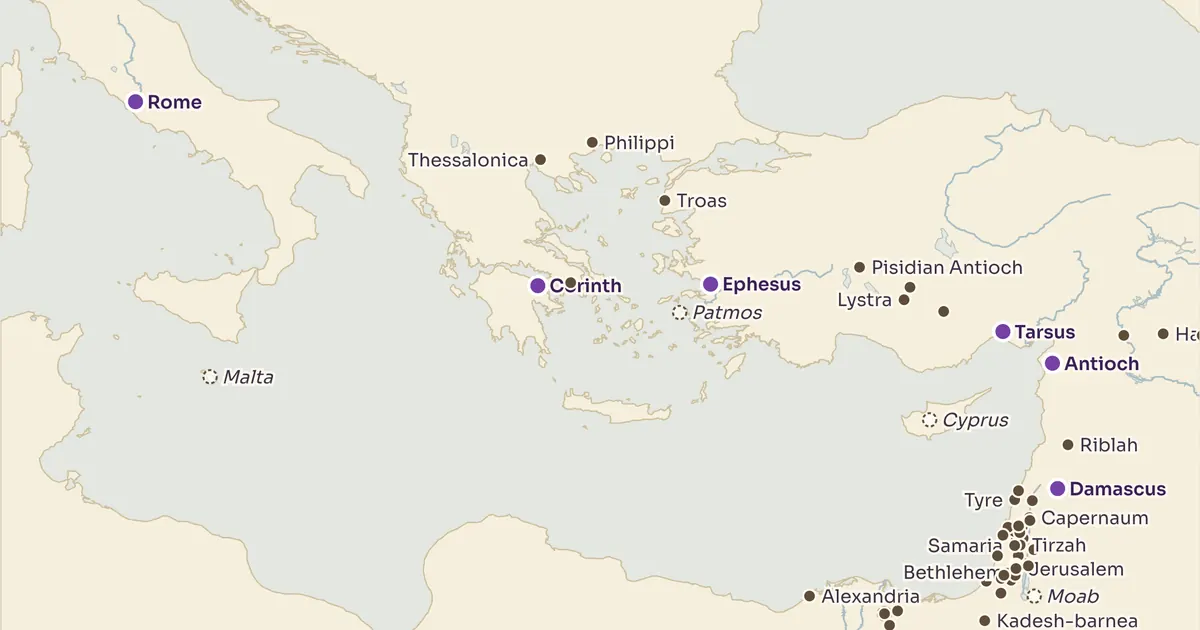
The story of the Bible can be laid on a single timeline running from Abraham, around 2000 BC, to the close of the New Testament around AD 100. The dates are not all equally sure. From Solomon onward, Assyrian and Babylonian records tie the kings of Israel and Judah to fixed years: Samaria fell in 722 BC and Jerusalem in 586 BC. Before Solomon, every date is counted back from the text and depends above all on when the Exodus happened, about 1446 BC or about 1260 BC. Put the kings, the prophets and the great empires on the same line and a lot of Scripture falls into place: Isaiah is speaking into Assyria’s world, Daniel into Babylon’s and Persia’s, and the Gospels into Rome’s.
The eras at a glance
These are the spans the lab uses. Where two ranges are given, the first follows the early Exodus date and the second the late one.
| Era | Approximate dates | Key people | Empire in the background |
|---|---|---|---|
| Patriarchs | c. 2166–1446 BC or c. 1980–1260 BC | Abraham, Isaac, Jacob, Joseph | Egypt (Middle Kingdom) |
| Exodus and wilderness | c. 1446–1406 BC or c. 1260–1220 BC | Moses, Aaron | Egypt (New Kingdom) |
| Conquest and judges | c. 1406–1050 BC or c. 1220–1050 BC | Joshua, Deborah, Gideon, Samson, Ruth | Egypt (New Kingdom, to 1070 BC) |
| United kingdom | 1050–931 BC | Saul, David, Solomon; Samuel, Nathan | no great empire |
| Divided kingdom | 931–586 BC | Kings of Israel and Judah; Elijah, Isaiah, Jeremiah | Assyria, then Babylon |
| Exile | 586–538 BC | Daniel, Ezekiel | Babylon |
| Return | 538–430 BC | Zerubbabel, Ezra, Nehemiah, Esther; Haggai, Malachi | Persia |
| Between the Testaments | 430–6 BC | the Maccabees, Herod | Persia, Greece, then Rome |
| Life of Jesus | c. 6 BC–AD 30 | Jesus, John the Baptist | Rome |
| Early church | AD 30–100 | Peter, Paul, John | Rome |
The firm dates
A handful of events are pinned down by outside records, and the rest of the timeline hangs from them.
- 853 and 841 BC. The battle of Qarqar, where Ahab fought Assyria, and Jehu’s tribute to Assyria anchor the reigns of the kings. The lab follows Edwin Thiele’s widely used chronology for the kings; other reconstructions differ by a few years, and some reigns overlap as co-regencies.
- 722 BC. Samaria falls after a three-year siege, and the northern kingdom ends:
In the ninth year of Hoshea the king of Assyria took Samaria and carried Israel away to Assyria, and placed them in Halah, and on the Habor, the river of Gozan, and in the cities of the Medes. (2 Kings 17:6)
- 701 BC. Sennacherib invades Judah. His own annals boast of shutting Hezekiah up in Jerusalem “like a bird in a cage”, yet the city is spared.
- 605 BC. The battle of Carchemish; Daniel and the first exiles are taken to Babylon.
- 586 BC (some say 587). Babylon burns the Temple: “He burned the LORD’s house, the king’s house, and all the houses of Jerusalem” (2 Kings 25:9).
- 539–538 BC. Babylon falls to Cyrus, who lets the exiles go home (Ezra 1:1).
- 516 and 445 BC. The second Temple is finished; Nehemiah rebuilds the walls.
- 4 BC and AD 70. Herod the Great dies, which is why Jesus’ birth is placed around 6 to 4 BC; Rome destroys Jerusalem.
The debated dates: when was the Exodus?
This is the one switch that moves everything earlier on the line. The key verse is this:
In the four hundred and eightieth year after the children of Israel had come out of the land of Egypt, in the fourth year of Solomon’s reign over Israel, in the month Ziv, which is the second month, he began to build the LORD’s house. (1 Kings 6:1)
Solomon’s fourth year is about 966 BC. Read the 480 years as calendar years and the Exodus falls about 1446 BC. Many scholars read 480 as twelve generations of forty years, shorter in real time, and link the store city of “Raamses” (Exodus 1:11) with the pharaoh Rameses II, giving about 1260 BC. The lab rates the Exodus date as plausible either way and lets you flip between the two. When you do, the patriarchs, Moses, Joshua and the judges all slide together, while David and everything after stays put.
The patriarchs are rated speculative for a different reason. Their dates are counted back from the Exodus using the ages in Genesis and the 430 years of Exodus 12:40, and no outside record names them. Genesis 1–11 is shown before the dated timeline, without years at all, because readers differ on whether its numbers can be added up into dates.
Kings and prophets side by side
This is where a timeline earns its keep. Many prophetic books open by naming the kings they spoke under. Isaiah’s first verse lists four:
The vision of Isaiah the son of Amoz, which he saw concerning Judah and Jerusalem, in the days of Uzziah, Jotham, Ahaz, and Hezekiah, kings of Judah. (Isaiah 1:1)
Lay that against the kings and you see Isaiah preaching from about 740 to 681 BC, through the fall of Samaria and Sennacherib’s siege. Amos and Hosea spoke to the northern kingdom in the days of Jeroboam II and after. Jeremiah warned Jerusalem for forty years and watched it fall. Haggai and Zechariah stirred the returned exiles to rebuild in 520 BC.
A few prophets name no king. Joel is placed anywhere from the ninth to the fifth century BC, and Obadiah somewhere after Jerusalem’s fall. The lab draws those bars faint, to show how little we know.
What we know and what is estimated
| Part of the timeline | Evidence level |
|---|---|
| Kings of Israel and Judah; the fall of Samaria and Jerusalem; the Persian period; Rome and Herod | Strongly supported |
| The Exodus date (1446 or c. 1260 BC); the judges; Saul, David and Solomon; the life of Jesus; the dates in Acts and the letters | Plausible |
| The patriarchs; undated prophets such as Joel and Obadiah | Speculative |
| Genesis 1–11 | Shown without dates |
Even the “firm” dates carry small margins. The Babylonian Chronicle dates Jerusalem’s first surrender to March 597 BC, but whether the Temple fell in 586 or 587 is still argued over by a year.
Three ways to see the whole story
The Bible Time Map is a zoomable timeline tied to a map. Whatever part of the timeline is in view decides what the map shows: the places of every item, with the empires of that time shaded behind them. Kings are drawn as bars for their reigns, Israel above Judah. Click any bar for its Scripture and how sure the date is.
The kingdom divides, 931 BC → · Samaria falls · Jerusalem falls · Cyrus sends the exiles home
The Time Map with new navigation is the same data, easier to move around on a phone: drag or swipe the timeline, use the overview strip of the whole story, and step from era to era with one tap.
Isaiah on the new Time Map → · the Exodus
The Bible Story Map trades dates for plot. It is a mind map of twelve big stories, over a hundred stories and hundreds of episodes, opened branch by branch, each with its passage and a key verse. It is the best way in if you know the stories but not how they connect.
The divided kingdom on the Story Map → · Hezekiah trusts the LORD · the exile
Frequently asked questions
How long a period does the Bible cover? From Abraham, around 2000 BC, to the end of the first century AD: over two thousand years of history, with Genesis 1–11 before that and undated.
When was the Exodus? About 1446 BC if 1 Kings 6:1 is read as 480 calendar years, or about 1260 BC if those years count generations and Rameses II was the pharaoh. Both views have serious defenders.
When did Israel split into two kingdoms? In 931 BC, after Solomon’s death, when ten tribes followed Jeroboam.
When was Jerusalem destroyed by Babylon? In 586 BC (some say 587).
When was Jesus born? Before Herod the Great died in 4 BC, so about 6 to 4 BC.
Related labs
- The Tabernacle: built in the second year after the Exodus.
- Places of Jesus: the Gospel years on a map of Galilee and Judea.
- Life Phases of Old Testament Heroes: eight lives on one age axis, from Noah to David.
Found this helpful? Pass it on.