 X-Dreamers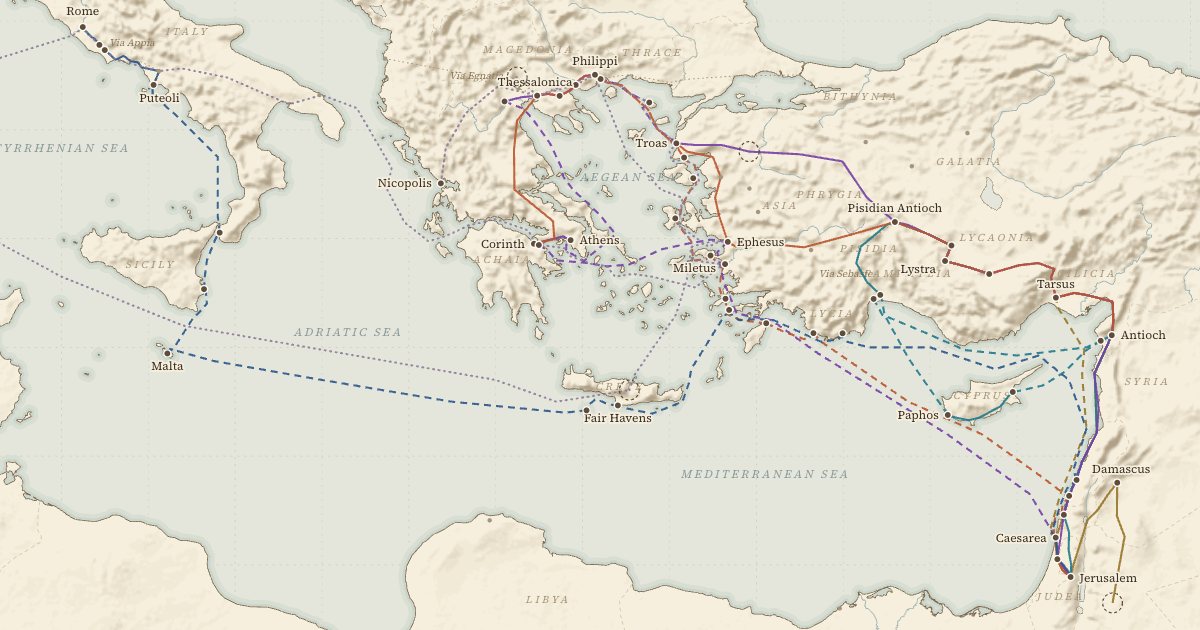
Enter from a verse
Acts 19:29
The whole city was filled with confusion, and they rushed into the theatre
29And the whole city was filled with confusion: and having caught Gaius and Aristarchus, men of Macedonia, Paul’s companions in travel, they rushed with one accord into the theatre.
Scripture: King James Version (1769).
A trade quarrel becomes a city riot, and two of Paul's companions are dragged into the theatre. Four doors open the time, the city, the theatre and the business behind the shouting.
When: Paul's long stay in Ephesus
On his third journey Paul stayed in Ephesus for more than two years, teaching daily in the hall of Tyrannus, so that the word spread through the province of Asia. The riot came near the end of that stay, in the mid 50s AD.
Scripture
9But when divers were hardened, and believed not, but spake evil of that way before the multitude, he departed from them, and separated the disciples, disputing daily in the school of one Tyrannus. 10And this continued by the space of two years; so that all they which dwelt in Asia heard the word of the Lord Jesus, both Jews and Greeks.
What we know, and how sure
PlausibleResearchPaul's third journey: c. AD 53–57 on the Time Map.
Acts gives few years. An inscription at Delphi puts Gallio in Corinth in AD 51–52 (Acts 18:12); most other dates in Paul's life are counted from it.
Where: Ephesus
Ephesus was the great port city of the province of Asia, near today's Selçuk in Turkey, with its harbour, marble streets and the famous temple of Artemis. Its ruins are among the best preserved Roman cities.
What we know, and how sure
Strongly supportedEphesus is the excavated city near Selçuk.
Extensive excavations; the harbour has since silted up several kilometres from the sea. Pleiades 599612.
The space: the great theatre
The crowd rushed into the theatre, the largest public space in the city, dragging Gaius and Aristarchus with them. Paul wanted to go in, but the disciples and some officials of Asia kept him out. For two hours the crowd shouted, until the town clerk calmed them.
Scripture
29And the whole city was filled with confusion: and having caught Gaius and Aristarchus, men of Macedonia, Paul’s companions in travel, they rushed with one accord into the theatre. 30And when Paul would have entered in unto the people, the disciples suffered him not. 31And certain of the chief of Asia, which were his friends, sent unto him, desiring him that he would not adventure himself into the theatre.
35And when the townclerk had appeased the people, he said, Ye men of Ephesus, what man is there that knoweth not how that the city of the Ephesians is a worshipper of the great goddess Diana, and of the image which fell down from Jupiter?
What we know, and how sure
Strongly supportedResearchThe theatre of the riot is the great theatre excavated at Ephesus.
Acts speaks of 'the theatre' as a single known place; Ephesus had one great theatre, on the slope of Mount Pion facing the harbour street, and it has been excavated.
PlausibleResearchThe theatre held about 20,000 to 25,000 people.
Estimates from the excavated seating vary, and the theatre was enlarged over time; the figure for Paul's day is approximate.
See it in the Labs
The background: Artemis and the silversmiths
Demetrius, a silversmith who made silver shrines of Artemis, warned his trade that Paul's preaching would ruin their business and the goddess's honour. Her temple at Ephesus was one of the wonders of the ancient world.
Scripture
24For a certain man named Demetrius, a silversmith, which made silver shrines for Diana, brought no small gain unto the craftsmen; 25Whom he called together with the workmen of like occupation, and said, Sirs, ye know that by this craft we have our wealth. 26Moreover ye see and hear, that not alone at Ephesus, but almost throughout all Asia, this Paul hath persuaded and turned away much people, saying that they be no gods, which are made with hands: 27So that not only this our craft is in danger to be set at nought; but also that the temple of the great goddess Diana should be despised, and her magnificence should be destroyed, whom all Asia and the world worshippeth.
What we know, and how sure
Strongly supportedResearchThe temple of Artemis at Ephesus was counted among the seven wonders of the ancient world.
Ancient lists of the wonders include it; its foundations have been found outside the city.
Textually statedBiblical textDemetrius made silver shrines of Artemis and brought much business to the craftsmen.
Stated in Acts 19:24.
See it in the Labs
Doors into the verse
Back to the verse
29And the whole city was filled with confusion: and having caught Gaius and Aristarchus, men of Macedonia, Paul’s companions in travel, they rushed with one accord into the theatre.
For discussion
- 1Demetrius's protest was about money as well as religion. Where do faith and business collide today?
- 2Others kept Paul from walking into danger. When have friends protected you from your own courage?
See this verse's connections in the Knowledge Graph
Read Acts 19 in full
Every door is drawn from the Bible Labs knowledge graph: each claim keeps its evidence level, and readings that link one passage to another are marked as interpretation. King James Version (1769).