
Where Was Gethsemane?
Gethsemane was an olive grove on the Mount of Olives, across the Kidron from Jerusalem. What the Gospels say, what the name means, and how sure the site is.
Gethsemane was an olive grove on the Mount of Olives, just east of Jerusalem across the Kidron valley. John calls it a garden, and Jesus often went there with his disciples. The traditional site, at the foot of the mount by today’s Church of All Nations, fits the Gospels, but the exact spot is unknown.
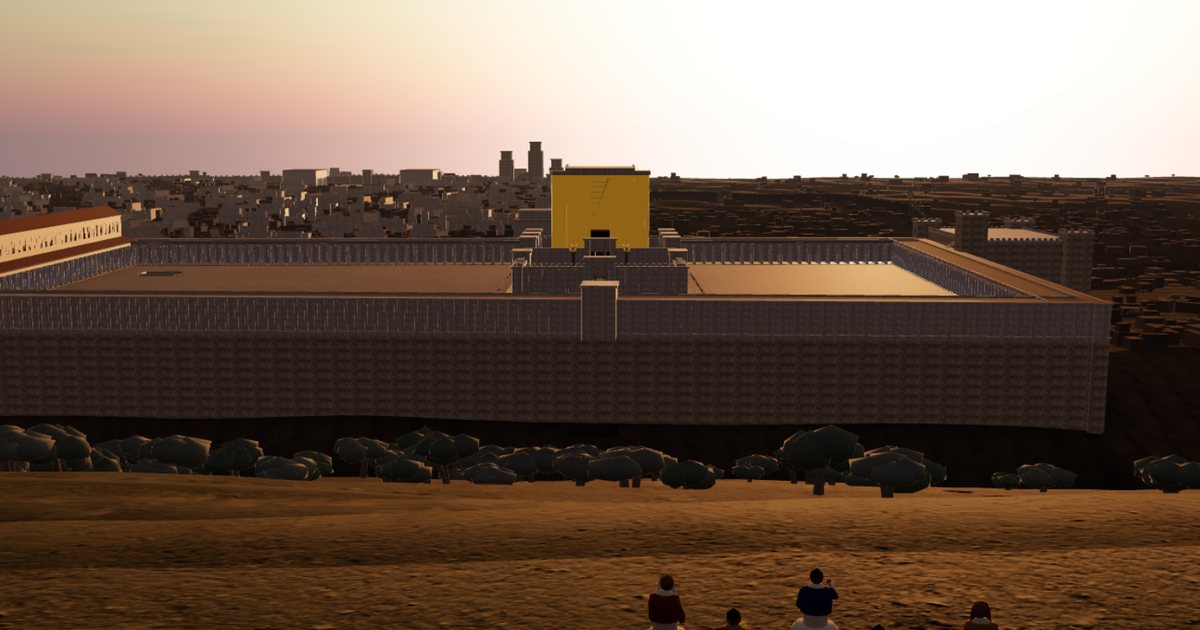
The Holy Week lab sets the scene on Thursday night, after the supper. Open Gethsemane in 3D and you stand behind the three sleeping disciples among the olive trees, looking west across the Kidron to the Temple walls.
What do the Gospels say about the place?
Each Gospel adds one piece. Mark and Matthew give the name: “they came to a place which was named Gethsemane” (Mark 14:32). Luke gives the hill: Jesus “went, as he was wont, to the mount of Olives” (Luke 22:39). John gives the valley and the garden:
When Jesus had spoken these words, he went forth with his disciples over the brook Cedron, where was a garden, into the which he entered, and his disciples. (John 18:1)
Cedron is the Kidron, the valley that runs between the city and the Mount of Olives. John also explains how Judas could find Jesus in the dark: “Judas also, which betrayed him, knew the place: for Jesus ofttimes resorted thither with his disciples.” (John 18:2) It was a place they used often, not a hiding place.
The name fits the hill. Gethsemane is Aramaic gat shemanim, “oil press”, and the Mount of Olives took its own name from its olive groves. A grove with a press in it is what the name suggests (Strongly supported).
Is the traditional site the real one?
The area, yes; the exact spot, no one knows. That Gethsemane lay across the Kidron at the foot of the Mount of Olives is Strongly supported on the Places of Jesus map: John, Mark and Luke agree, and a church stood at the traditional spot by the late 4th century. The Church of All Nations (1924) is built on the remains of that church, around a rock where Jesus was said to have prayed. A cave nearby once held an olive press.
For the spot itself, the Holy Week lab marks the traditional site Plausible: it fits every detail the Gospels give, but nothing on the ground can show where Jesus knelt.
What about the old olive trees there today? They are not from Jesus’ time. A 2012 study dated the oldest trunks to the 12th century, and Josephus says the Romans cut down the trees around Jerusalem in the siege of AD 70. The trees may grow from older roots.
What does the lab show?
The stop has two moments. In The prayer, Jesus prays alone in the moonlight, “about a stone’s cast” (Luke 22:41) from Peter, James and John, who sleep. Passover fell at the full moon, so the night was probably bright (Plausible). In The arrest, torches and lanterns come down from the city and across the Kidron as Judas leads the soldiers and officers to Jesus.
The grove itself, its trees, terraces and press, is drawn after ancient olive growing in Judea and is marked Artistic: no particular tree is shown.
For the whole week, from Palm Sunday to the empty tomb, see Holy Week in Jerusalem, Day by Day.
Found this helpful? Pass it on.