
Advent with Bible Labs: Four Weeks on the Road to Bethlehem
A free Advent path for families and groups: a step each Sunday from Isaiah to the magi, with 3D Bethlehem, honest evidence notes and a printable kit.
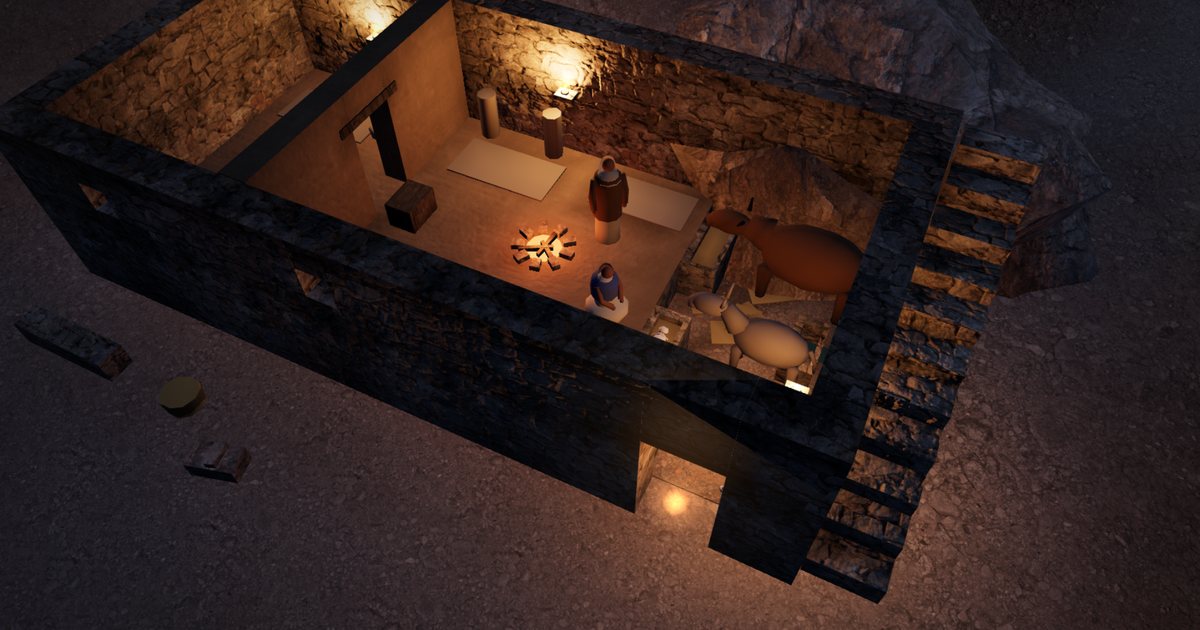
Advent 2026 begins on Sunday 29 November. Bible Labs now has an Advent path for it: four steps, one for each Sunday, that walk from the prophets to the magi. Week 1 is the promise (Isaiah 9 and Micah 5:2), week 2 the journey (Luke 2:1–7), week 3 the shepherds (Luke 2:8–20) and week 4 the magi (Matthew 2:1–12), which runs on to Epiphany on 6 January. Each week has the Scripture in full, a set of links into 3D Bethlehem, the maps and the timeline, evidence notes that say how sure we can be, a ten-minute version for families and three questions for groups. The page opens on the current week by itself, and there is a printable kit with QR codes.
The four weeks at a glance
| Week | Sunday | Theme | Read | Go to |
|---|---|---|---|---|
| 1 | 29 November | Promise | Isaiah 9:2, 6–7; Micah 5:2 | The Time Map, Hezekiah's Jerusalem, Bethlehem from above |
| 2 | 6 December | Journey | Luke 2:1–7 | The road in, the family house, the cave |
| 3 | 13 December | Shepherds | Luke 2:8–20 | The shepherds' field in four moments |
| 4 | 20 December to 6 January | Magi | Matthew 2:1–12 | Herod's Jerusalem, the house in Bethlehem |
Week 1: a promise made seven hundred years early
Christmas did not start in Luke 2. Isaiah and Micah spoke in Judah in the late eighth century BC, when Assyria was on the march. Micah named a village:
But thou, Beth-lehem Ephratah, though thou be little among the thousands of Judah, yet out of thee shall he come forth unto me that is to be ruler in Israel; whose goings forth have been from of old, from everlasting. (Micah 5:2)
Isaiah spoke of a child: “For unto us a child is born, unto us a son is given: and the government shall be upon his shoulder” (Isaiah 9:6).
The week's links start on the Time Map at Micah, so you can see the gap between the prophets and Bethlehem for yourself. Then they go to Jerusalem Through the Ages, where Hezekiah's walls and tunnel show the city Isaiah walked in, and to Bethlehem from above: a village of a few hundred people on a ridge.
The evidence notes for this week set two readings of Isaiah 9 side by side. Matthew applies Isaiah 9:1–2 to Jesus' preaching in Galilee, and the church has read the child of 9:6–7 as Jesus. Some Jewish interpreters connected the child with King Hezekiah. Both are marked as interpretation, at the same level. The page does not pick one for you; it shows what each rests on.
Week 2: the road, and the “inn”
Luke tells the journey in a few lines. A decree of Caesar Augustus, Joseph going up from Nazareth “because he was of the house and lineage of David” (Luke 2:4), and then the birth:
And she brought forth her firstborn son, and wrapped him in swaddling clothes, and laid him in a manger; because there was no room for them in the inn. (Luke 2:7)
No innkeeper, no stable, no donkey. Luke's word for “inn” is kataluma, the word he uses again for the upstairs guest room of the Last Supper. The links for this week take you along the road into Bethlehem, into a family house with its guest room and the mangers in the animals' end, and to the cave that Justin Martyr wrote about around AD 155. The common picture list sets the usual Christmas scene beside the text, item by item.
The evidence notes keep the Bethlehem lab's levels: that Luke has no innkeeper is in the text; reading kataluma as a guest room is plausible; the cave tradition is early and well attested; how Luke's census fits Quirinius is still debated, and the page says so.
Week 3: the shepherds' field
The third Sunday goes out to the fields below the village. The lab splits the scene into the four moments Luke gives: the watch, the angel, the heavenly host and the hurry into Bethlehem. The angel's words are the centre of the week: “For unto you is born this day in the city of David a Saviour, which is Christ the Lord” (Luke 2:11).
Where were the fields? Nobody knows. Tradition points to Beit Sahour, east of Bethlehem, and the page marks that as speculative. The same goes for the season: flocks out at night are often said to rule out winter, others answer that flocks stayed out near Bethlehem in winter too, and Luke gives no month. One small thing the lab gets right: Luke says the heavenly host was “praising God, and saying” (Luke 2:13). He mentions no wings and no singing.
Week 4: the magi, to Epiphany
Matthew's visitors go to Jerusalem first. Herod is troubled, the scribes answer from Micah 5:2, and only then do the magi go on to Bethlehem. Week 4 takes you to Herod's Jerusalem and then to the house, because that is where Matthew puts them:
And when they were come into the house, they saw the young child with Mary his mother, and fell down, and worshipped him: and when they had opened their treasures, they presented unto him gifts; gold, and frankincense, and myrrh. (Matthew 2:11)
A house, “the young child”, and Herod's order to kill the boys “from two years old and under” (Matthew 2:16): the visit came some time after the birth, which the lab rates as strongly supported. Matthew does not say how many magi there were, only that there were three gifts. That they were kings who rode camels comes from later readings of Psalm 72 and Isaiah 60. For the star, the page lists five explanations with their levels and proves none of them.
This week runs past Christmas to Epiphany on 6 January, when many churches remember the magi.
For families: ten minutes
Every week has a short version for the kitchen table: read one or two verses, look at one scene in the lab together, wonder with two open questions, and pray a short prayer. There is always one question for the youngest, such as “What is a manger for?” or “How many gifts were there?”. It takes about ten minutes.
For groups and classes: the printable kit
The lesson kit has two pages a week. The teacher page has a 40-minute plan, three lab views to show with a QR code each, what the evidence says in four lines, three discussion questions, a leader tip and a closing prayer. The family page goes home: the key verse, a QR code to the scene, things to find, questions to talk about, a space to draw, and a prayer. It prints on A4 or US Letter, and you can print a single week, such as week 2.
Questions
Do I need to install anything? No. The path and the 3D scenes run in the browser, on a phone, a tablet or a church laptop.
Is the Chinese a translation? No. The Chinese pages and kit are written for Chinese readers, with the 1919 Chinese Union Version, in Simplified and Traditional characters.
Why do some notes say “speculative”? Because the text does not settle them. The Advent path uses the same evidence levels as every lab: what Scripture says, what is well supported, what is a reasonable reconstruction, and what is a guess. Where Christians read a passage in more than one way, the readings are set side by side.
Found this helpful? Pass it on.