 X-Dreamers
Seasons of Waiting in the Bible: Abraham to David
Abraham waited 25 years for a son, Joseph 13 in slavery and prison, Moses 40 in Midian, David years on the run. What their waiting looked like, age by age.
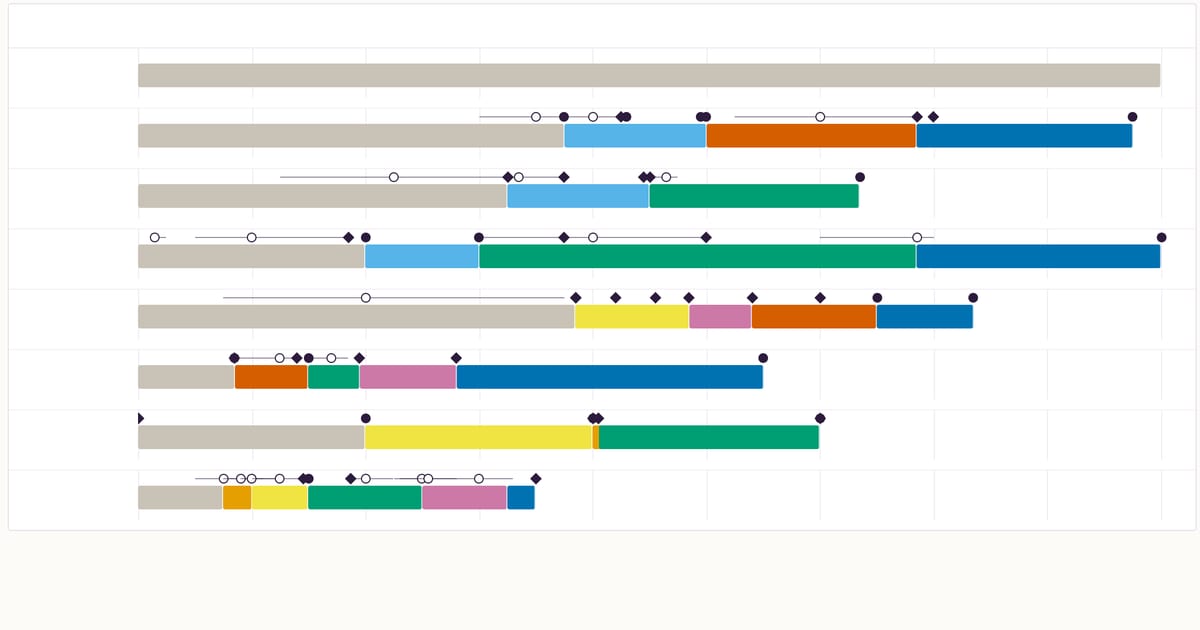
Some of the Bible’s best-known lives were mostly waiting. Abraham was 75 when God called him out of Haran and 100 when Isaac was born: twenty-five years between the promise and the son. Joseph was sold at 17 and stood before Pharaoh at 30: thirteen years as a slave and a prisoner. Moses fled Egypt at 40 and met God at the burning bush at 80: forty years keeping sheep in Midian. David was anointed as a boy and crowned at 30, after years of running from Saul. Their stories never pretend waiting is easy, but they show that it was where much of their faith was formed, and that God was present in it before anything changed.
See eight lives on one age axis →
Four waits, side by side
| Person | The wait | Ages | How the ages are known |
|---|---|---|---|
| Abraham | Twenty-five years for a son | 75 to 100 | Both ages stated (Genesis 12:4; 21:5) |
| Joseph | Thirteen years of slavery and prison | 17 to 30 | Both ages stated (Genesis 37:2; 41:46) |
| Moses | Forty years in Midian | 40 to 80 | Stated in Acts 7:23; 80 worked out from Acts 7:30 |
| David | The fugitive years | about 20 to 30 | Only 30 is stated (2 Samuel 5:4); the rest is estimated |
The Life Phases lab uses two kinds of mark. Events are dots at an age the text gives or that can be worked out from it, and each is labelled stated, derived or estimated. Phases are coloured bands laid between the events. The lab is careful to say those bands are an interpretation, one reading of a life, not labels the Bible supplies.
Abraham: twenty-five years for a son
Genesis gives his age:
So Abram went, as the LORD had told him. Lot went with him. Abram was seventy-five years old when he departed from Haran. (Genesis 12:4)
Then nothing, for a very long time. Abram lied about Sarai in Egypt. At 85, after ten years in Canaan, he took Hagar. At 99 he laughed at the promise. Yet somewhere in the middle of all that, sometime between his arrival and Hagar, comes the verse Paul would build on:
He believed in the LORD, who credited it to him for righteousness. (Genesis 15:6)
“Abraham was one hundred years old when his son, Isaac, was born to him” (Genesis 21:5). On the lab’s chart, that wait fills a seventh of his 175 years. Waiting in Scripture is not a pause before faith begins. For Abraham it was where faith was learned, stumbles included.
Joseph: thirteen years, and the LORD was with him
Joseph’s wait was not for a son but for the meaning of two dreams, and he spent it in a pit, a slave market, an Egyptian household and a prison. Genesis says it in the worst places, not after the rescue: “But the LORD was with Joseph” (Genesis 39:21). Looking back, the psalmist says “Joseph was sold for a slave” (Psalm 105:17) and kept in irons “until the time that his word happened, and the LORD’s word proved him true” (Psalm 105:19).
The cruellest stretch is the last two years, after the cupbearer forgot him. Years later, raised to power in Egypt, Joseph named his second son Ephraim: “For God has made me fruitful in the land of my affliction” (Genesis 41:52). He does not say the affliction ended. He says fruit grew in it.
Moses: forty years in the back of the desert
Moses had the opposite problem. At forty he was educated, capable and sure of his calling, and he tried to deliver his people by his own hand. It failed, and he ran. He named his first son Gershom, explaining, “I have lived as a foreigner in a foreign land.” (Exodus 2:22) Then Scripture goes quiet for a third of his life. Stephen covers it in five words: “When forty years were fulfilled” (Acts 7:30), the angel appeared in the burning bush.
The man Stephen called “mighty in his words” (Acts 7:22) now tells God he is slow of speech. Every objection at the bush starts with himself: “Who am I, that I should go to Pharaoh” (Exodus 3:11). God’s answer is not a better résumé but a promise: “Certainly I will be with you” (Exodus 3:12). The hidden decades were not wasted. They undid his self-reliance.
David: anointed, then hunted
David’s wait had a crown at the end of it, promised in advance, which may have made it harder. Samuel anointed him while he was still keeping sheep. Then came years of service to Saul, and then years of caves, strongholds and a spell among the Philistines.
David stayed in the wilderness in the strongholds, and remained in the hill country in the wilderness of Ziph. Saul sought him every day, but God didn’t deliver him into his hand. (1 Samuel 23:14)
Twice David could have killed Saul and would not. He learned to wait for the throne rather than take it. “David was thirty years old when he began to reign, and he reigned forty years” (2 Samuel 5:4). Many psalms remember these years, and the Psalms are also where the Bible’s waiting words are thickest.
What the Bible’s word for “wait” tells us
In English “wait” and “hope” sound like different things: one is about time, the other about feeling. In Hebrew they overlap. The verb qavah means to wait for, and it is often translated “wait”; yachal can be rendered either way. In the Psalms the two sit side by side:
I wait for the LORD. My soul waits. I hope in his word. (Psalm 130:5)
The Bible Word Usage lab shows this clearly. Choose Hope in the gallery and you will see it drawn from tiqvah, qavah and yachal in Hebrew and elpis and elpizō in Greek. The Psalms have more of it than any other book in all three texts: English, Chinese and the original languages. The lab also notes that the English count of “hope” is lower in the Old Testament, because those Hebrew waiting words are often translated “wait”: “hope” occurs 156 times in the WEBU, against 208 for the Hebrew and Greek words behind it.
Paul puts the two words back together for the church: “But if we hope for that which we don’t see, we wait for it with patience” (Romans 8:25).
What we know and what we read into it
| Point | Evidence level |
|---|---|
| Abraham 75 at the call and 100 at Isaac’s birth; Joseph 17 when sold and 30 before Pharaoh; David 30 when he began to reign | Stated in the text |
| Moses 80 at the burning bush; Joseph 28 when the cupbearer forgot him | Derived from stated ages and spans |
| David’s age when anointed, when he fought Goliath and when he fled | Estimated (speculative) |
| Calling these spans “waiting”, “testing” or “wandering” | Plausible interpretation |
In fact the lab labels Joseph’s years “testing” and Moses’ and David’s “wandering”. The categories overlap: one person’s waiting was another’s exile.
Frequently asked questions
How long did Abraham wait for Isaac? Twenty-five years: from 75, when he left Haran (Genesis 12:4), to 100, when Isaac was born (Genesis 21:5).
How long was Joseph in prison? Genesis does not say exactly. From his sale at 17 to his release at 30 was thirteen years, the last two of them after the cupbearer forgot him.
How old was David when he became king? Thirty (2 Samuel 5:4).
What is a good Bible verse about waiting? The best known is probably this: “but those who wait for the LORD will renew their strength. They will mount up with wings like eagles.” (Isaiah 40:31)
See the seasons for yourself
The Life Phases lab draws eight lives, from Noah to David, on one age axis, with every dated event and its verse. Use Show phases to follow one kind of season, such as Waiting or Testing, across all eight, or Share of life to see how much of a life one season took.
Compare eight lives on one axis → · Trace “hope” and “wait” through the Bible →
Related labs
- Joseph’s Robe: the “coat of many colours”.
- Joseph in Egypt on the Bible Story Map
- Abraham in the Biblical Family Tree
Found this helpful? Pass it on.